 Guide On Map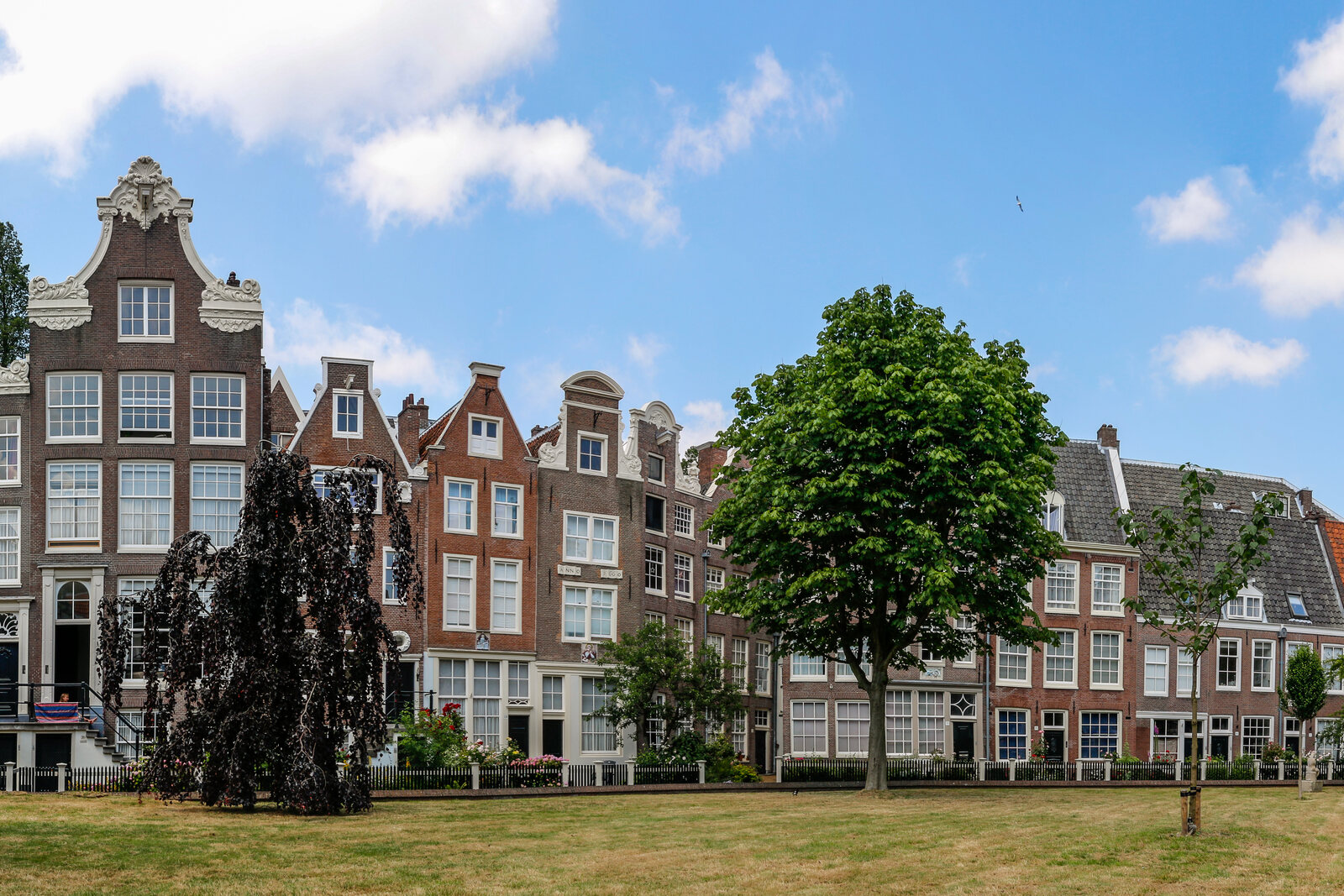
Look around first
What to notice
- The old chapel in the center of the courtyard
- Two residential facades opposite the chapel
- The inner courtyard of Begijnhof
The story of the place
Begijnhof developed as an enclosed residential courtyard for Beguines: they observed chastity, managed their housing, and could leave, including to marry. Here they cared for the sick, helped the poor, and taught children. The old chapel stands in the middle of the courtyard, and opposite it a Catholic chapel is concealed within two connected residential houses. The courtyard remains residential today: the foundation rents the apartments here to women.
In fifteen seventy-eight, Amsterdam's Protestant city council banned public Catholic worship and began taking over churches and monastic property. Begijnhof, too, was a Catholic community, but the council could not evict its women residents: the houses belonged to the women themselves.
Begijnhof means “courtyard of Beguines.” Beguines were not nuns. They took a vow of chastity but retained their property and could leave the community, for example to marry. Some bought homes here, while others paid rent; many cared for the sick, helped the poor, and taught children. When the official religious order changed, their homes, livelihoods, and ability to live together were at stake. Private deeds to the property allowed them to stay.
The chapel in the middle of the courtyard did not belong to them personally, so it was closed. In sixteen oh seven, the city council transferred the building to English and Scottish Calvinists. Thus the former Beguine chapel became the English Reformed Church.
At first, the Beguines continued holding Mass in its vestry. When they were forbidden to use the vestry, a priest came in turn to different residential houses: a permanent Catholic church would have been revealed by the address itself. In sixteen sixty-five, the rector David van der Mije, who was seeking a permanent chapel for the community, arranged the purchase of two neighboring houses. They were connected from within. The city council approved construction on one condition: from the outside, the building must not look like a church. The first stone was laid in sixteen seventy-one, and in sixteen eighty-two Catholic Masses began to be held here again.
When the new chapel opened, one hundred fifty Beguines and another twelve single women and widows lived in Begijnhof. The last Beguine, Sister Antonia, died in nineteen seventy-one. The foundation now rents the apartments here to more than one hundred women.
The old chapel in the middle of the courtyard still belongs to the English Reformed congregation. Directly opposite it, the Catholic chapel is concealed behind the facades of two residential houses. Both churches are active: four centuries ago, the Beguines had their church taken from them, but their own houses remained theirs.
Useful on site
Officially open daily 10:00-18:00, closed 27 April; check the notice at the gate and keep quiet.
Checked: June 28, 2026. Check the official source before visiting.This is an active residential community. Move quietly, do not photograph residents, and do not linger by doorways; you can see the difference between the periods without visiting the churches.