 Guide On Map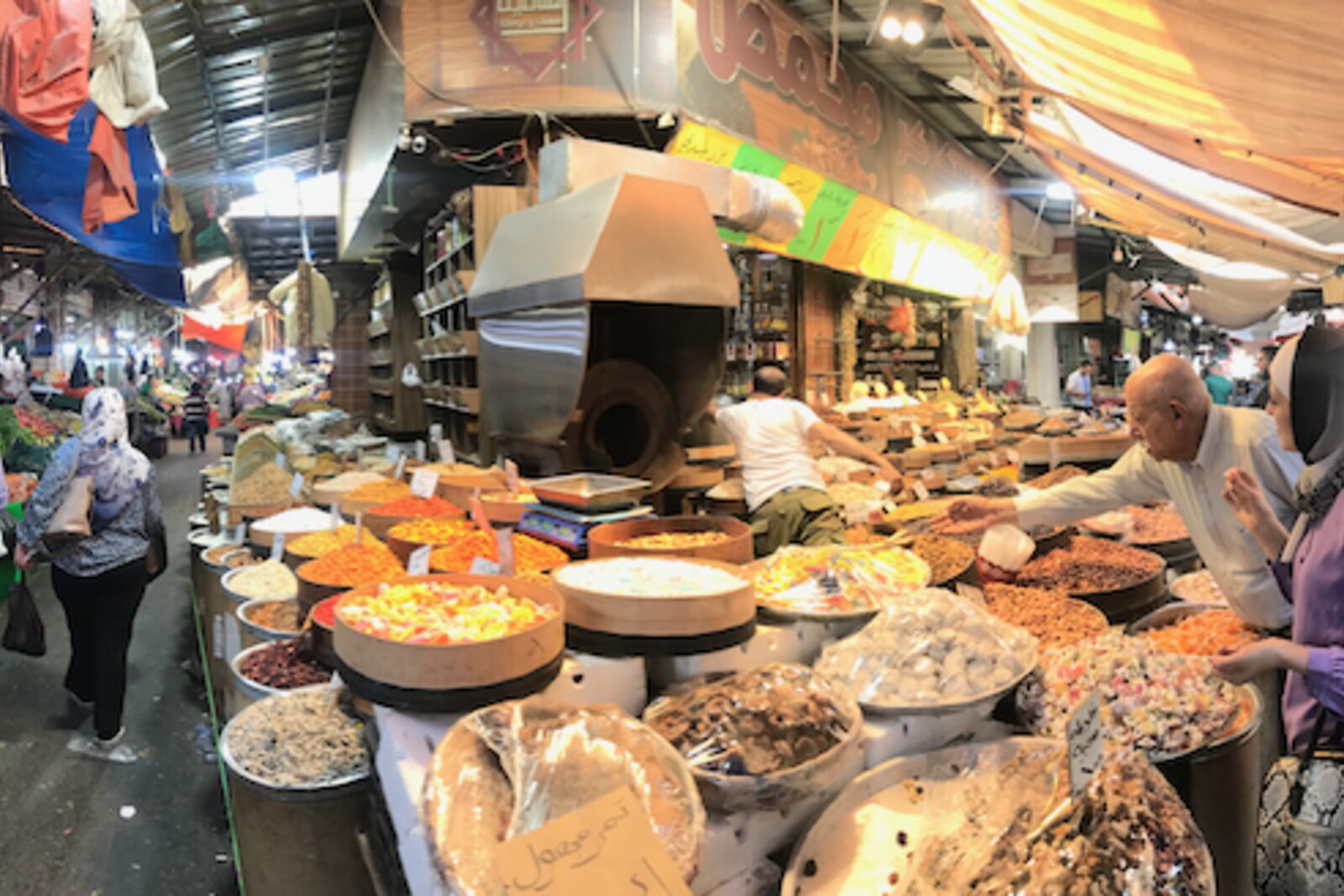
Look around first
What to notice
- The market's five entrances
- Vegetable stalls
- Fruit stalls
- Rows of permanent shops
The story of the place
The name Souq al-Sukar can easily be mistaken for a list of goods. Sugar really was sold here by the sack, alongside rice, dates, beans, spices, and halva. However, “al-Sukar” is a person's surname.
Yusuf Mansur al-Sukar was a merchant and landowner from the city of Al-Salt. He earned money through trade and by cultivating his land, and in the late nineteen twenties he invested in permanent shops and warehouses in Amman. He chose a site at the bottom of the valley, near Al-Husseini Mosque and the then still open channel of the Amman stream. Roads met here: residents walked to the mosque, carriers delivered goods, and visitors from other cities looked for wholesalers.
Before these premises appeared, many food traders sold from handcarts. A shop required rent and a stock of goods that could spoil or fail to find a buyer. In return, the seller gained an address that a customer could return to. The premises built by Yusuf Mansur al-Sukar became known by their owner's name, and then the surname spread to the entire market.
A permanent address changed the scale of trade. Cheese and olive oil arrived by car from Nablus, and goods from Syria came by rail. In the other direction went dates, clarified butter, and jameed—a dried fermented dairy product for mansaf. At first, goods were sold mainly wholesale: owners of provincial shops came here, bought foodstuffs, and took them away by bus and horse-drawn carriage.
Ahmad Abu-Raqia came here with his father from Ma'an as a child. The family faced a long journey back south, so they bought enough food at once to last a month. For them, this narrow row in Amman was a warehouse on which their household supplies depended.
For the sellers themselves, a shop became an inheritance. Hisham Salameh took over the family store at twenty-four; in nineteen sixty-two, his father had given up foodstuffs and begun selling stationery. After school, Rami Sharaf came to help his father, and later inherited his sewing-machine shop. Al-Sukar's decision to rent out permanent premises gave these families a business that could be passed on to their children.
When the municipality opened a new central market in the Al-Wahdat district and shops appeared in Amman's outlying neighborhoods, some wholesalers left the old center. Vegetable and fruit sellers occupied the vacated passages; fish shops, mills, spice shops, clothing stores, and household-goods stores joined them.
Souq al-Sukar now has about one hundred shops and five entrances—from King Talal Street, Quraysh Street, and Ibn al-Athir Street. The Amman stream is enclosed beneath Quraysh Street, sugar no longer defines the range of goods, and the surname of the man who built the first commercial premises here remains over this entire part of the valley.
Useful on site
Open trading area; shops keep their own schedules, with more activity in the morning and daytime; on Friday, some places are closed or open later.
Checked: date not specified. Check the official source before visiting.Walk along the edge of trading traffic, and give way to porters and unloading. Before photographing people or goods at close range, ask permission.