 Guide On Map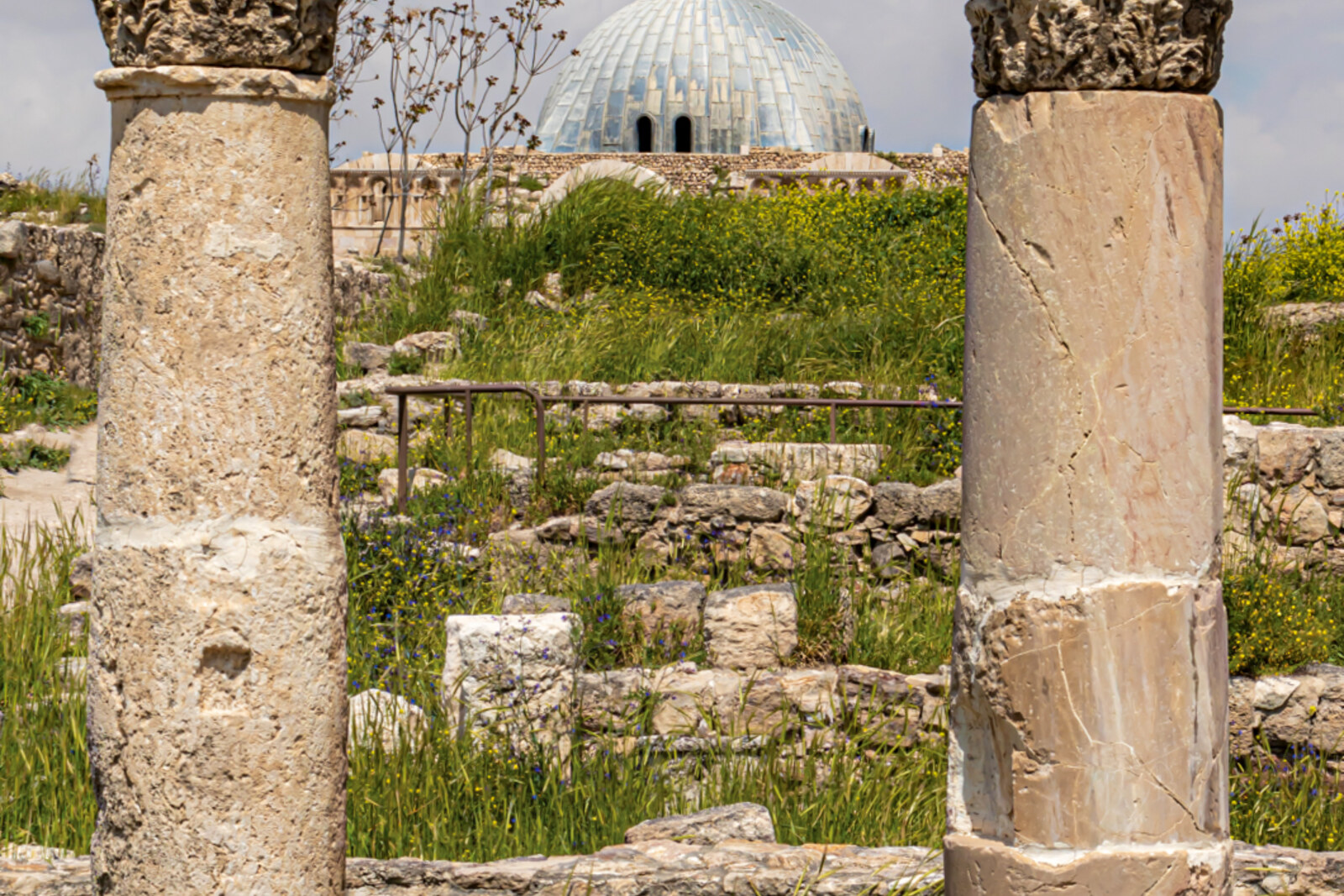
Look around first
What to notice
- The edge of the fortress wall
- The hill's steep slopes
- Valleys below the citadel
The story of the place
The edge of Jabal al-Qal'a looks out over valleys that cut so deeply into the hill that the upper plateau seems separate from the city. This was the boundary of the fortress that enclosed the summit; the remains of the wall still mark its edge. On the northern side, archaeologists discovered a water system from the early Hellenistic period: they do not know its exact entrance, but it remains the most convincing trace of how the people living at this height sustained life above.
In two hundred eighteen BCE, the Seleucid king Antiochus III circled this hill and found only two places where siege engines could be brought up. The other slopes dropped sharply into valleys. What is now the edge of Jabal al-Qal'a was then the edge of the fortress.
After the breakup of Alexander the Great's state, Antiochus was fighting Ptolemy IV, king of Egypt, for the cities between Syria and Egypt. Amman had already received the Greek name Philadelphia, although the historian Polybius calls it by its old name, Rabbath Ammon. A detachment of Ptolemy's troops was stationed here: its soldiers raided the lands of Arab tribes that had gone over to Antiochus. The king abandoned his other objectives and led his army straight to this hill.
Two of his commanders, Nicarchus and Theodotus, were each assigned a section of wall. Each wanted to be the first to make a breach and distinguish himself before the king. Battering engines quickly broke through the fortifications in two places at once, but they could not take the fortress. The defenders repelled assaults day and night. The height allowed them to hold even the damaged wall.
An unnamed prisoner decided the outcome. He showed the besiegers an underground passage by which the defenders went down for water. Polybius does not say what the prisoner was promised or what became of him. Antiochus's soldiers opened up the passage and filled it with logs and stones. The garrison, having survived two breaches and continuous assaults, surrendered from thirst.
Antiochus left Nicarchus in Rabbath Ammon with a new garrison and continued his campaign. The commander competing for the right to be the first to destroy the wall received the city only after another person revealed the route to water.
Archaeologists have not yet identified the exact entrance to that passage. On the northern side of the citadel, they found a water system used in the early Hellenistic period and considered it the best known candidate for Polybius's account. From here, the reason the fortress was built precisely on Jabal al-Qal'a is visible: the walls were difficult to climb to, yet water still had to be brought up from below. The stone breaches did not decide the hill's fate. It was decided by the blocked underground passage.
Useful on site
The official schedule changes by season: usually from 8:00, until 16:00 in winter, until 17:30–18:30 in the warm season, and 9:00–17:00 during Ramadan; Fridays and holidays may have shorter hours.
Checked: date not specified. Check the official source before visiting.First find the theater and the direction of the lower city, and only then look at the ruins. It can be windy at the edge; do not go near the drop-offs for a photograph.