 Guide On Map
Terracotta Army and the Mausoleum of Qin Shi Huang
From the museum's North Gate to the imperial burial mound
Guide On Map on your phone
Open the walk like a regular app
It takes about 10 seconds to install. No app store needed.
The whole path
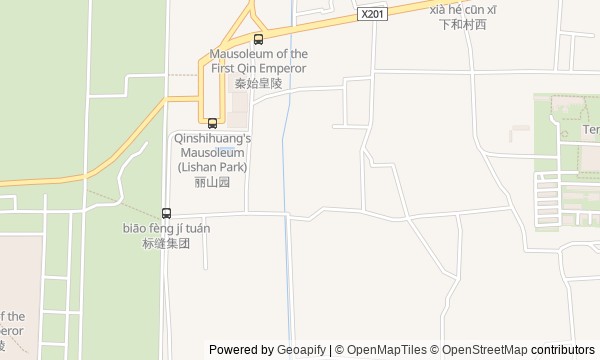
Route map
About the walk
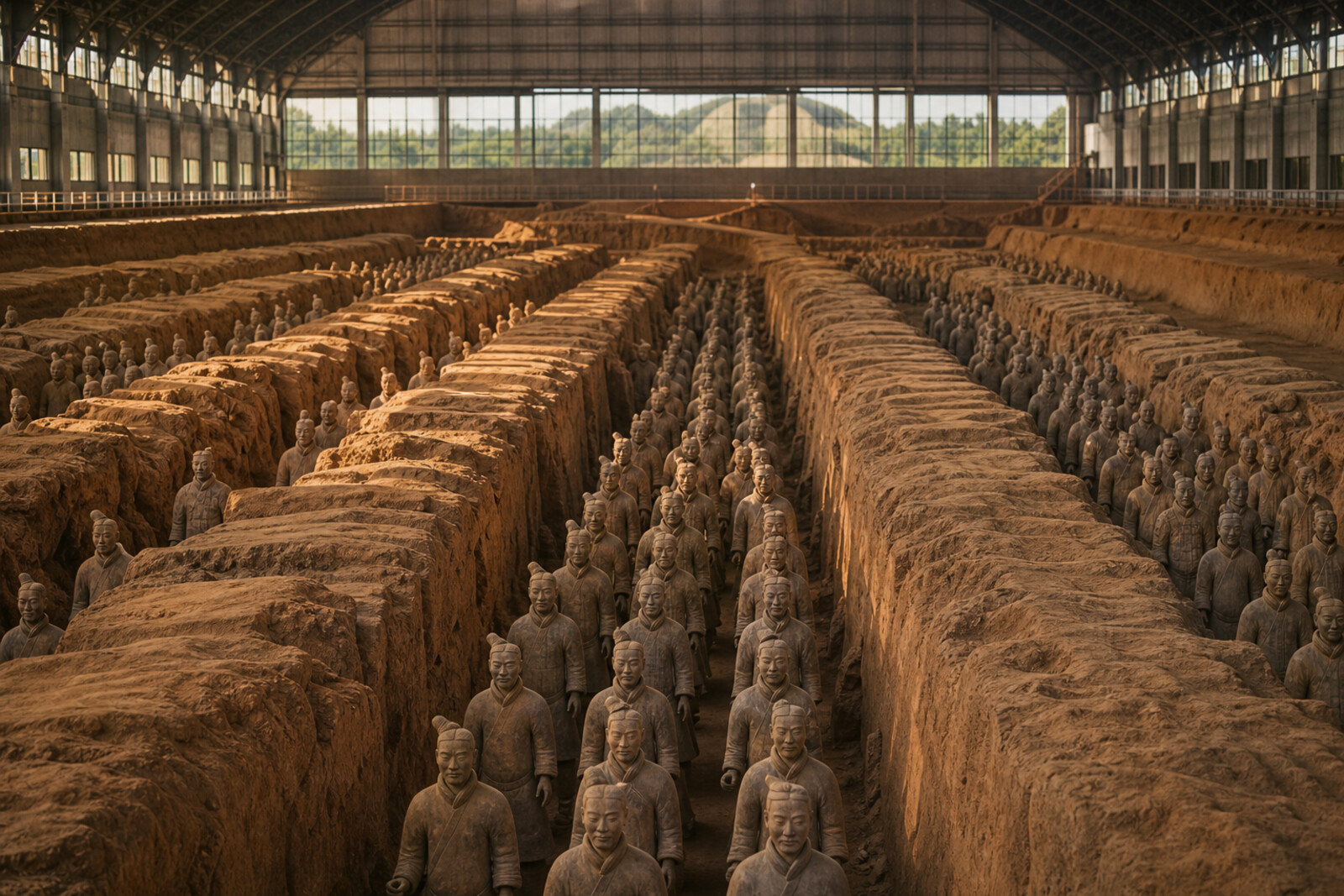
You will enter through the North Gate and make your way from vast army pits to the Mausoleum of Qin Shi Huang. First come the museum halls: ranks of reassembled warriors, the empty center of the command post, an archer with surviving paint. Then the route takes you beyond the familiar Terracotta Army—to a human figure caught in an impossible bend, bronze carriages, and officials. The final stretch leads to a green hill where archaeologists have not yet opened the main chamber inside.
The story follows the work itself: how a find was protected from rain, how poses were restored from thousands of fragments, and why sometimes the right decision was to stop digging. It separates what is proven from scholarly theories and museum nicknames. You will leave with something other than the image of a finished army: an understanding of how many hands, doubts, and deliberate pauses stand between the field near Xi'an and the mausoleum of the first emperor.
Why this order
The North Gate first explains the origins of the museum, built directly over the excavation. Pit 1 then shows what had to be protected: not a finished formation, but a jumble of fragments. After the largest pit, Pit 3 narrows the scale to a command post where the army's structure can be read through an absent figure. Pit 2 continues the conversation about restoration through pose, paint, and individual features. The Pit of Acrobats naturally expands the underground world beyond the army: restorers must bring back movement that has no place in a military formation. The carriages and officials bring the route closer to the burial mound itself and connect court objects with the transfer of imperial power. The final transfer leads to the mound, where archaeology has stopped before the main chamber.
Those who want to understand archaeology, not simply see the famous formation Those interested in the work of restorers Those who enjoy theories, evidence, and honest limits to what can be known
Those looking for a short overview of the main exhibits Those more interested in the emperor's biography than the history of excavations Those expecting final answers to every mystery of the complex
Before you go
Arrange your visit in advance using the document you will bring with you: at the entrance, staff may check both your booking and passport. Start at the North Gate. Allow time for security, the long distances inside the complex, and getting back to the shuttle after Pit 2. Emperor Qinshihuang's Mausoleum Site Museum and Lishan are 2 separate areas of one route, so do not treat the transfer as an optional extension: without it, the story ends with the army and never reaches the mausoleum. Comfortable shoes and water will help, especially on the open part of the route; leave yourself a little extra time for reading navigation and making the transfer.
When to go
3-4 hours
Backup plan
If Pit 1 is too crowded, stay with the overall view only long enough to understand the formation, then examine the details in the more intimate Pit 3 and Pit 2. If time is short, do not try to replace the shuttle with a walk: shorten your stops inside the museum area and keep the transfer to the burial mound, or the route will lose its ending. If a separate pavilion or part of Lishan is unavailable, do not look for an unofficial way around it—follow the open museum navigation and move on to the next stop. In rain or intense heat, give more time to the covered displays, and at the burial mound limit yourself to a short exterior look from the accessible path.
Route conditions
Surface. Paved — 743 m; unpaved — 487 m (data covers 30% of the route)
Access. Wheelchair — limited; stroller — limited
Facilities. Toilets — 7; drinking water — 2
Elevation. Ascent — 103 m; descent — 46 m
OpenStreetMap extract of June 25, 2026: database data, not a check on the ground. Data © OpenStreetMap contributors, ODbL licence
Walk plan
Open in maps ↗- 1
North Gate: Entrance to the Underground State
Here you will understand why an entire museum had to be built over an unfinished excavation. - 2
Pit 1
This stop will show the Terracotta Army as the result of lengthy sorting and assembly, rather than a discovery found intact. - 3
Pit 3
Here, the absence of a single figure changes the reading of the entire underground command post. - 4
Pit 2
Here, color, poses, and differences between the figures will have to be separated from popular museum myths. - 5
Pit of Acrobats
This stop will show the limits of restoration: a body position can be restored, but the name of a move cannot always be. - 6
Chariots and Officials: The Mechanism of Imperial Power
This stop connects court objects with the struggle for power after the first emperor’s death. - 7
Mausoleum of Qin Shi Huang
The route ends where research ran up against preserving the unopened chamber.
Route features
Everything you need stays in the browser
Progress, saves and your trip plan are stored on this device.
Add Guide On Map to your home screen so the walk opens outside the browser.
How we handle sources, maps and corrections: our editorial standards