 Guide On Map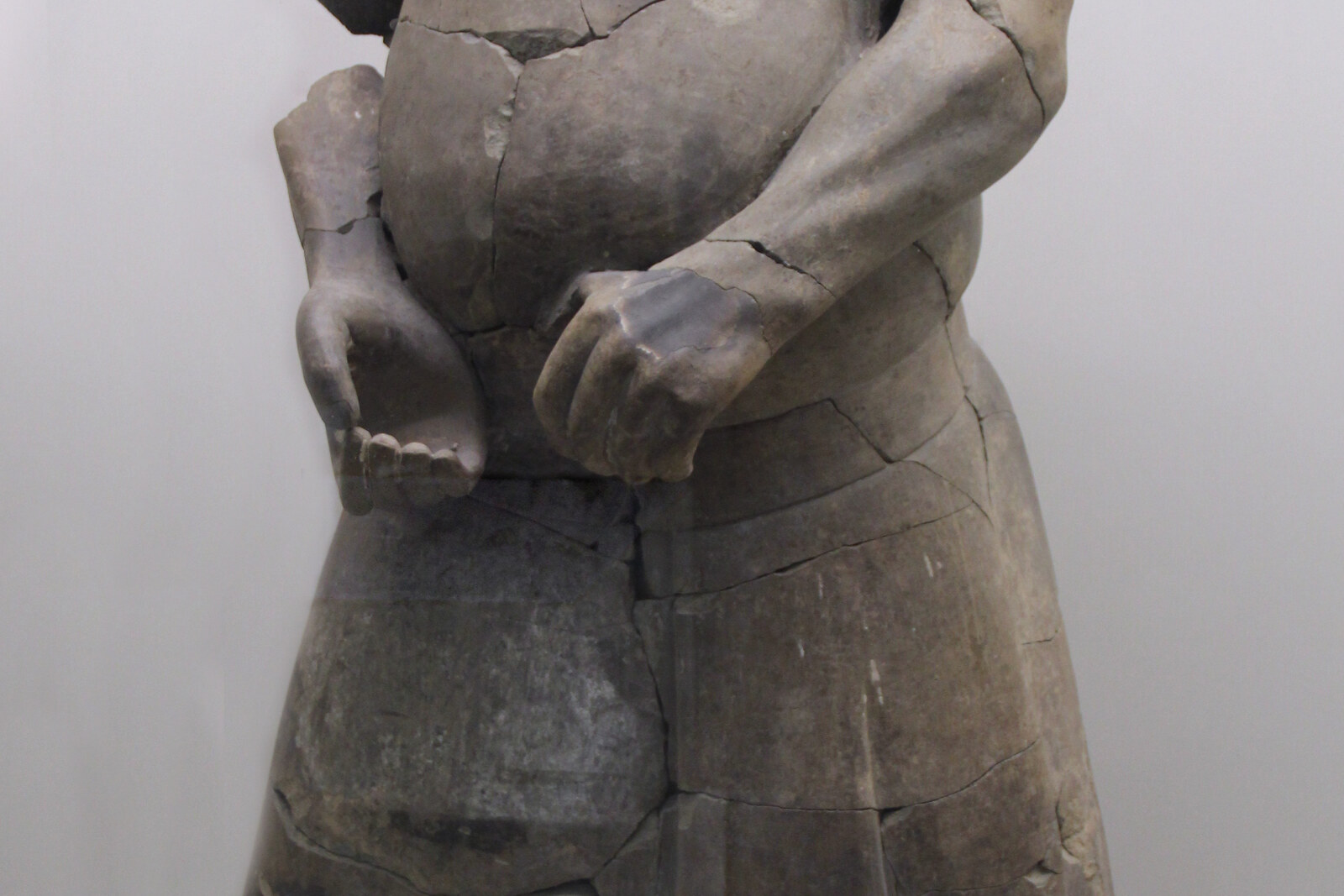
Look around first
What to notice
- Figure with a torso bent backward
- Support beneath the pelvis
- Feet above the base
- Missing head and hands
The story of the place
The builders placed this pit almost next to the emperor’s mound, in the space between the two walls of the burial enclosure. Inside are about thirty terracotta men: some are bare above the waist, some wear short painted garments; some stand, while others have gone down on one knee or raised a hand. A large bronze tripod beside them suggests court entertainments, though the pit’s current name is provisional: these people may have included wrestlers and strongmen.
Restorer Ma Yu began with a support. He had to join eighty-four fragments of a figure that archaeologists lifted from the third corridor of this pit in two thousand twelve. The head and hands were missing, and the lower half of the body was especially badly shattered. The pose survived: the person is kneeling and bending backward so far that the back touches the floor.
Ma Yu sought stability and was not allowed to make the ancient clay bear its former load. First, the restorers assembled the small parts of the legs, then joined them to the torso. A large crack was reinforced from the inside. The support beneath the pelvis was raised to a precisely calculated height: both feet remained above the base and did not take any weight. The work took nine months. The assembled figure came out about one hundred fifty-four centimeters long and weighing more than one hundred kilograms.
Then the question arose of what exactly this person is doing. Some suggested that the restorers had made a mistake: the bend seemed too implausible. Ma Yu replied that the position was determined by the breaks themselves—each shard matched the one beside it. Museum staff invited performers from the Shaanxi acrobatic troupe. They recreated the pose and built an act around it, but could not establish the exact name of the ancient technique.
“Pit of Acrobats” is a modern working name. No ancient plaque with such a designation was found here. Archaeologists saw nearly three dozen men of different builds: some bare to the waist, others dressed in short painted garments; some standing, some down on one knee, some raising a hand. A huge bronze tripod lay nearby. Such a group recalled “baixi”—a collective name for performances involving wrestling, weightlifting, pole exercises, and comic acts, which came into use only after the Qin era. Some researchers consider these men wrestlers and strongmen, so the word “acrobats” does not settle the dispute; it merely brings together unfamiliar poses.
The location explains for whom the performance was intended. The military pits are about one and a half kilometers from the emperor’s mound. This one was arranged only three hundred meters from it, between the inner and outer walls of the burial enclosure. Under the accepted interpretation, the builders placed performers of court entertainments here so that after his death Qin Shi Huang would receive the same amusements as in life.
The twenty-eighth figure still has no head or hands. Beneath the pelvis remains the support calculated by Ma Yu, while the feet hang without bearing weight. The restorers restored the body position; the name of the move disappeared along with those who once performed it.
Useful on site
Official ticket checks: 08:30-17:00 during high season; 08:30-16:30 during low season. Check holidays separately.
Opening hours by day
Do not try to guess the exact act from a single pose: the purpose of individual figures remains disputed.