 Guide On Map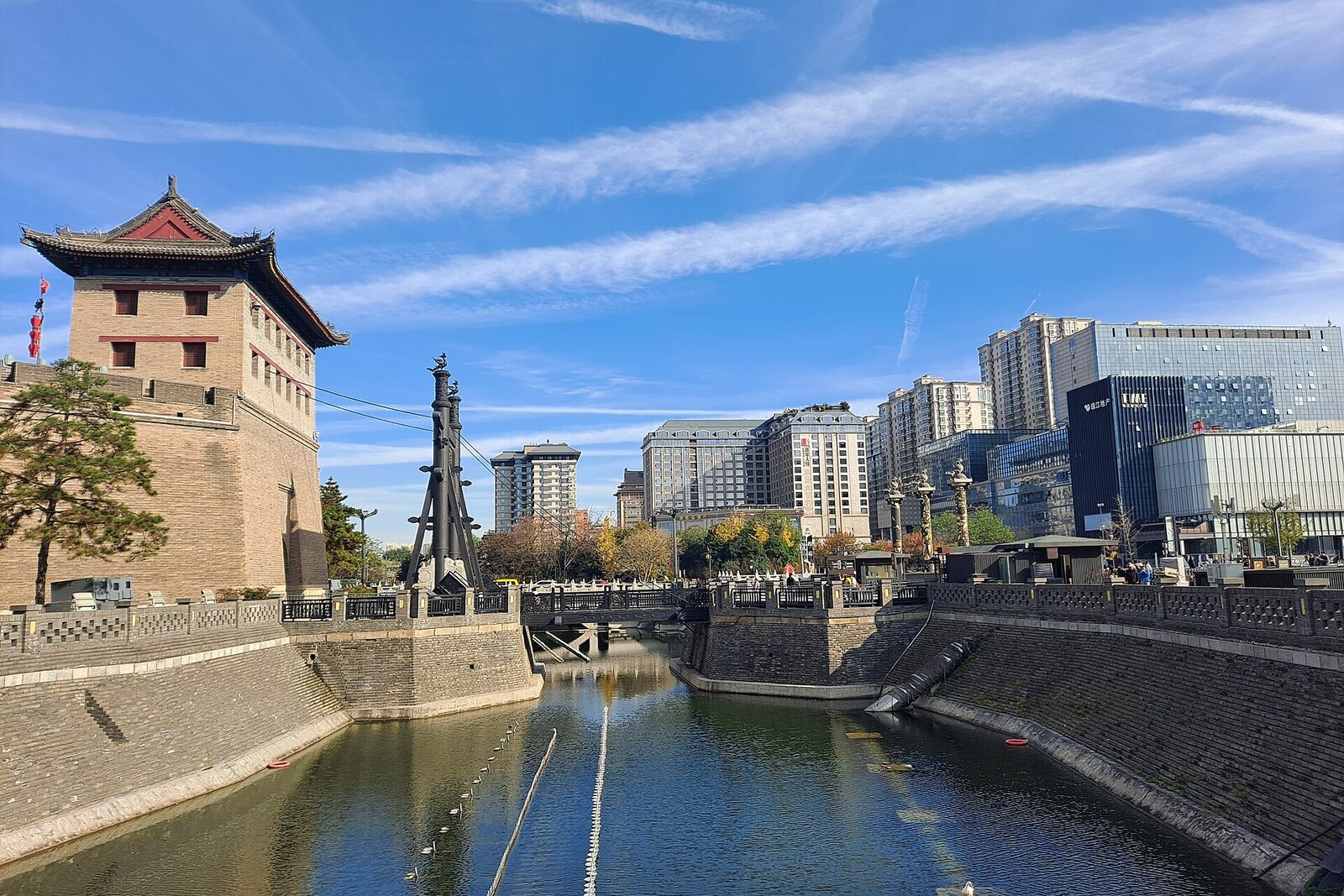
Look around first
What to notice
- Moat water
- Drawbridge
- Outer tower
- Walls of the outer fortification
The story of the place
The water by the southern wall separates the present outer fortification of the gate complex from the city. At the beginning of the twentieth century, the later yuecheng was dismantled here together with its tower and bridge, so the structure above the moat had to be recreated from old images. The work was completed in nineteen ninety: the central drawbridge and the outer walls look older than their present incarnation.
The moat before the southern wall left a single controlled crossing at the gate. A bridge lay over the water and could be raised from the outer tower. Behind it stood the yuecheng—a small fortified courtyard before the main gate. Anyone entering it found themselves between water, walls, and a locked passage.
At the beginning of sixteen forty-five, Li Zicheng, leader of Dashun, returned to Xi'an after his defeat at Tongguan Pass. He could no longer hold his capital and led his army southeast. Li did not intend to leave grain, weapons, and government buildings to the advancing Qing troops. He ordered the rear guard to burn everything that could not be taken away.
The rear guard was commanded by Tian Jianxiu, one of Dashun's senior military commanders, who was trying to buy time for the retreating army. Tian had received his rank and title from Li himself; deceiving the commander-in-chief could have cost him his head. Yet the people of Shaanxi were starving. The chronicle records his decision this way: the rice should be left to save the people.
Tian did not carry out the order. Instead of the storehouses, his soldiers set fire to two conspicuous structures: the tower of the East Gate and the tower of the yuecheng here by the southern moat. Tian then caught up with Li and reported that everything had been destroyed. Li saw the fire above the city and believed him.
The grain and equipment remained in Xi'an. A substantial part of the supplies went to the Qing troops that entered afterward. They replenished their provisions and quickly continued the pursuit; the retreating Dashun army lost its respite. Li died during the further retreat in the same year, and Tian later surrendered to the victors.
The wooden tower that Tian's men burned above this crossing has long been gone. At the beginning of the twentieth century, the later yuecheng, together with its tower and bridge, was also dismantled here. The present outer fortification and central drawbridge were restored from old images; the work was completed in nineteen ninety. Behind the modern walls above the water lies the site of the fire with which Tian concealed the untouched granaries.
Useful on site
Open outer walking edge. Local passages and park sections may change because of events, works, or crowd management at the South Gate.
Checked: June 29, 2026. Check the official source before visiting.Stay on the designated paths and choose a spot that does not obstruct traffic. Going down to the water itself is not necessary for viewing.