 Guide On Map
Torzhok Along the Tvertsa and Sovereign's Road
From Tikhvin Church through the old center to the Museum of Gold Embroidery
Guide On Map on your phone
Open the walk like a regular app
It takes about 10 seconds to install. No app store needed.
The whole path
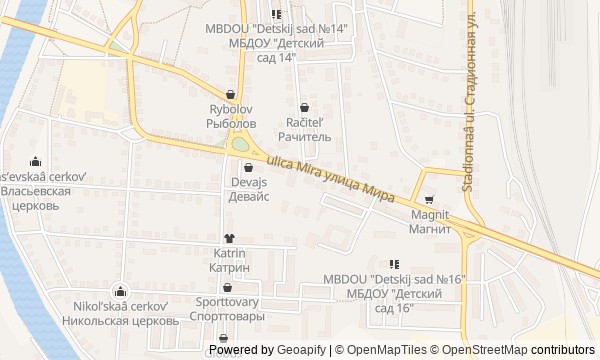
Route map
About the walk
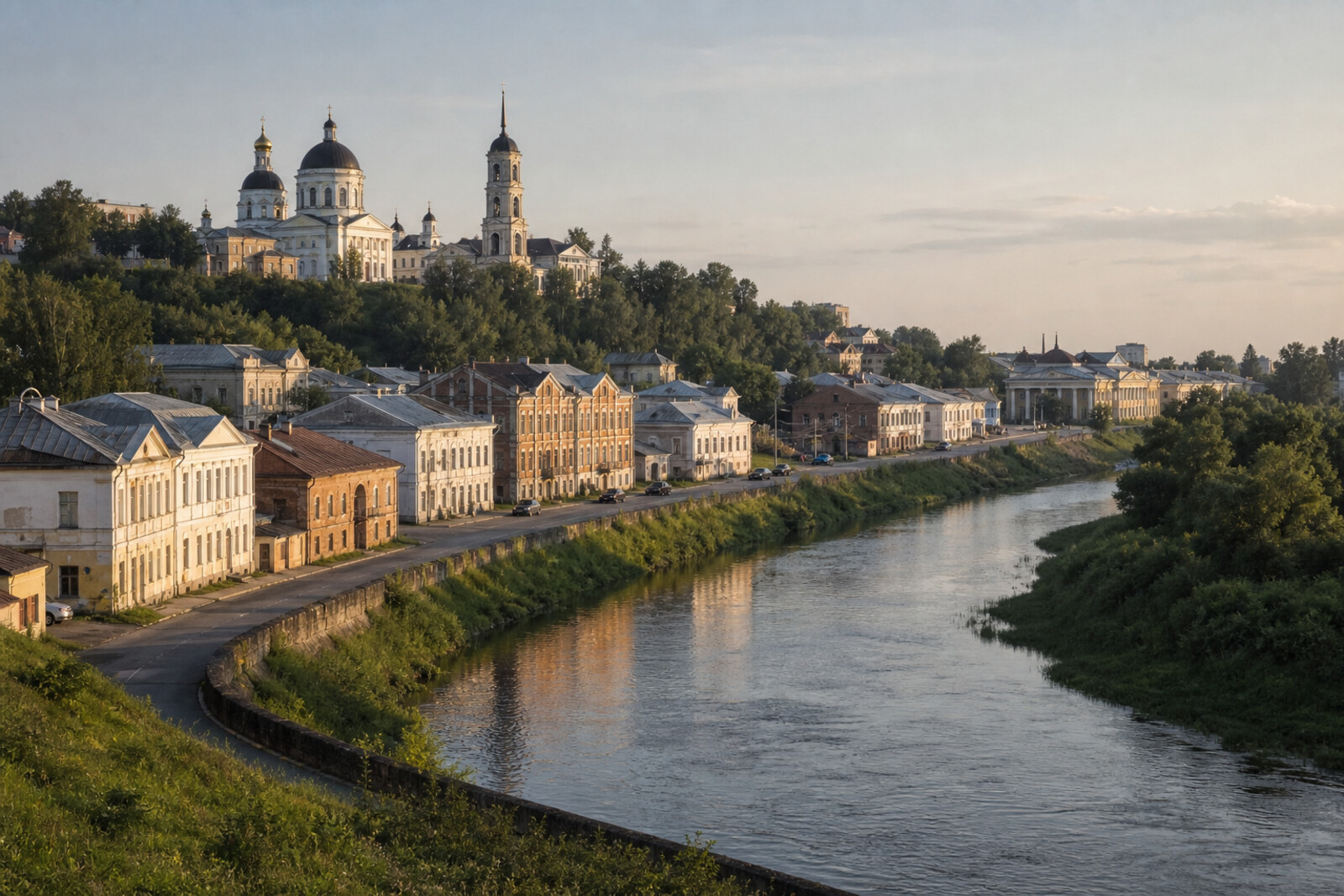
You will walk from a wooden church on the southern edge of town to the monastery hill, the Kremlin rampart, and the old market by the Tvertsa. At first, the route stays on the right bank, where a timber structure that was nearly dismantled, siege engines, and a cathedral with windows added after a conversation about the road all come close together. Then you will descend to the square and cross the river. On the left bank, you will climb to the Imperial Travel Palace, step onto former Yamskaya Street, and finish where a museum stands beside a working factory. The story follows everyday decisions: who agreed to pay for repairs, why a rejected structure was bought, and how promissory notes proved stronger than a famous hotel. It separates documents from legend and later decoration. By the end, you will read Torzhok through three things—a wooden frame, a river crossing, and gold thread—and connect this river city to the road between the capitals.
Why this order
The wooden church on the southern edge sets the starting point: Torzhok before regular squares and stone development. The way along the right bank leads to the monastery hill, where the city's early history is tied to the river route and a refuge for travelers. The neighboring hillfort continues that line: it becomes clear why a town on a trade route needed a fortress. Descending from the rampart to Transfiguration Cathedral shifts the story from defense to the city's main church, while the next square reveals the economy for which the center was restored. The pedestrian bridge comes after the market rows because moving goods between the banks required a permanent crossing. On the opposite bank, the Imperial Travel Palace faces a Torzhok already reshaped by trade; from here, the route reaches former Yamskaya Street, where the hotel served the same road between the capitals. The final move to the factory shows another response to change: after the decline of the road trade, the city's craftswomen preserved both their income and their craft.
Those who want to understand how old Torzhok worked Lovers of material history without ceremonial rhetoric Those interested in trade, roads, and urban crafts
Those looking for a short, level walking loop Those who want church interiors only Those who prefer separate sights without a connected urban story
Before you go
Check access in advance for the interior of Tikhvin Church, the grounds of Novotorzhsky Kremlin, and the Museum of Gold Embroidery: opening arrangements can change, and some visits require a phone call beforehand. Treat the cathedral and the Imperial Travel Palace mainly as exterior stops unless entry is confirmed. Museum Rows may remain inaccessible because of restoration, but the surviving buildings and the square still matter to the route. Choose sturdy footwear for unpaved ground and slopes. This is a linear walk: the endpoint is about two kilometres from the start, so plan your return in advance.
When to go
Exterior stops and walking between them will take about 2 hours and 40 minutes. If the available museum sites and interiors are open, add another 1 hour and 30–50 minutes. Do not rush along the monastery bank or around the former Kremlin: the terrain and panorama tell as much as the individual buildings.
Backup plan
The route still works if the interiors are closed. See the wooden forms of Tikhvin Church from outside, walk the accessible part of the monastery grounds, and linger on the fortress hill to read it through its height and slopes. Then continue to the cathedral, the surviving market buildings, the Tvertsa, the palace, and the hotel—these stops are easily joined by an exterior story of the river and the road. If the Museum of Gold Embroidery is closed, finish at the Pozharsky Hotel: it is a good place to draw the walk together through roadside hospitality and the work of Torzhok craftswomen that travelers carried away from the city.
Route conditions
Surface. Paved — 3 km (data covers 59% of the route)
Stairs. Flights: 1, 147 m in total
Access. Wheelchair — no; stroller — limited (stairs)
Facilities. Toilets — 4; drinking water — 2
Elevation. Ascent — 42 m; descent — 46 m
OpenStreetMap extract of July 4, 2026: database data, not a check on the ground. Data © OpenStreetMap contributors, ODbL licence
Walk plan
Open in maps ↗- 1
Tikhvin Church
The surviving log structure begins a conversation about the people who saved old buildings despite the parish's expenses. - 2
Borisoglebsky Monastery
The tradition about the founder will help distinguish the monastery’s antiquity from later dating and lost evidence. - 3
Novotorzhsky Kremlin
The hillfort will show what remains in the ground from the medieval defenses and what appeared here as a museum reconstruction. - 4
Transfiguration Cathedral
The story of its construction shows how the townspeople corrected mistakes and sought money after they had already dismantled the former main church. - 5
Market Square and Museum Rows
The square will link archaeological traces of the old street with the trading center rebuilt after the fire. - 6
Tvertsa Embankment and Pedestrian Bridge
The crossing will explain why a trading town had to pay dearly to become independent of flooding and navigation. - 7
Imperial Travel Palace
Choosing the high bank will show what view of rebuilt Torzhok was intended for the imperial windows. - 8
Pozharsky Hotel
A family business will show how the great road first sustained the hotel and then ceased to save it. - 9
Museum of Gold Embroidery
The final stop brings together museum specimens, the training of craftswomen, and the production that grew from a rescued craft.
Route features
Everything you need stays in the browser
Progress, saves and your trip plan are stored on this device.
Add Guide On Map to your home screen so the walk opens outside the browser.
How we handle sources, maps and corrections: our editorial standards