 Guide On Map
Forest, Fashion, and Streets: From Meiji Shrine to Shibuya
Through Harajuku, Omotesando, and Cat Street—to Hachiko
Guide On Map on your phone
Open the walk like a regular app
It takes about 10 seconds to install. No app store needed.
The whole path
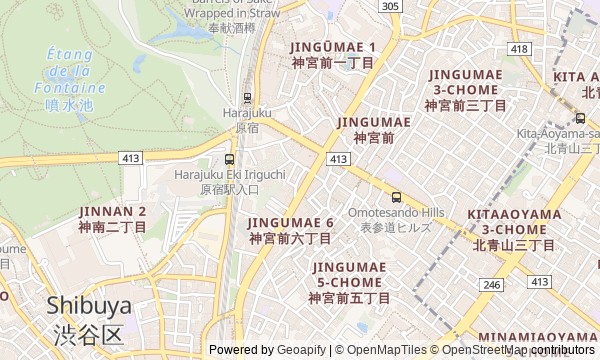
Route map
About the walk
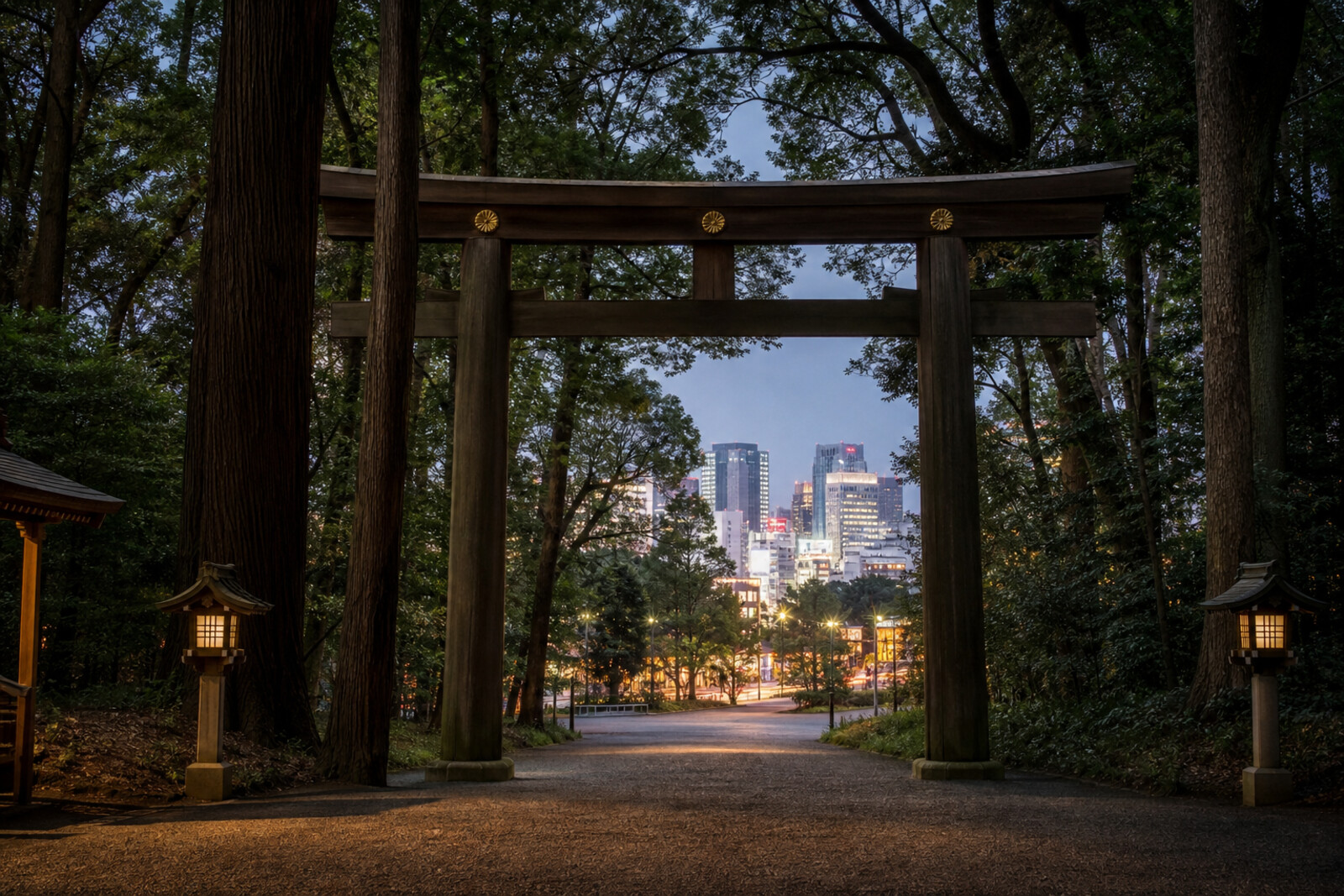
You will begin at the southern torii of Meiji Shrine and enter a forest that feels older than the city around it. Then you will return to Harajuku Station, make your way through narrow Takeshita Street, broad Omotesando, and the bends of Cat Street. You will finish among rooftops, railway tracks, and people meeting by Hachiko.
This route follows places whose shape and purpose people have changed more than once. You will hear why two enormous trees were sought for the gates, why a heavy door was removed from an apartment before demolition, and how the name of a shop came to stand for an entire youth movement. The answers appear only on the ground.
The story stays calm and precise. It holds on to tangible details: a trunk, a door handle, a stone post, and a bronze figure. Legend is kept separate from what is known for certain.
By the end, you will be able to explain why the way from the Meiji grove to Hachiko is made of rebuilt gates, a planted forest, a vanished river, and places city residents claimed in their own way.
Why this order
The southern torii first mark the boundary of the shrine, and the forest just beyond them shows that on the other side, not only buildings but the environment itself was remade. Returning to the station takes you out of a grove designed for centuries and onto Takeshita Street, where a new urban culture was created not by planners but by teenagers. Omotesando continues the conversation about fashion and commerce, but moves it from the street into a building that was demolished and partly assembled again. From the preserved door, the route drops toward Cat Street: here the trace of the former city survives not in a facade but in the curve of the road and the post of a vanished bridge. The former riverbed leads to Miyashita Park, where a shortage of land forced a public park to rise above the shops. After that, Hachiko makes for a fitting finish: by the station, urban reinvention gives way to an everyday human habit—waiting for one another amid the shared motion of Shibuya.
Those curious about modern Tokyo beyond panoramas and retail facades Those who enjoy reading a city through concrete details Those who want to connect Meiji Shrine, Harajuku, and Shibuya in one walk Those who like sharp shifts between quiet, narrow streets, and large squares
Those looking for a route focused only on temple interiors Those who find the dense crowds of Takeshita Street and Shibuya difficult Those who want to spend the entire walk away from shops and city noise
Before you go
Set aside 3–4 hours and wear shoes suited to a long walk: the forest section, city sidewalks, crossings, and inclines each ask something different of you. Start with daylight to spare, since the shrine follows its own seasonal schedule; check current access before you set out. Within its grounds, speak more quietly, do not eat while walking, and follow photography restrictions near prayer areas. On the shopping streets, do not stop in the middle of the flow, and do not photograph people up close without permission. Access to individual shops, cafes, sports facilities, and indoor spaces may depend on their current rules, but following the route does not require a purchase or a visit to any particular venue.
When to go
3–4 hours
Backup plan
If the shrine is already closed, do not try to get past the barriers: view the southern torii from the accessible side and begin the city section from Harajuku. If you are very tired, shorten the loop after the main courtyard and take a break before Takeshita Street; beyond that, stations and major streets offer natural exit points without needing to complete the whole arc. In rain, focus on the exterior details of Omotesando and Cat Street, and skip the roof of Miyashita Park if the surface is slippery or access is limited. If crowds on Takeshita Street and by Hachiko become excessive, do not push toward the center: watch from the edge, keep entrances and passageways clear, and cross Shibuya only on the signal.
Route conditions
Elevation. Ascent — 51 m; descent — 52 m
OpenStreetMap extract of June 18, 2026: database data, not a check on the ground. Data © OpenStreetMap contributors, ODbL licence
Walk plan
Open in maps ↗- 1
The Torii Beyond Which Tokyo Changes
The first boundary of the route introduces the theme of precisely restoring a lost form. - 2
A Forest Planted for Future Generations
The grove shows the result of a decision designed not for opening day, but for several generations. - 3
Takeshita Street: Fashion Tested by the Crowd
Here, the route moves from a planned grove to a movement invented by the street's visitors themselves. - 4
Omotesando: the old city within the new
This stop will show what exactly can return to the same address after a building has been completely demolished. - 5
Street Along the Bed of a Vanished River
The former riverbed will explain the bends in the pedestrian path between Harajuku and Shibuya. - 6
Miyashita Park
This stop shows how public land was preserved above commercial floors. - 7
Hachiko and a Few Seconds of Shared Movement
The finale connects the story of a popular monument with the daily expectation of meetings at the station.
Route features
Everything you need stays in the browser
Progress, saves and your trip plan are stored on this device.
Add Guide On Map to your home screen so the walk opens outside the browser.
How we handle sources, maps and corrections: our editorial standards