 Guide On Map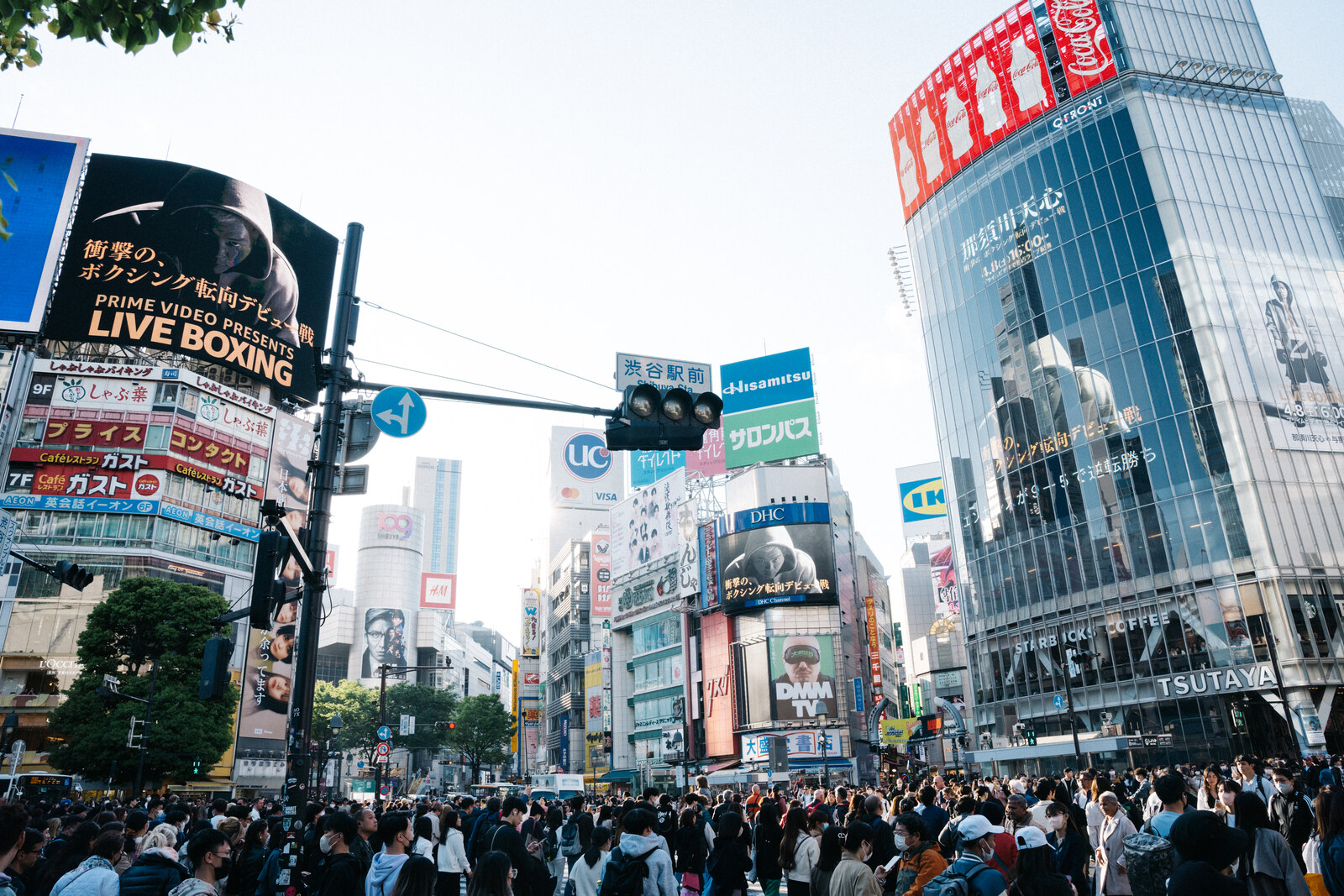
Look around first
What to notice
- The bronze figure of Hachiko
- Hachiko Exit
- Diagonal intersection markings
- Traffic lights at the corners
The story of the place
The second monument to an Akita dog stands at Shibuya Station. The first statue was seized during the war to be melted down, and the current figure was made by the son of its first sculptor. The bronze dog remained by the station, although exits, ticket gates, and one of the city's busiest intersections have long grown up around it.
While cars are stopped in every direction, people enter the intersection from several corners at once, cross it straight ahead and diagonally, and then gather again on the sidewalks. One group barely takes part in this shared movement: it stays by the bronze dog near the station exit. This is where people arrange to meet, wait for latecomers, and line up for a photograph with Hachiko.
The real dog's name was Hachi. Professor Hidesaburo Ueno's students added the respectful “ko” to his name: they felt it was impolite to call their teacher's pet without a respectful form of address. Ueno, a professor of agricultural engineering, had long wanted an Akita dog. The puppy was delivered to him by rail from northern Japan. Hachi proved weak, and the professor kept him near his room, let him into the house, and shared his food with him.
In the well-known version of the story, Ueno leaves from here for work every day, and Hachi meets him at the train. In fact, the professor usually walked to the university's agricultural building in Komaba, and the dog saw him off to the university gates. Ueno used the station when he went elsewhere on business.
On the twenty-first of May, nineteen twenty-five, Ueno died at the university. Hachi had lived with him for about seventeen months. After the professor's death, his companion Yaeko could not inherit the house or keep a large dog there. Hachi was moved from one relative to another until Ueno's former gardener, who lived near Shibuya, took him in.
From his new home, the dog came back to the station again and again. Why he chose this particular station is not reliably known. Perhaps he remembered that his master left through these gates for a long time and returned through them. Hachi sat by the exit and watched people emerging from the ticket gates. To some passengers, merchants, and station employees, he was a large homeless dog obstructing the way. They dragged him away, doused him with water, beat him, and drew on his muzzle.
Hirokichi Saito, founder of the Japanese Dog Preservation Society, decided to make the old dog's story public. In the autumn of nineteen thirty-two, the Tokyo Asahi Shimbun published an account of a dog that had already been waiting seven years for his dead master. After the publication, children began lining up around Hachi, and food, money, and letters asking people to care for him were sent to the station.
With donations, the sculptor Teru Ando cast the first bronze Hachiko. On the twenty-first of April, nineteen thirty-four, the living dog attended the unveiling of his own monument. He died in March of the following year.
The first statue was seized during the war for metal collection and melted down. In nineteen forty-eight, Takeshi Ando, the first sculptor's son, placed a new figure here. It still stands today. At every signal, people from different corners move together through the intersection for a few seconds, while near the second Hachiko remain those whose meeting has yet to take place.
Useful on site
An open urban spot; viewing platforms, cafes, and commercial viewpoints around Shibuya Crossing operate on separate schedules, tickets, and weather restrictions.
Checked: June 27, 2026. Check the official source before visiting.Photograph the intersection only from the sidewalk or a permitted viewing point. Enter the roadway on a green signal and do not linger for a shot; keep the passage by the monument clear.