 Guide On Map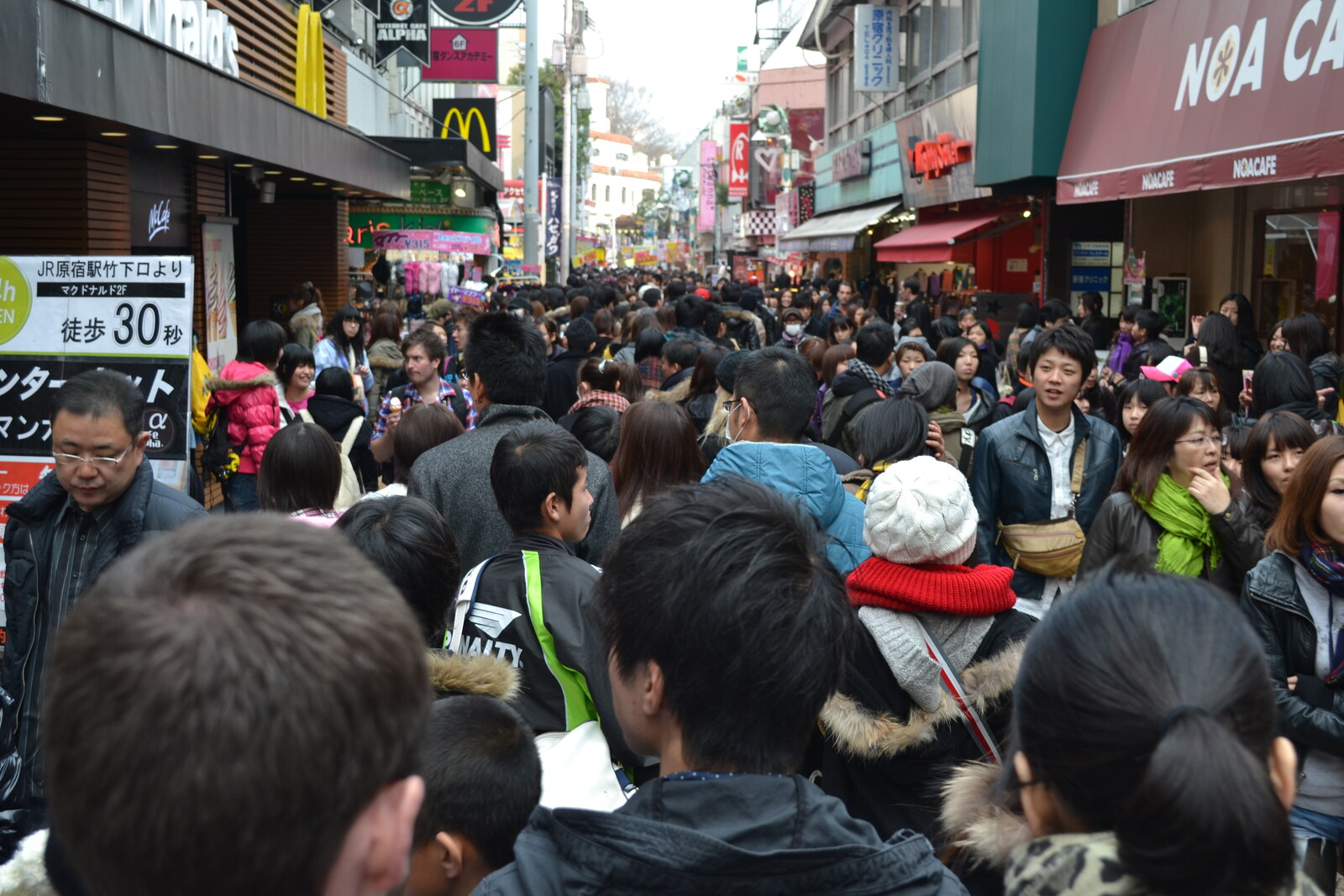
Look around first
What to notice
- The Takenoko shop sign
- Stage costumes in the display window
- A dense row of retail facades
The story of the place
From the exit of Harajuku Station, the pedestrian Takeshita Street stretches for three hundred fifty meters. A dense row of retail facades squeezes the flow of people; in these cramped premises, small clothing and accessories shops stand alongside sweets stalls and larger stores. Takeshita Street serves as Harajuku's shopping center for those looking for inexpensive youth fashion.
Among the current shops on Takeshita Street, the Takenoko boutique still operates, with rows of stage costumes. The street's name preserves the former name of this neighborhood—Takeshita-cho—which has disappeared from postal addresses. Takenoko is a different word: it means “bamboo shoot.” It was the shop, not the similarly sounding street, that gave its name to Harajuku's first youth movement.
Takenori Otake, a seller of inexpensive women's clothing, earned money from orders from cabaret and nightclub workers. He had no systematic training as a fashion designer: an acquaintance who had graduated from fashion school showed him a little, and Otake learned the rest alongside his employees. His entire chain had fewer than ten people. He noticed that aspiring performers and disco-goers were more willing to buy bright cover-ups, and decided to make clothes that young people themselves would want to dance in.
The result was a “harem costume”: a loose top with wide sleeves and trousers gathered at the ankles. Otake combined a movement-friendly cut with details from monpe, Japanese work trousers, and happi, a short festive jacket. It required little elaborate trim and used little fabric as well. The costume cost from three thousand to three thousand five hundred yen—a sum a schoolchild could save from pocket money. The first one hundred fifty sets sold out on the day they went on sale.
When Otake opened a branch on Takeshita Street, a high school student he knew came wearing such a costume. The young man was not admitted to a disco because of his age. So he set up a cassette boombox outside the shop and began to dance. Other customers joined him. After complaints from neighbors, police directed the group to the Sunday pedestrian zone near Yoyogi Park. There, teenagers gathered in circles and repeated shared movements; those who could not afford the branded costume sewed similar outfits from lace curtains and gold-colored fabric.
After about half a year, journalists began calling the dancers the “Takenoko tribe,” after the shop where many of them bought their clothes. Otake himself did not like being declared the choreographer of the entire movement: he invented the costume, but the customers themselves carried it out of the sales floor, chose the venue, and turned the product into the form of their group.
The mass dances at the entrance have long been gone, but Takenoko continues to sell clothing for dancers, performers, and young idols on Takeshita Street. The shop manager spoke of a former member of the “tribe”: he became a dance instructor and now returns here every year for costumes for his students' performances.
Useful on site
Open street; shops, cafés, and game/photo spots operate on individual schedules, and the crowd grows noticeably on weekends and after school hours.
Checked: June 27, 2026. Check the official source before visiting.Keep to the left, do not stop in the middle of the flow, and move to the side if you want to look at a display window or have a snack.