 Guide On Map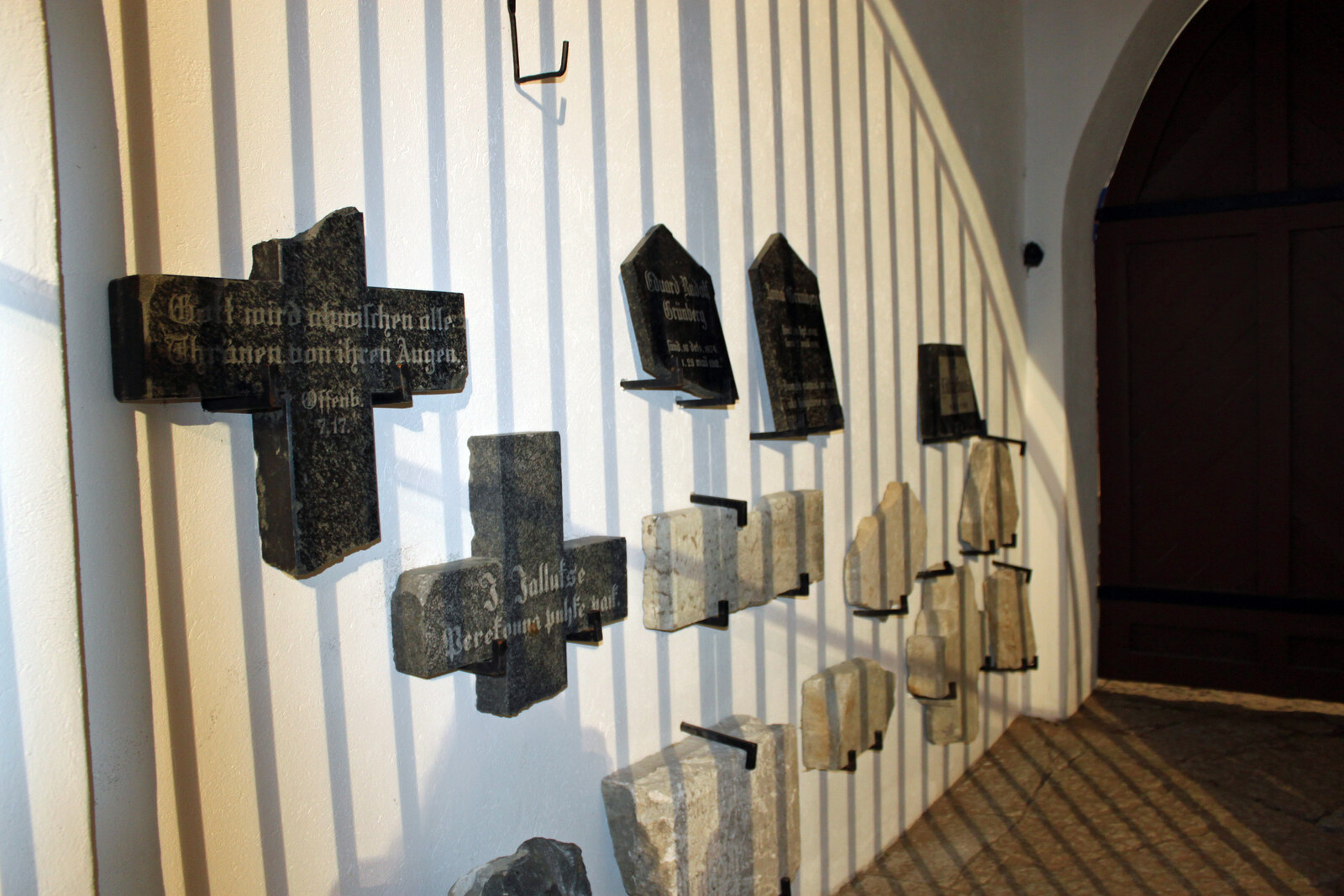
Look around first
What to notice
- Baroque gate tower
- Gate arch
- Park paths
- Playground
The story of the place
After the Great Northern War, the Estonian and Swedish communities approached the Reval city council with a very practical request: to fence Kalamaja Cemetery and install bells. Parishioners of the Church of the Holy Spirit and the Swedish Church of St. Michael were buried here. There was no fence, and livestock from the surrounding pastures wandered freely among the graves.
The request was submitted in seventeen thirty. The gate tower had to wait another half-century. Peter Duborgh took on the construction—a prominent Reval merchant and city council member who decided to pay for the work himself. His trading house earned money from sea cargoes: salt, herring, and dried fish were brought into the city for Duborgh. This money allowed him to bring the long-standing request of the two communities to fruition.
In seventeen eighty, a Baroque gate bell tower rose above the entrance. Duborgh had a stone plaque bearing his name and the year of construction mounted on its wall. The plaque remained in place until the end of the nineteen seventies; the tower survives to this day.
By then, the cemetery had long outgrown its small parish burial ground. After burials were banned in city churches and beside them, more and more burials were directed here. From eighteen forty-two to nineteen oh two alone, about thirty thousand people were buried here. Funeral processions passed through the gates paid for by Duborgh for almost two centuries.
In the early nineteen fifties, the cemetery was closed, and in nineteen sixty-four the gravestones and grave fences were removed, turning the grounds into a park. The cemetery caretaker’s house disappeared as well; a playground now stands in its place.
When the park was reconstructed in two thousand nine, the designers were instructed to consult old cemetery plans and not lay new paths over known graves. Information about those buried here was placed beneath the tower’s arch. So the paths here curve around sections of the old necropolis, and Duborgh’s gates still mark the entrance to a cemetery that no longer has gravestones.
Useful on site
Free entry. The current gate-locking hours as of 2026-06-30 have not been confirmed by an official source; follow the signs on site.
Checked: June 30, 2026. Check the official source before visiting.Everyday life in the district continues here, but the grounds should be treated as a burial place: do not leave the paths unless necessary, and speak quietly.