 Guide On Map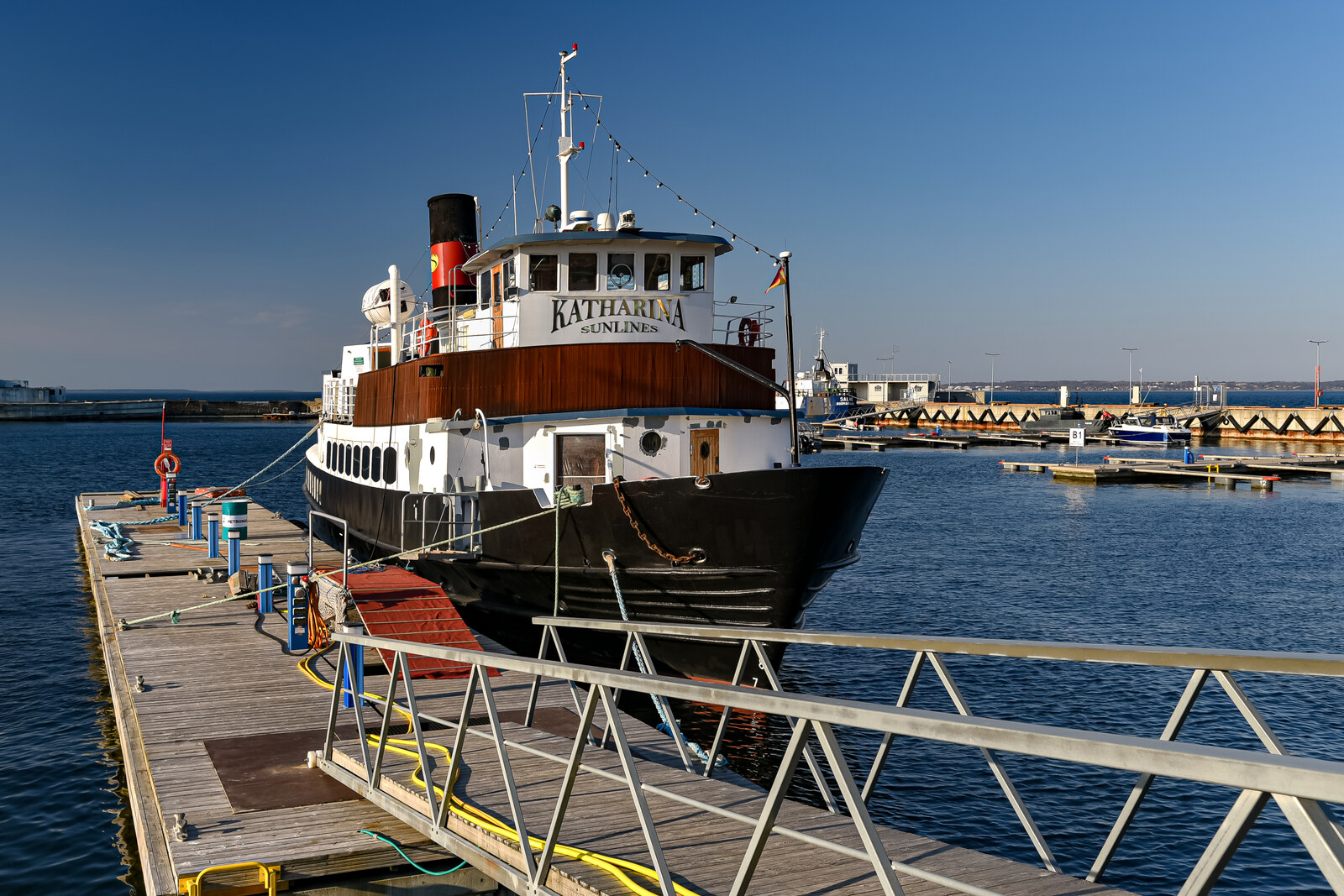
Look around first
What to notice
- Large brick buildings
- Rail slipway
- Winch by the water
- Yachts at the piers
The story of the place
The deep water of Reval Bay made it possible to test submarines right by the shore, while the railway and neighboring enterprises brought in components, diesel engines, and armament. Submarine hulls were assembled in the brick buildings; a sloping rail track with a winch led to the bay, and the hulls were launched along it. When submarine production ceased, ships continued to be built and repaired here for a long time. The PROTO Invention Factory occupied the former foundry, and the track by the water remained from the shipyard.
Yachts now stand by the water, and an art center, an invention museum, and restaurants have opened in the former factory buildings. The name “Noblessner” remains from the enterprise for which the harbor itself, the waterfront, and these large brick buildings appeared. It is made up of two surnames: Nobel and Lessner.
After its defeat in the Russo-Japanese War, the naval department of the Russian Empire was urgently ordering new ships for the Baltic Fleet. Emanuel Nobel, Alfred Nobel’s nephew, managed the family oil business and a marine-diesel factory. Arthur Lessner owned engineering enterprises that produced torpedoes, torpedo tubes, and other naval equipment. Both were already making money from military orders, but they built separate components. Now they were to take on an entire submarine.
In the spring of nineteen twelve, Nobel & Lessner combined their enterprises into a joint-stock company with capital of two million rubles. The new company was named after both owners: “Nobel & Lessner” was condensed into “Noblessner.” They brought in the naval engineer Ivan Bubnov, who was seeking to put his large seagoing submarine into series production. Bubnov reworked the earlier design into the future Bars type.
When the Naval General Staff announced a competition, the new company still had neither workshops nor slipways here, nor even a purchased plot of land. The partners submitted a design together with a commitment to build a specialized submarine shipyard in Reval. The risk paid off: Bubnov’s design was accepted, and Noblessner was commissioned to build twelve submarines.
Saint Petersburg and Kronstadt were poorly suited to such a factory: shallow water hindered submarine trials, and ice interrupted navigation for a long time. In Reval Bay, deep water lay close to the railway and industrial enterprises. Components and Nobel’s diesel engines were delivered here from Saint Petersburg, Lessner’s factories supplied the submarines with armament, and the hulls were assembled and launched from this shore.
From nineteen thirteen to nineteen seventeen, twelve submarines were built here. The partners then received an order for another twenty large ocean-going submarines and expanded the enterprise. In nineteen sixteen, the shipyard was renamed the Petrovskaya Shipyard—it was the same Nobel & Lessner factory. The revolution disrupted the new order; after Estonia gained independence, submarine production ceased, and in nineteen twenty-five the company went bankrupt.
Ships continued to be built and repaired here until August two thousand eighteen. The PROTO Invention Factory now occupies the former foundry, and two of its halls bear the names of Nobel and Lessner. A rail slipway with a winch survives by the shore: along these rails, hulls assembled at the shipyard were pulled to the water.
Useful on site
The port area is accessible around the clock. “PROTO”: usually Tue–Sun 11:00–18:00, daily in July 10:00–19:00. “Kai”: Wed–Sun 12:00–18:00. Restaurants, bars, and events have separate hours.
Checked: June 30, 2026. Check the official source before visiting.You can walk freely along the publicly accessible shore; exhibitions, the PROTO Invention Factory, and other interior spaces are visited separately.