 Guide On Map
Djurgården: museums, rides, and gardens
From Djurgårdsbron along the museum waterfront to Rosendal
Guide On Map on your phone
Open the walk like a regular app
It takes about 10 seconds to install. No app store needed.
The whole path
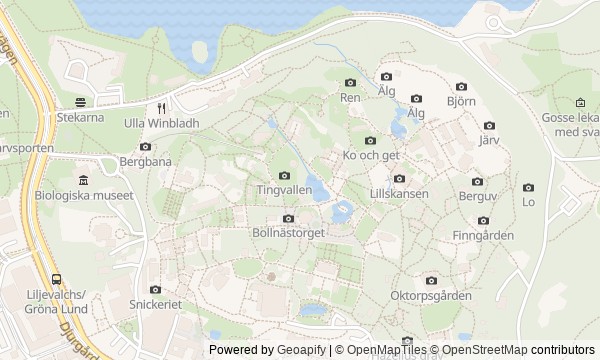
Route map
About the walk
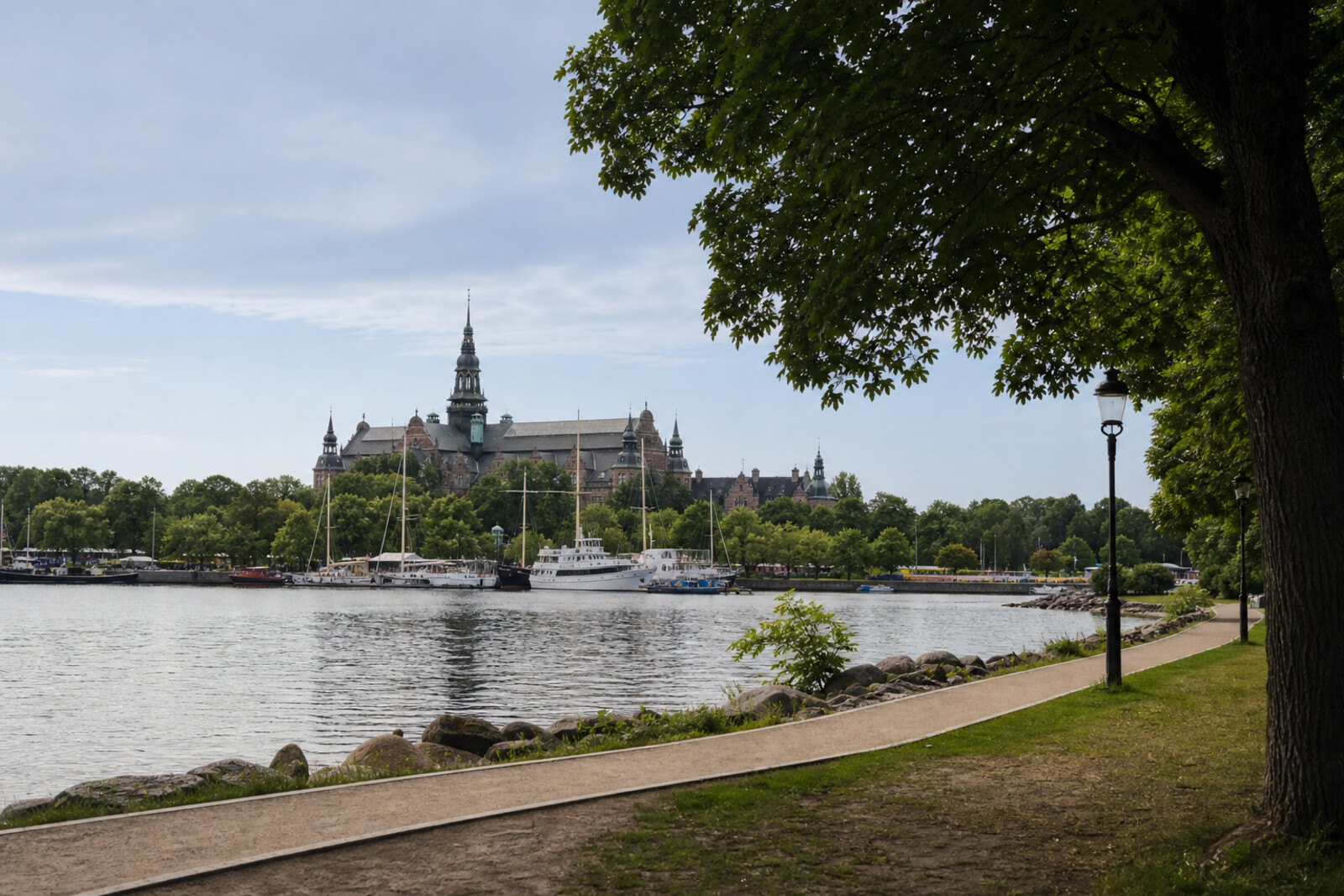
You will enter Djurgården across a ceremonial bridge and follow the museum waterfront. First, a northern palace will rise before you; then the road will lead to the ship that got an entire museum built around it. Nearby are a maritime cemetery and a former shipyard. After that, the walk changes tone: rides, old farmsteads, greenhouses, vegetable beds, and apple trees.
But this will not be a parade of sights. You will hear about the people who collected household objects, tested a ship, worked in historic houses, and brought a neglected garden back into use. You will learn why researchers had to reopen a sealed grave and why a wedding did not end the rivalry between two neighboring parks. The answers will come at the stops themselves.
The stories turn on decisions, mistakes, and manual work, without museum grandeur. By the end, you will be able to connect the bridge, the ship, the fairground street, the relocated houses, and the old apple trees into one story of Djurgården.
Why this order
The bridge comes first because it separates the city from the former closed royal grounds. Just beyond it, the Nordic Museum shows how people on Djurgården began collecting ways of life that were disappearing. Across from it, the Vasa Museum takes that idea to its limit: here, an almost complete ship was preserved. The cemetery behind the museum building follows next because it brings back the people found inside the vessel and shows the limits of museum knowledge. From the graves, the road along the former Galärvarvet reaches Gröna Lund: beside naval service, another Djurgården appears—a place of commercial entertainment. Through Allmänna gränd and along Djurgårdsvägen, the route climbs toward Skansen, where Hazelius's museum idea became paid work in relocated houses. The final stretch to Rosendal continues the theme of work without a historical display: harvest, kitchen, bakery, and compost remain parts of a working operation.
Those who want a substantial walk around Djurgården rather than choosing a single museum Fans of maritime history, urban curiosities, and human biographies Those interested in museums as the result of work, risk, and private initiative
Those looking for a short overview of Stockholm's old center Those who want to spend all their time exploring one museum in depth Those who only want palaces and grand royal history
Before you go
Decide in advance where you want to go inside: the Nordic Museum, the Vasa Museum, Gröna Lund, and Skansen each have their own visiting arrangements, and a full visit to any one of them can easily change the length of your day. Before setting out, check the official pages for your chosen places: opening hours, available entrances, and programs depend on the date and season. For Skansen, use the main entrance at Djurgårdsslätten 49–51; Hazeliusporten and the funicular may operate differently. Wear comfortable shoes and be ready to move from waterfronts to an uphill stretch and park paths. It is best to plan for water and a food break before tiredness starts setting the pace.
When to go
Start in the first half of the day, especially if you plan to visit a museum. Allow about three hours for a sequential look at the outdoor details and for listening to the stories, without long stops inside. One large museum turns the walk into half a day, while combining Vasa with Skansen can take up almost the whole day. Do not rush the first stops: after Gröna Lund come an uphill stretch and a longer walk to the garden.
Backup plan
If you cannot get inside a museum, keep the order: at the Nordic Museum, you can still take in the portal and reliefs; at Vasa, the building's distinctive form and its masts are visible; and the layout of Gröna Lund reads well through the fence. Do not buy an amusement-park ticket solely to continue the route—go around it as a separate area. In rain, reduce the cemetery, Skansen, and the garden to their key outdoor details, and spend more time in one covered museum. If Skansen's main entrance is closed, check the official information rather than automatically heading to Hazeliusporten. If you are very tired, end the walk at Skansen: the road to Rosendal is worthwhile precisely at an unhurried pace.
Route conditions
Surface. Paved — 1.5 km; unpaved — 748 m (data covers 73% of the route)
Stairs. Flights: 3, 108 m in total
Access. Wheelchair — no; stroller — limited (stairs)
Facilities. Toilets — 21; drinking water — 1
Elevation. Ascent — 42 m; descent — 27 m
OpenStreetMap extract of July 9, 2026: database data, not a check on the ground. Data © OpenStreetMap contributors, ODbL licence
Walk plan
Open in maps ↗- 1
Djurgårdsbron
Here the transition from the city to the former royal grounds begins, and you will learn why the current crossing was preceded by a series of unreliable bridges. - 2
Nordic Museum
This stop will show how the household collection of two spouses grew into a museum for which only part of the planned building was ever constructed. - 3
Vasa Museum
The route’s main stop brings together a dangerous test, a first voyage, a search on the seabed, and the ship’s rescue over many years. - 4
Galärvarv Cemetery
Here, the ship's story continues with the fate of the people found and the careful attempt to restore a name to one of them. - 5
Gröna Lund
The park will help you see Djurgården not as a museum preserve, but as a place of family business, competition, and risky decisions. - 6
Skansen
Here Hazelius’s museum idea unfolds through the work of women who replaced the costumed mannequins in the old houses. - 7
Rosendals Trädgård
The finale will show an old training farm that gardeners turned into a self-financing cycle from garden bed to kitchen and back again.
Route features
Everything you need stays in the browser
Progress, saves and your trip plan are stored on this device.
Add Guide On Map to your home screen so the walk opens outside the browser.
How we handle sources, maps and corrections: our editorial standards