 Guide On Map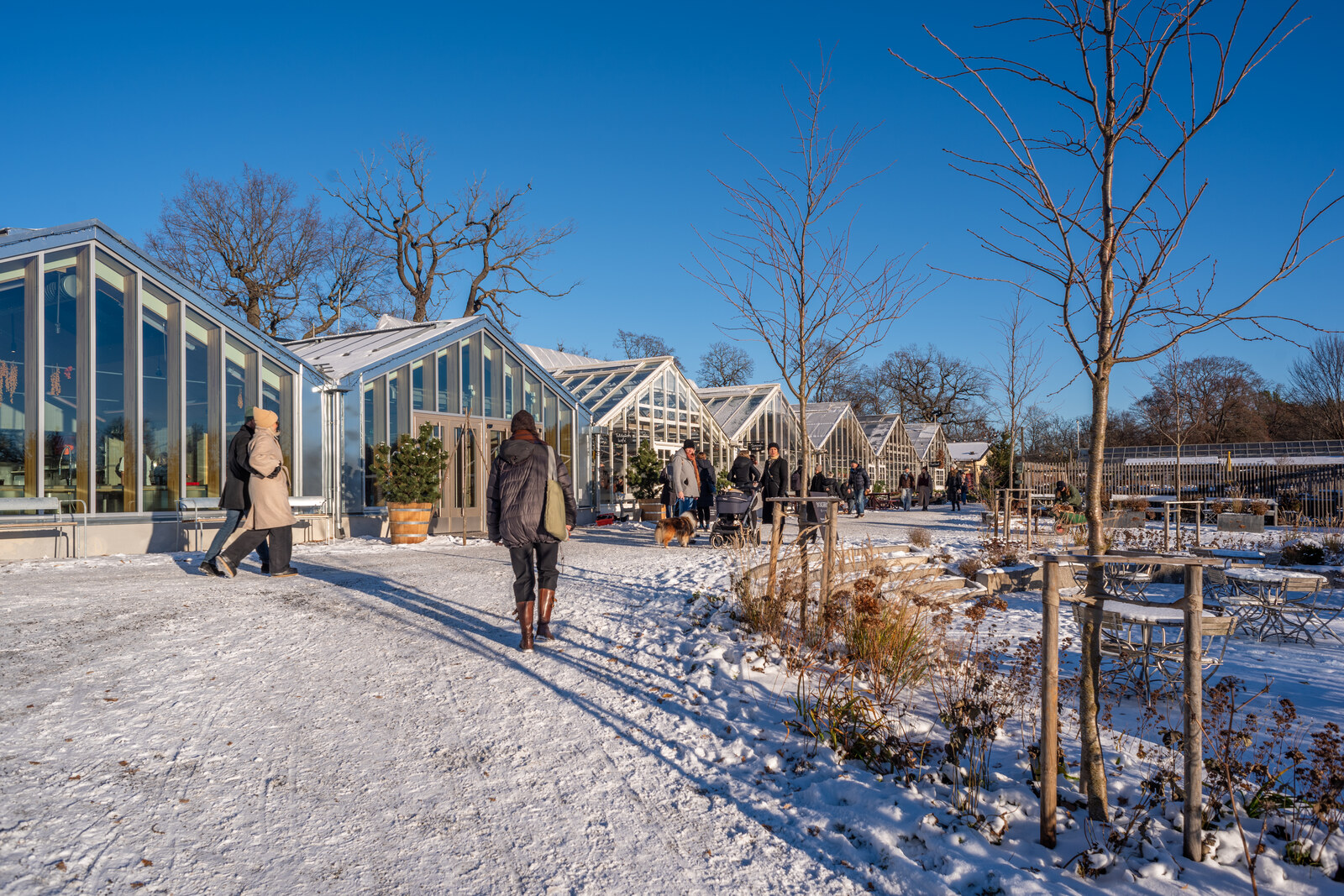
Look around first
What to notice
- Old apple trees
- Greenhouses
- Open garden beds
- The bakery's stone oven
The story of the place
The greenhouses, fruit trees, and vegetable plots remain from the training farm at Rosendal Palace. Future professional gardeners were taught here using living plantings: the winter garden was set aside for classrooms, and thousands of trees and shrubs were planted around it. After the school closed, the land was leased to private farms, but the apple trees from the first planting continue to bear fruit. The bakery was built around an already completed sixteen-ton stone oven.
One foundation runs the greenhouses, garden beds, orchard, café, shop, and bakery. The harvest goes to the kitchen and the counter, the proceeds pay for the care of the plantings, and food waste returns to the beds as compost. This arrangement was devised by gardeners who, in the early nineteen eighties, inherited several dilapidated greenhouses and a farm that had fallen into decline.
Horticulture took root here much earlier, thanks to an agreement made by Queen Josefina. In eighteen sixty-one, she needed to maintain the park at the neighboring Rosendal Palace. The Swedish Horticultural Society, by contrast, lacked space for a school. Queen Josefina gave the society a terrace, the yard by the stables, part of a meadow, the winter garden, and the greenhouses for fifty years. In return, the gardeners maintained the palace park.
The winter garden was turned into a teaching building. Around the palace, about two thousand trees and shrubs were planted: students could study plants not from drawings, but by growing and pruning them. From eighteen sixty-two to nineteen eleven, Sweden's first professional school for gardeners operated here. Its graduates opened farms of their own and took positions as municipal gardeners; one of them, Alfred Medin, then spent almost forty years in charge of Stockholm's public plantings.
When the fifty-year agreement ended, the society left and the school closed. The Royal Djurgården Administration began leasing plots to private garden farms. By the early nineteen eighties, the old system had run out of steam. Stockholm's municipal gardener proposed finding a different purpose for Rosendal and approached the horticultural seminar in Järna.
Lars Krantz and Pål Borg worked there—young gardeners trained in biodynamic agriculture. They wanted to create an open farm in the city, where growing plants would feed people and serve as a lesson at the same time. In nineteen eighty-two, Krantz and Borg established the Rosendal Garden Foundation, and the following spring they held the first sowing season here.
They did not receive the land and buildings as property: the foundation became a tenant of the Royal Djurgården Administration. It also had no private owners to whom profits could be paid. The garden's upkeep was to be paid for through sales of plants and vegetables, classes, and food for visitors. That is how the café and shop became part of the farm's operation: without their income, the foundation could not maintain the publicly accessible garden. It still operates without regular government or municipal subsidies, and spends any possible surplus here.
On these beds, the biodynamic method means very tangible actions. The gardeners rotate crops, sow plants to fertilize the soil, make compost, and bring in manure from animals at Skansen. Vegetables, herbs, and fruit go to the shop or the kitchen. In nineteen ninety-eight, they first built a sixteen-ton stone oven for the bakery, and then erected the building around it.
Among the current apple trees are trees planted in eighteen sixty-one, when Queen Josefina transferred this land to the horticultural society. Their apples are still harvested and pressed here; leftovers from the kitchen go into a composting machine, and the resulting compost is carried by the gardeners back to the old training fields.
Useful on site
Garden areas are accessible during daylight hours. The café and plant shop daily 11:00–17:00; the farm shop and wood-fired bakery daily 10:00–17:00. Check the official website for holiday closures and private events.
Checked: June 29, 2026. Check the official source before visiting.The garden remains a working farm: stay on the permitted paths, do not step into the beds, and ask on site which seasonal activities are available. The café, bakery, and flower cutting may follow their own schedules, so do not make them a mandatory condition of the finale.