 Guide On Map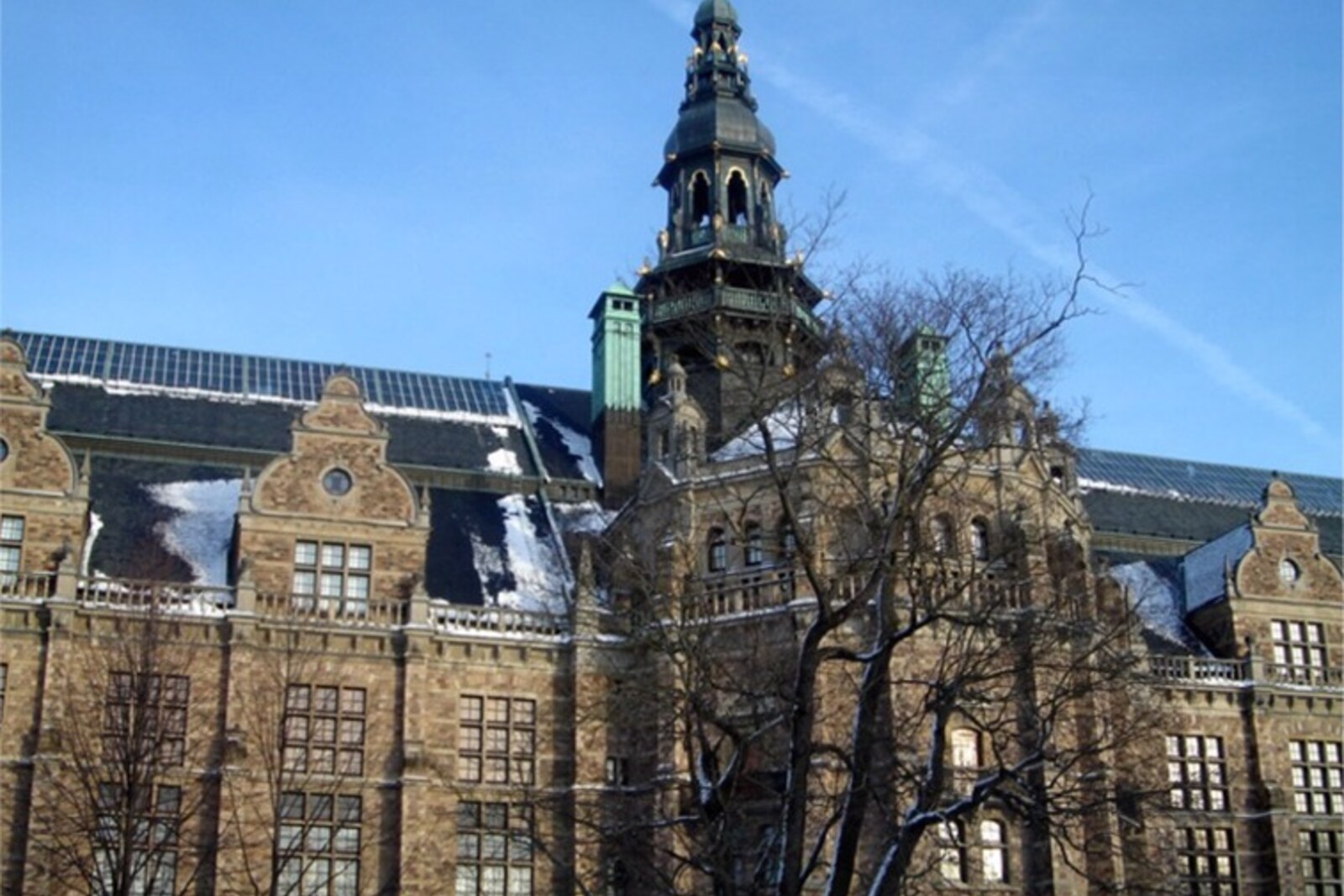
Look around first
What to notice
- The only wing that was built
- The main façade
- The large central hall
The story of the place
Behind the main façade, only one part of the grand plan survives: the architect planned four wings and two inner courtyards, but there was not enough money for the entire complex. That is why the wing resembles a finished palace, although at its center is a vast hall intended for folk celebrations. Visitors came here later, and now these walls house the collection of objects and accounts of everyday life in Sweden and other northern countries. The collections also preserve the first object in the collection, a handwoven wool skirt from Dalarna.
On October twenty-fourth, eighteen eighty-eight, Arthur Hazelius, a former teacher and collector of objects of everyday life, took a spade here and turned the first sod. Final plans for the future museum did not yet exist. King Oscar II granted the foundation land on Djurgården on one condition: construction had to begin within five years. The deadline was approaching, and the symbolic work with the spade made it possible to keep the site.
Arthur and his wife Sofi began the collection sixteen years earlier. He had already left teaching and lived on the earnings of a freelance writer; she translated from English, and the couple kept lodgers. Sofi was Arthur's only assistant in the new undertaking. Peasant headdresses, chests, clothing, and tools accumulated in their apartment. Money set aside for a new frock coat or a winter coat sometimes went toward buying the next rarity.
The couple opened their first exhibition in rented premises under the name Scandinavian Ethnographic Collection. A few months later, Sofi died of puerperal fever after giving birth to a son. Arthur was left with an infant and continued their shared work. The collection grew, the rooms became cramped, and in eighteen eighty Hazelius transferred the collection to a foundation he had established for the Swedish people. The present name appeared then. The Swedish inscription on the façade means “Nordic Museum”: the charter required the preservation of the memory of the lives of Swedes and northern peoples related to them.
The architect Isak Gustaf Clason designed a four-wing fortress with two inner courtyards for the foundation. There were not enough donations for the entire plan, and after the General Art and Industrial Exposition of Stockholm (1897), the boundaries of the site changed. Three wings remained on paper. One wing was built, with a vast hall originally intended for folk celebrations. It is this single wing that today looks like a finished palace.
Arthur Hazelius died in nineteen one, while work was still underway here. The first visitors entered the museum only six years later. From the beginning, the building served as a museum; inside, they still collect objects and stories about everyday life in Sweden and other northern countries. The collections also hold object number one: a handwoven wool skirt that Arthur and Sofi bought during a journey through Dalarna in eighteen seventy-two.
Useful on site
Daily 10:00–17:00; from September through May, Wednesdays 10:00–20:00. Some children's areas and temporary exhibitions may have their own hours.
Checked: June 29, 2026. Check the official source before visiting.You can read the main idea of this stop from the façade without visiting the exhibition. If you want to see the collections and the hall with Gustav Vasa, set aside separate time for the museum and check the admission conditions in advance.