 Guide On Map
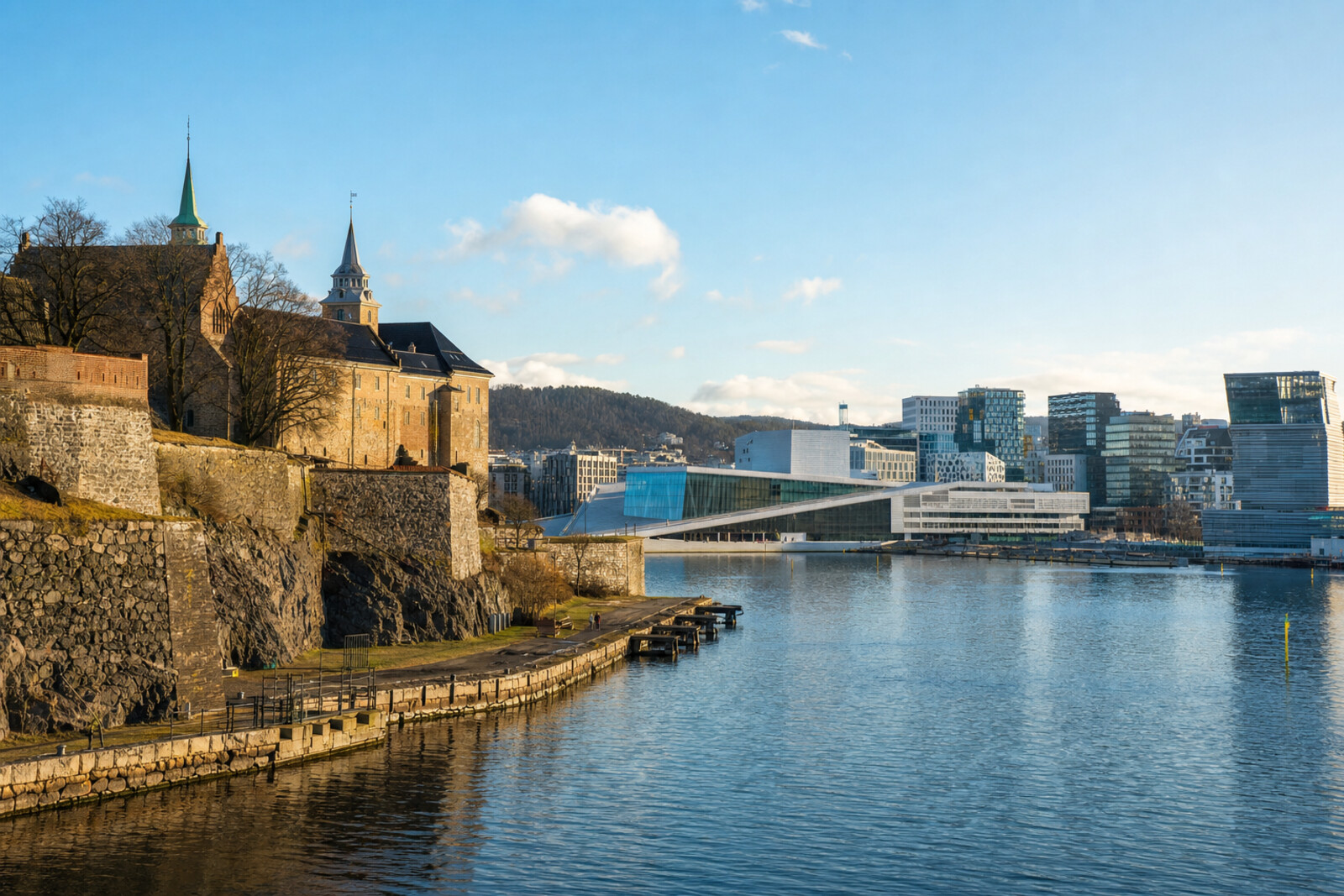
Oslo by the fjord: City Hall, Akershus Fortress and Bjørvika
From Rådhusplassen along the fortress to Bjørvika and Barcode
Guide On Map on your phone
Open the walk like a regular app
It takes about 10 seconds to install. No app store needed.
The whole path
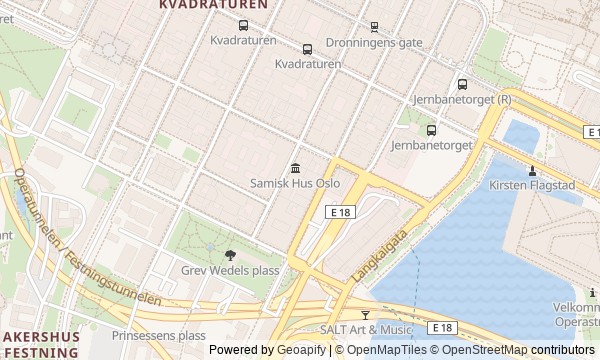
Route map
About the walk
You will begin by the fjord, between Oslo City Hall and Honnørbrygga, then head east along Akershus Fortress. Stone ramparts will give way to the straight streets of Christiania; after them, the route reaches the water again—by way of the white roof of the Oslo Opera House, the MUNCH tower, the library, and the steel spans of Barcode.
This is a walk about how kings, residents, builders, and caretakers repeatedly moved and reassembled the center by the harbor. There will be no sweeping chronology. Every turn begins with something that does not fit neatly on a postcard: a king's hesitation before landing, stone from vanished churches, a manuscript with no reader, a boat beneath a banking district. The answers come only at the stops.
By the end, you will be able to point out where the old harbor lay beneath the new buildings and why Oslo's present-day center ended up precisely in Bjørvika.
Why this order
Rådhusplassen starts the route where the city faces the fjord; the neighboring ramparts of Akershus Fortress explain why power took hold on this headland. From the fortress, the route reaches Christiania Torv, where it becomes clear how military protection determined the site and layout of the new city. Straight Rådhusgata carries that royal grid to Bjørvika, where the Oslo Opera House was the first to return residents to the harbor shore. Next comes MUNCH, the next major move of culture to the water. The return to the Oslo Opera House leads to Deichman Bjørvika and shifts the conversation from stage and museum heritage to texts left for future readers. The final crossing along Barcode ends at Akrobaten Bridge: among the new buildings, a vessel from the former harbor appears, and the last stretch connects contemporary development with the ground beneath it.
Those who want to connect Oslo's old center with new Bjørvika. Those interested in people's decisions and the fates of objects, rather than a list of dates. Those who enjoy routes where architecture is tested against the history of a place.
Those looking for a walk only through a medieval fortress. Those who need an overview of Oslo's main sights. Those who prefer a light story without wars, fires, and loss.
Before you go
Choose shoes with good grip: near the fortress, there are uneven stones and slopes, while the light surfaces of the Oslo Opera House can be slippery after rain. The waterfront offers little shelter from the wind, so an extra layer will help even when the city center feels calm. The main narrative works outdoors, but entry to Oslo City Hall, the fortress exhibitions, the Oslo Opera House, and MUNCH is subject to separate rules; plan any performance, tour, or museum visit on your own. Do not assume that all workshops and special spaces at Deichman Bjørvika will be freely accessible.
When to go
Give the route an unhurried half-day and begin in good natural light. That leaves time to linger at the fortress and the old square, then reach Bjørvika when the glass, water, and white roof of the Oslo Opera House change most noticeably with the sky.
Backup plan
If wind or rain picks up, shorten the stops in the open areas of Akershus Fortress and do not climb the wet sloping surfaces of the Oslo Opera House. Take in the building's overall silhouette from outside, then use Deichman Bjørvika as a quiet indoor pause if the library is accessible. At MUNCH, decide in advance whether you are ready for a separate museum visit; without one, the story still works through the façade and the tower's position by the water. You can skip the final exit onto Akrobaten Bridge in slippery conditions or poor visibility and finish the walk at street level among the buildings of Bjørvika.
Route conditions
Surface. Paved — 4.3 km; unpaved — 49 m
Stairs. Flights: 1, 7 m in total
Access. Wheelchair — no; stroller — limited (stairs)
Facilities. Toilets — 7; drinking water — 4
Elevation. Ascent — 37 m; descent — 32 m
OpenStreetMap extract of June 18, 2026: database data, not a check on the ground. Data © OpenStreetMap contributors, ODbL licence
Walk plan
Open in maps ↗- 1
Rådhusplassen
Here, the route begins with a ceremonial waterfront and the doubt with which the king returned to his subjects. - 2
Akershus from the outer grounds
This stop will show the price the townspeople paid for the fortress that its commander decided to hold. - 3
Christiania Torv and the old administrative layer
Here it will become clear how a royal order turned a forced relocation into the plan for a new administrative center. - 4
Oslo Opera House
The story of a stage of its own begins with a woman who had to support part of the national company with her own money. - 5
MUNCH
This stop connects the artist’s wartime will to the unusual delivery of two canvases to the new museum. - 6
Deichman Bjørvika
Here the route shifts from heritage that has already been preserved to books that today’s readers will not be shown. - 7
Akrobaten Bridge and Barcode
The finale will take the new Bjørvika back to the old harbor through a vessel found beneath the banking district.
Route features
Everything you need stays in the browser
Progress, saves and your trip plan are stored on this device.
Add Guide On Map to your home screen so the walk opens outside the browser.
How we handle sources, maps and corrections: our editorial standards