 Guide On Map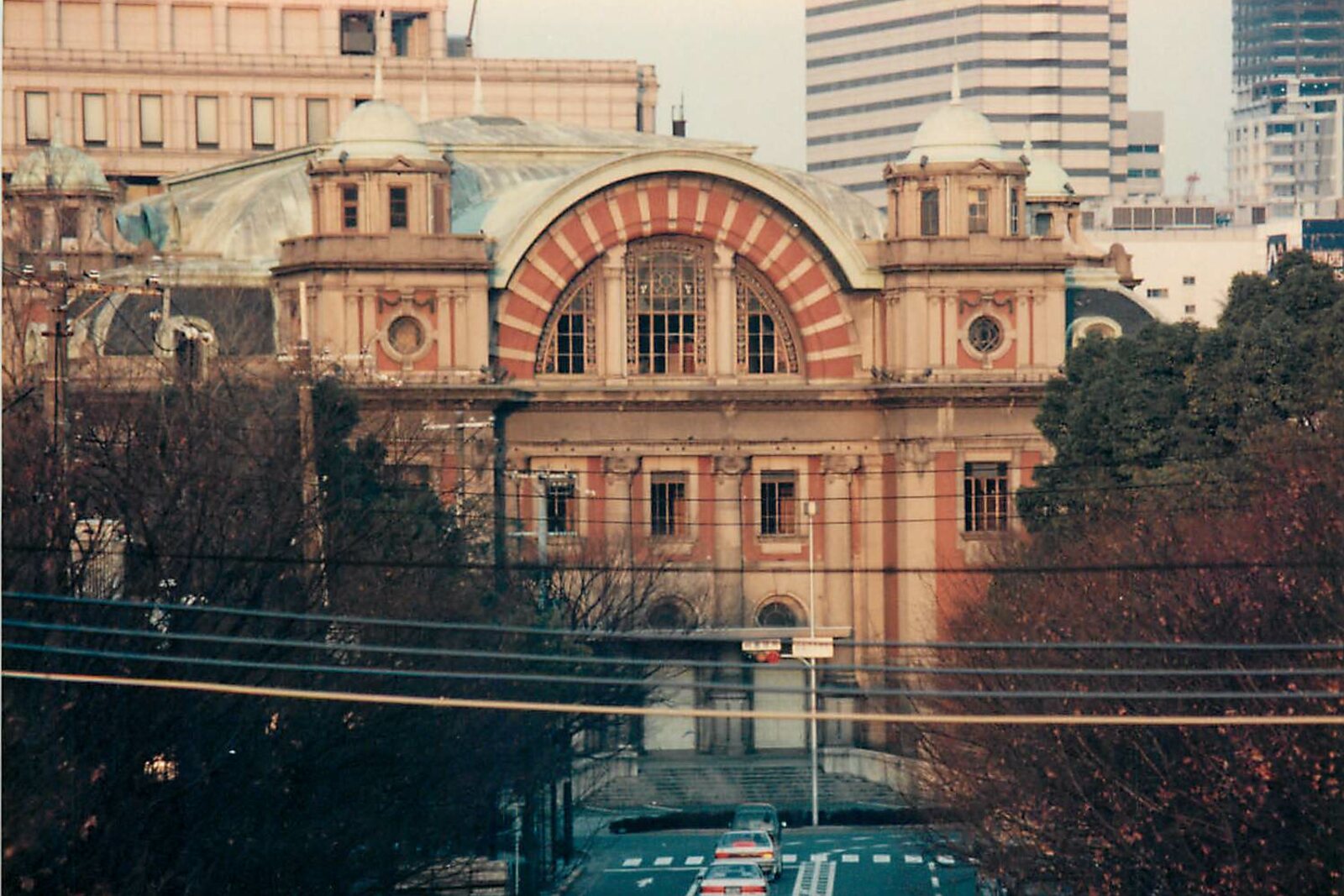
Look around first
What to notice
- Red-brick facade
- Main entrance
The story of the place
At the eastern end of Nakanoshima, the red-brick facade and main entrance lead into a large public hall. A small wooden meeting room once stood nearby, while the new building received a stage and rooms for lectures, concerts, and city meetings. Concerts, conferences, and association activities still take place here, and beneath the hall are kept the belongings of the man thanks to whom it came into being.
This red-brick hall was built with the money of Iwamoto Einosuke, a stockbroker from neighboring Kitahama. He made money from fluctuations in market prices, risking his own fortune, and one day gave Osaka one million yen—half of his father’s inheritance and another half-million from his own funds.
The idea for such a gift came to Iwamoto in nineteen oh nine. He traveled to the United States with a Japanese business delegation and saw wealthy entrepreneurs paying for libraries, schools, and public buildings. During the trip, his father died. Iwamoto returned with an inheritance and the intention of investing the money in a structure that city residents could use.
He asked Shibusawa Eiichi for advice—an entrepreneur who helped turn private donations into lasting public institutions. Shibusawa suggested creating a separate fund: then the fate of the money would not depend on the donor’s own future success. A park, a school, and other options were discussed. According to family tradition, Iwamoto’s mother insisted that the gift should be accessible to everyone. That is how Osaka City Central Public Hall was chosen.
The eastern end of Nakanoshima was set aside for it, where a small wooden meeting hall already stood nearby. Iwamoto’s million made it possible to replace it with a building with a large stage and rooms for lectures, concerts, and city meetings. Construction began in nineteen thirteen.
By then, Iwamoto had left the stock exchange, but he soon returned to trading. During the First World War, market prices rose sharply, while his deals brought enormous losses. People around him advised him to ask the city to return at least part of the million. Iwamoto refused: he called asking for back something once given a disgrace for an Osaka merchant.
In October nineteen sixteen, Iwamoto shot himself at home. He remained alive for five days. Stockbrokers, many of whom owed him because of earlier deals, kept lights burning all night at Osaka Tenmangu Shrine and prayed for his recovery. Iwamoto died on October twenty-seventh, at the age of thirty-nine. The city did not return the donation, and the fund created in advance continued the construction.
Osaka City Central Public Hall opened two years after his death. Operas were staged here, lectures were given, and meetings were held; the same rooms are still rented out for concerts, conferences, and activities of city associations. Items connected with Iwamoto are kept in the basement exhibition. Above them, the hall he paid for in full and never lived to see completed still operates.
Useful on site
The facade provides a complete ending to the route. If you want to see the interiors or attend an event, check the separate access conditions in advance.