 Guide On Map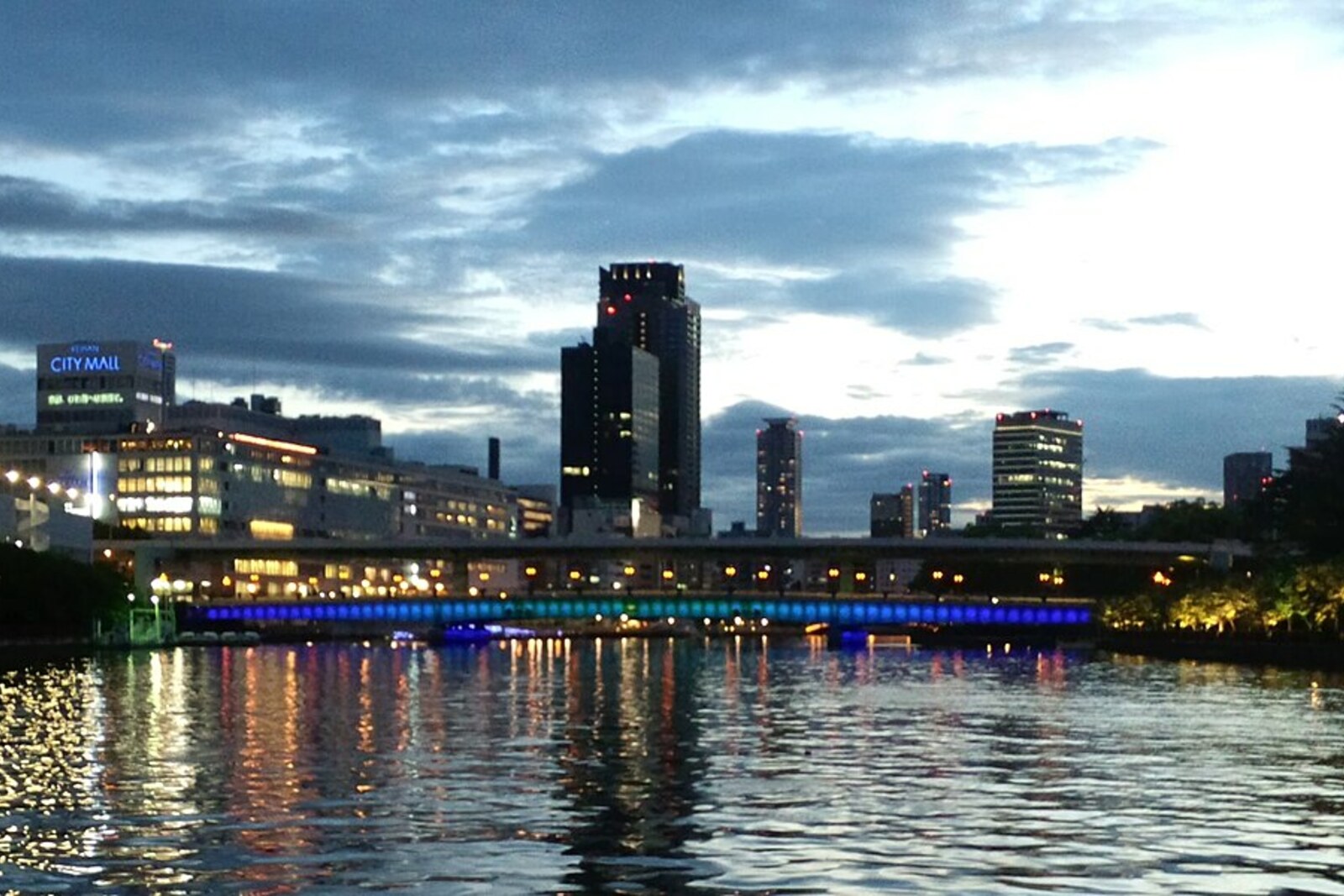
Look around first
What to notice
- Temmabashi Bridge
- Hachikenya-hama Pier
- The stretch of river between the bridge and the pier
The story of the place
In seventeen thirty-eight, boatmen delivering cargo along the Yodo River demanded the abolition of one particularly galling charge. Their vessels reached Temmabashi Bridge, but the carriers had fewer than a hundred ken—about one hundred eighty meters—left to go. Very nearby was Hachikenya-hama Pier, where warehouse and inn owners awaited the goods. Yet they were not allowed to cover these last meters in their own boats.
Temmabashi Bridge connected the city with the Temma district on the north bank and served as the boundary of the river domain. Vessels arriving along the Yodo River were stopped here; bales and barrels were transferred to boats belonging to the city guild, and its men then carried the goods to Hachikenya-hama Pier. For this short transport, they charged a separate fee—ko-mawari-chin, the small freight charge.
Members of the uwani-bune and cha-bune guild made their living precisely from such jobs. A large boat could hold up to twenty koku of cargo and was worked by two boatmen; a smaller one, designed for ten koku, could be handled by one. The city canals were assigned to them: outside river vessels were not allowed beyond Temmabashi Bridge or neighboring Kyobashi Bridge. At the beginning of the seventeenth century, about two thousand six hundred such boats were registered under the supervision of the city magistrate. Mandatory transshipment supported an entire industry.
The carriers from the Yodo River filed a complaint with the city magistrate—the official who governed Osaka and settled commercial disputes. They had already carried the goods along the river and wanted to complete the journey themselves; handing the cargo to competitors right by the pier and paying for the last hundred ken seemed unfair to them. The magistrate rejected the complaint and kept the old arrangement. The visiting boatmen lost the final stretch and its earnings, while the city guild retained the exclusive right to make deliveries.
The wooden Temmabashi Bridge stood slightly east of the present bridge. Hachikenya-hama Pier is operating again on the south bank, though now it receives sightseeing boats. Between it and the bridge lies that very short stretch over which the boatmen went to court almost three centuries ago—and still paid.
Useful on site
Choose a spot away from pedestrian traffic and road noise. Take normal care by the water's edge, especially in rainy or windy weather.