 Guide On Map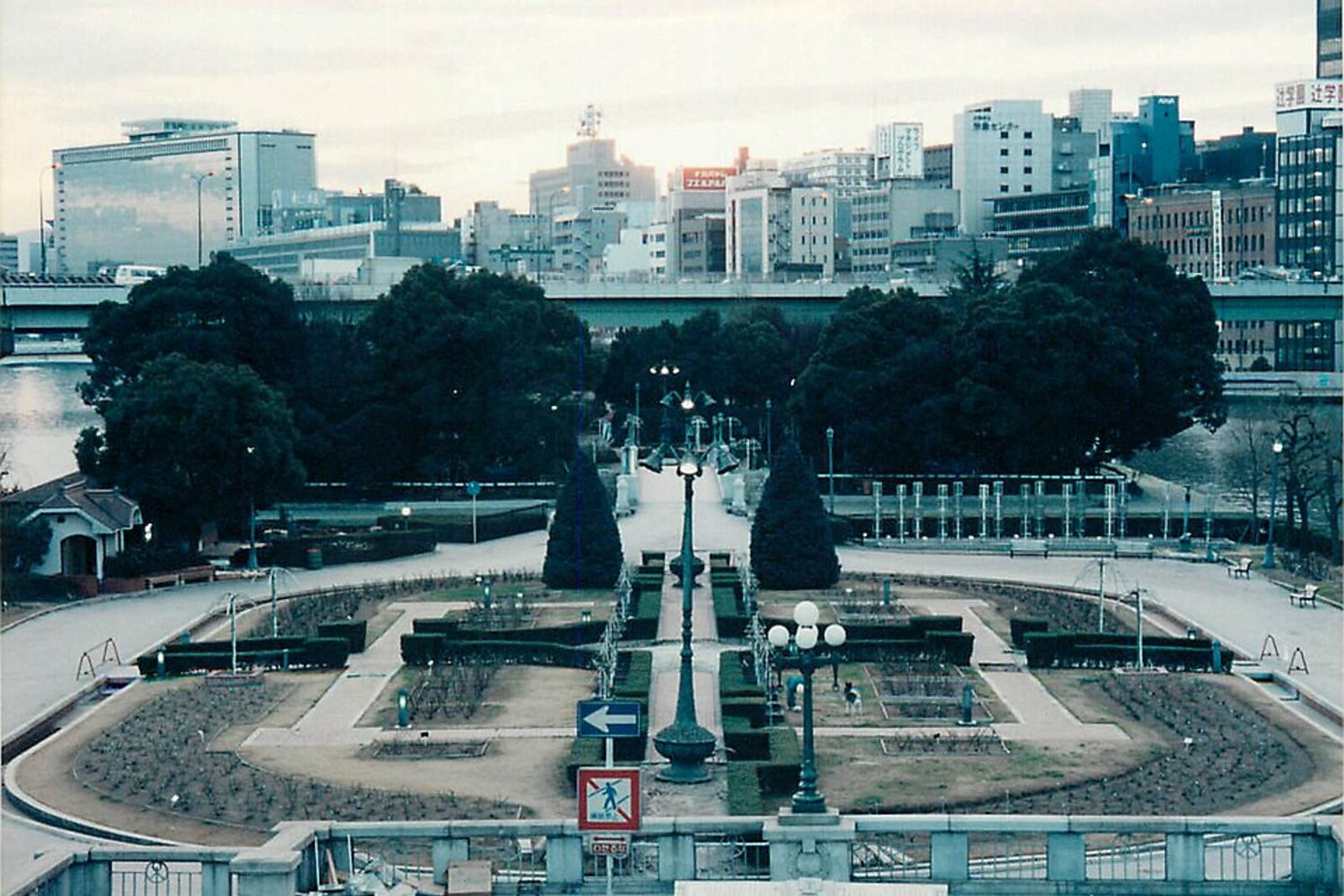
Look around first
What to notice
- Rose garden flower beds
- Two branches of the river
- Paths on the eastern part of the island
The story of the place
The rose garden occupies the eastern part of Nakanoshima: its paths and flower beds lie between two branches of the river, on land that did not exist here before. When this plot was joined to the old city park, a garden for strolling was created here. After its renewal in two thousand nine, it brought together about three hundred ten varieties of roses, with the plantings arranged according to the history of their breeding. The soil beneath the flower beds came here during work on the river and much later became the foundation for the garden.
Until the second half of the nineteenth century, a river flowed where the present rose garden stands. The old Nakanoshima ended farther west, near Osaka City Central Public Hall. At its tip stood the warehouse compound of the Yamazaki family, owners of the small Nariwa Domain in what is now Okayama Prefecture. This is where the cape’s former name, Yamazaki-no-hana, came from.
Farmers gave landowners part of their harvest in rice, but money was needed to settle accounts with suppliers and creditors. Managers brought the sacks to Osaka and held auctions. The merchant who paid received a rice receipt, which could be used to collect the goods from the specified warehouse. The receipts were resold, sometimes several times, while the sacks remained in place. That made Nakanoshima convenient precisely as a narrow island between two branches of the river: boats came up to the warehouses, while merchants worked beside the rice market.
In eighteen seventy-one, the former domains were abolished. Their warehouse compounds passed to the state and were then sold off. Fourteen years later, a flood of the Yodo River inundated a huge part of Osaka, swept away more than fifteen hundred houses, and destroyed bridges across the city’s branches of the river.
Twenty-four-year-old Ohashi Fusataro was then preparing to become a lawyer in Tokyo. When he learned that his home village, now a district of Osaka, was among the flooded places, he returned and devoted himself to one cause: pressing for a complete reconstruction of the Yodo River’s channel. Ohashi earned his living trading rice, became a prefectural assembly member, and spent years traveling to the capital with petitions. He paid for those trips and the campaign from his own funds; the family home was eventually taken for debt, and Ohashi had to live in rented houses.
In eighteen ninety-six, parliament approved a law that allowed the work to begin. The engineer Okino Tadao prepared a plan for a new channel and protective works. Construction required land from about three thousand owners; Ohashi persuaded them to agree to the expropriation of their plots. Workers brought the soil excavated while clearing the river to the eastern tip of Nakanoshima. In this way, the island was extended beyond the former cape and the line of the old Namba Bridge, gradually bringing the embankment as far as Tenjimbashi Bridge.
On the old part of the island, the city had already opened its first public park. The new embankment was joined to it, and in nineteen eighty a rose garden was created here. After the reconstruction in two thousand nine, it contained about three hundred ten varieties, with the flower beds arranged according to the history of rose breeding.
The Yamazaki family warehouse stood farther west, at the island’s former tip. None of its buildings remain. Beneath the paths and rose beds lies soil excavated during the work Ohashi pressed for after the flood.
Useful on site
Blooming depends on the season and the weather. If there are few flowers, read the variety labels and trace how the plantings organize movement across the former warehouse grounds.