 Guide On Map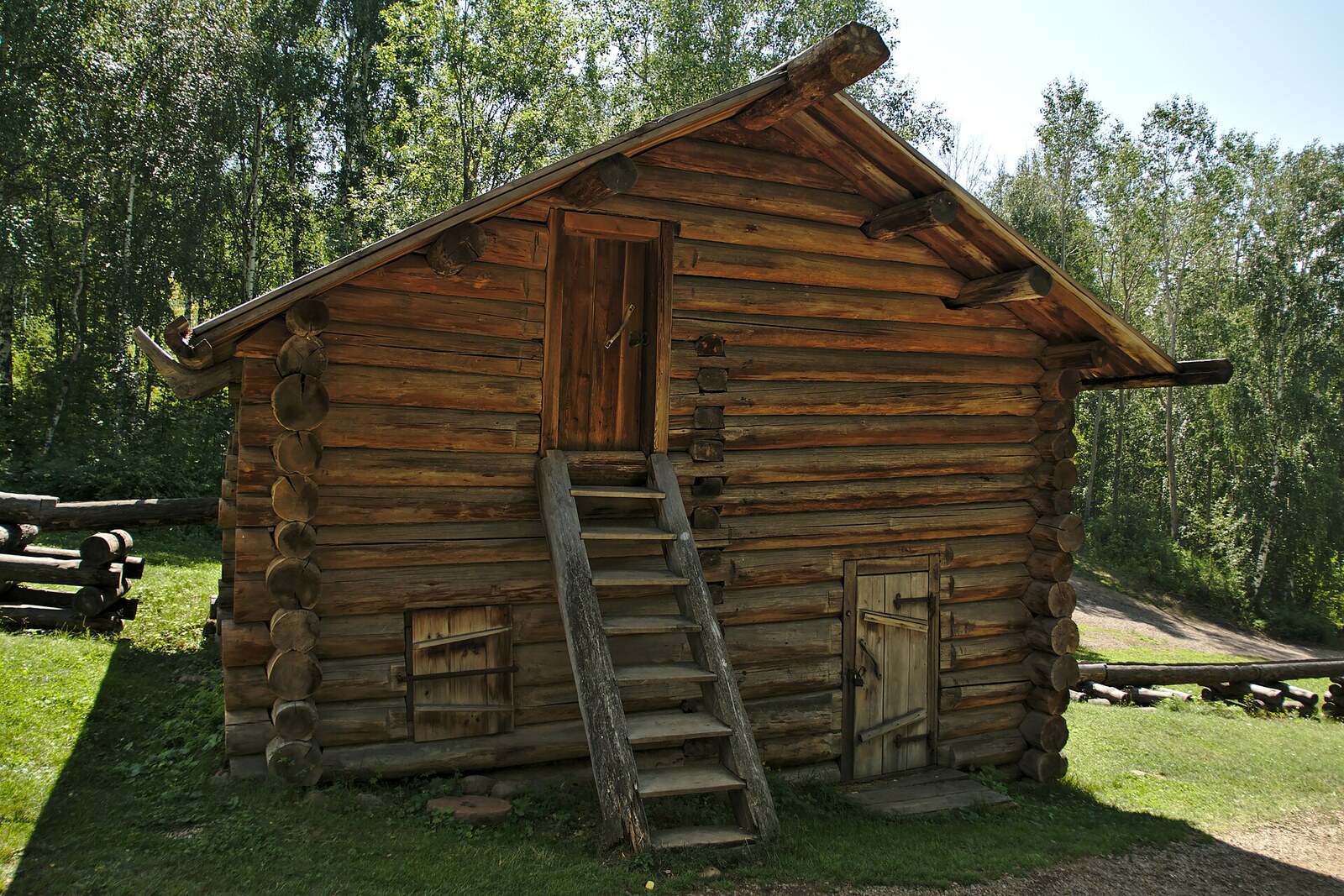
Look around first
What to notice
- Three mill log structures
- Dam
- Wooden chutes
- Outside staircases
The story of the place
The outside staircases on the mill log structures lead to the upper loading floors, while below stand the millstones and a stone stove. In winter, peasant carts loaded with grain made their way here: the sleigh route made it easier to bring sacks from the surrounding villages. The miller adjusted the distance between the stones to avoid either a coarse grind or flour scorched by overheating. Heat from the stove was carried to the enclosed water chutes; otherwise, all work would have stopped in the frost.
The three mills belonged to different settlements, but they shared a single water supply. One served Vladimirovka in Bratsky District, and the other two served neighboring villages. Their owners chose a hillside with a small river, dammed it, and set the log structures one below another. Water ran down a wooden chute from above onto the wheel of the first mill. From there, it was directed to the second, then to the third. Three families were able to operate from a single flow.
Most of the grinding took place in winter. Once the sleigh route had been established, peasants brought sacks here from the surrounding villages. The grain was carried up the wide outside staircase to the second floor and poured into a large grain bin. Below, the miller sent water onto the wheel, set the millstones in motion, and adjusted the distance between them. Too wide a gap left the grain coarse; too narrow a gap heated the stones so much that the flour could burn. The grain that went into the millstones was intended by the sack owners to feed their families.
The miller stayed here for long periods. A stone stove was built for him in the lower room. Heat was needed by both the person and the mechanism: the heat was carried to the enclosed chutes so that the water would not freeze. While the upper mill was grinding, its spent water was already flowing to the next wheel. In winter, this cascade could operate almost without interruption.
By the nineteen seventies, peasant flour milling in the Angara region was disappearing. Architect-restorer Galina Oranskaya worked to preserve these three mills together with their shared system. In nineteen seventy-four, an expedition she organized transported the log structures from Vladimirovka. Moving the buildings alone would not have been enough: without the drop in elevation, they would have become three empty barns.
In Taltsy, Oranskaya chose a similar steep slope. Following her design, a water collector, a dam, and a new channel were built here, and the mills were once again arranged in a cascade. The restoration was completed in the early nineteen eighties. The pond and stream here are artificial. The three log structures themselves are authentic, and the distance between them repeats the old calculation: water reaches the lower wheel only after passing through the two upper mills.
Useful on site
The grounds are accessible according to the museum's schedule; operation of the water mechanisms is not guaranteed and depends on the season and maintenance.
Checked: date not specified. Check the official source before visiting.Move carefully near the water and wooden walkways. Do not touch the wheels or chutes; the cascade is easiest to understand by following the flow from top to bottom.