 Guide On Map
Old Dubai by Wind and Water
Courtyards of Al Fahidi Historical Neighbourhood, a crossing of Dubai Creek and mercantile Deira
Guide On Map on your phone
Open the walk like a regular app
It takes about 10 seconds to install. No app store needed.
The whole path
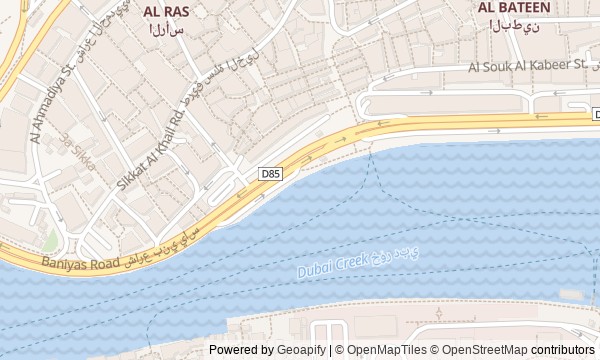
Route map
About the walk
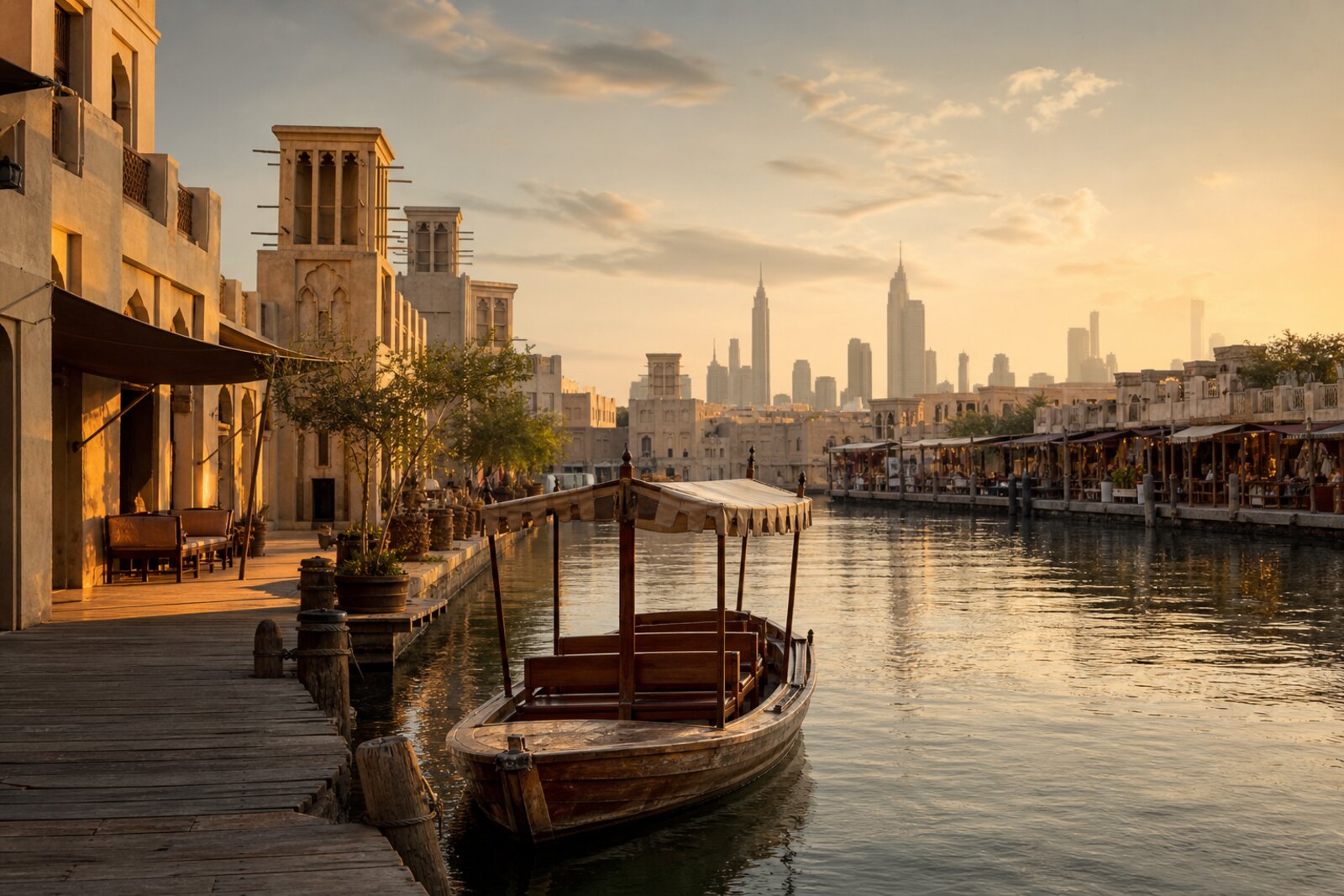
This walk begins where architecture still adapted itself to the wind and ends among shop windows linked to trade routes across half the world. In Al Fahidi Historical Neighbourhood, you will see how a courtyard, thick walls and a wind tower helped people endure the heat, while at House 26 you will hear why an old building became a place for candid conversation between people from different cultures. Then textiles lead you to the water: a short abra ride reveals Dubai Creek not as scenery, but as the city’s working road. On the Deira side, the route grows denser and louder—with carts by the pier, sacks of spices, medicinal herbs and gold whose price is set apart from the work of the craftsperson. The stories at each stop introduce architects, boatmen, porters, merchants and children who carried on the family business. Come for the old scale of Dubai: human, commercial and unexpectedly close at hand.
Why this order
The route first explores how the old city worked from within: the house responds to the climate, while the courtyard turns neighboring into conversation. Then trade leaves the residential quarter for the textile rows and reaches Dubai Creek—a road along which passengers, goods and new opportunities moved. After the crossing, the view changes: in Deira, you see not the setting of merchant life but its working rhythm—unloading, storage, a seller’s advice, bargaining and the testing of trust. Spices reveal the market through knowledge of the goods, while gold completes the route with the story of how personal reputation became an urban system.
For a first introduction to old Dubai and its merchant history. For those who enjoy noticing architecture, working waterfronts and the everyday life of markets. For a walk shaped by sounds, scents, conversations and a short ride on the water.
For a walk at the height of the heat without the option to take breaks. For a fully accessible route: there are uneven surfaces, narrow passages and an awkward boarding process for a traditional boat. For those who find market crowds, persistent attention from sellers or intense smells difficult.
Before you go
Wear sturdy, comfortable shoes: surfaces in the historic quarter and the markets are uneven in places, and you need to board the boat carefully at the pier. Bring water, sun protection and small cash for the traditional crossing; check current conditions before you set out. Programs, tours and meals at the Sheikh Mohammed bin Rashid Al Maktoum Centre for Cultural Understanding must be booked separately—an ordinary visit to the house does not include them. At the markets, do not block narrow passages, ask permission before photographing people and do not treat the first quoted price as an obligation to buy immediately. Consider medicinal herbs part of the market’s history, not medical advice.
When to go
It is best to begin in the afternoon, when it becomes easier to notice shade and moving air in the lanes of Al Fahidi Historical Neighbourhood, and you will reach the markets of Deira closer to their evening bustle. In the hot season, allow extra time for water and breaks in cool places.
Backup plan
If heat or fatigue makes it hard to complete the route at once, divide it at Dubai Creek: leave Al Fahidi Historical Neighbourhood, House 26 and the Textile Souk for one outing, and the Deira pier, Spice Souk and Gold Souk for another. If the crowds are heavy, do not try to squeeze along every stall: follow the edge of the trading rows and choose only a few quiet places to stop. If boarding an abra feels unsafe or the crossing is temporarily unavailable, finish the Bur Dubai section and reach Deira separately by regular city transport, rather than replacing the official station with a random boat.
Route conditions
Surface. Paved — 3.5 km; unpaved — 37 m (data covers 68% of the route)
Access. Wheelchair — limited; stroller — limited
Facilities. Toilets — 6
Elevation. Ascent — 38 m; descent — 42 m
OpenStreetMap extract of August 12, 2026: database data, not a check on the ground. Data © OpenStreetMap contributors, ODbL licence
Walk plan
Open in maps ↗- 1
Al Fahidi: Houses That Caught the Wind
Here, old Dubai unfolds through climate, daily life, and the preserved memory of the district. - 2
House 26: A conversation in the inner courtyard
This old merchant house serves not as a backdrop, but as a place to ask questions without awkwardness. - 3
Textile Souk: Trade by Touch
Fabric shows how goods, language, and personal reputation connected Dubai with other shores. - 4
The Old Market Pier: The City Boards the Abra
A short crossing turns the Creek from a beautiful view into an active urban thoroughfare. - 5
Deira Wharf: Goods Disembark
Here you can see the continuous cycle of exchange between ship, warehouse, market, and city. - 6
Spice Souk: A Shop as a Living Card Catalog
This stop tells of merchants who sold not only goods, but also accumulated knowledge. - 7
The Gold Souk: The Price of Metal and the Weight of Trust
The finale shows how family shops and personal reputation grew into a global-scale trading system.
Route features
Everything you need stays in the browser
Progress, saves and your trip plan are stored on this device.
Add Guide On Map to your home screen so the walk opens outside the browser.
How we handle sources, maps and corrections: our editorial standards