 Guide On Map
Copenhagen's Squares, Palaces, and Old Harbour
From City Hall Square through Slotsholmen to Nyhavn
Guide On Map on your phone
Open the walk like a regular app
It takes about 10 seconds to install. No app store needed.
The whole path
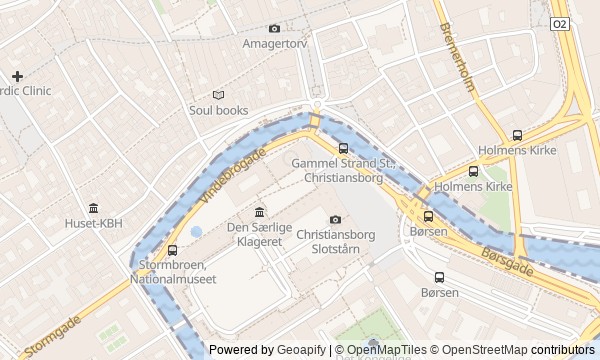
Route map
About the walk
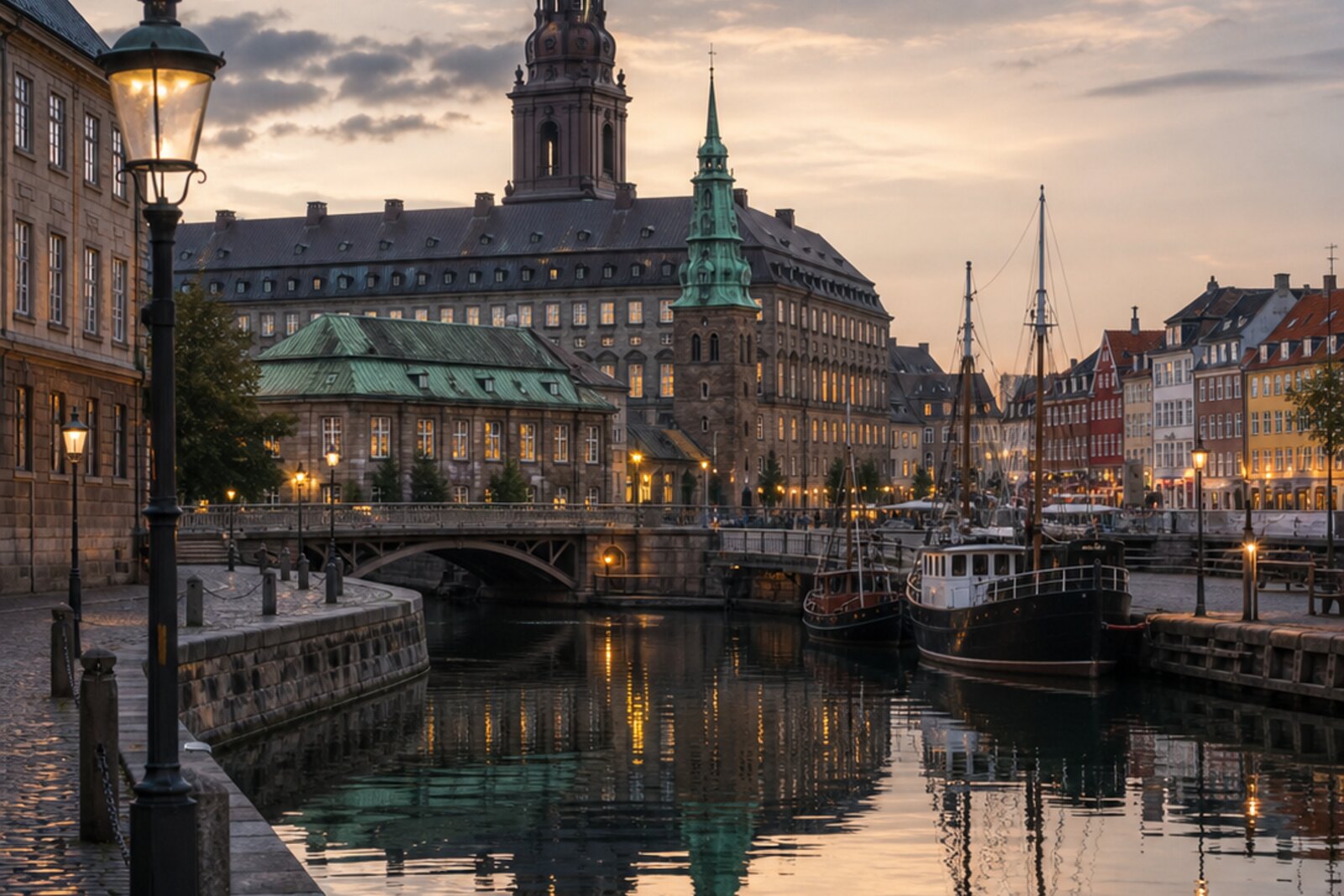
You will walk from the open City Hall Square to the palaces of Slotsholmen, then circle the island along the water and emerge by the old trading shore, heading toward the royal square and the Nyhavn canal.
First, you will see Copenhagen through its public places: clocks above the crowd, palace rooms, a square before a king. Along the waterfront, formal order gives way to black granite, glass, and steps by the harbour. Beyond them come a canal, a stone fishwife with a plaice, a rider above a strange figure, and a house where 2 rented rooms prove more important than literary reputation.
The stories will stay close to human decisions and inconvenient details. Why will people turn their backs on one building? Why would a national library need a concert hall? What happens to a lead king?
By the end of the walk, you will be able to draw a line from the City Hall clock to house number twenty and explain how Copenhagen moved public life from former fortifications to squares, palaces, and the harbour.
Why this order
City Hall Square sets the starting measure of urban space—here, a crowd can become part of history. A short walk to the former palace trades the street for the inward world of collections. Christiansborg Palace follows because the museum's preservation of the past gives way to a square where the very structure of the state was changed. From the palace, the route descends to the harbour: at The Black Diamond, you can see how a state institution opened itself to the city and the water. Circling the island along the canal brings you to Gammel Strand, where grand history continues in everyday trade. The route then leaves the old shore for Kongens Nytorv, the square for which the eastern part of the city was rebuilt. From there, it is a short walk to Nyhavn: the canal completes the connection between the new center and the harbour begun by the king, while the finale moves the story from state design to a writer's rented room.
For a first introduction to Copenhagen's historic center For those interested in urban change through the fates of people and things For lovers of palaces, squares, libraries, and waterfronts For a walk that looks at ceremonial places without a ceremonial tone
For those looking for a route only about Hans Christian Andersen's fairy tales For a walk exclusively through museums with long indoor visits For those who care more about contemporary architecture than the history of the old center
Before you go
The main story can be followed from outside, so the route does not depend on entering every building. The world clock, museum horns, royal stables, and manuscripts are inside their respective institutions; if they matter to you, check visiting conditions on official websites in advance and plan them as separate parts of the walk.
Waterfronts can feel noticeably colder and windier than squares, so an extra layer is useful. For a close look at monuments and facades, choose comfortable shoes and take your time on sections with active pedestrian and bicycle traffic.
When to go
Daylight helps you take in the sculptures and old facades; quieter mornings work well for the squares, while the later part of the walk is especially suited to the waterfront and Nyhavn.
Backup plan
If it rains, follow the route in the same order, shortening stops in open squares and allowing more time at places where the story can be read from the waterfront or under nearby shelter. Strong winds are usually more noticeable at The Black Diamond, Gammel Strand, and Nyhavn; in that weather, do not linger at the water's edge.
If open interiors are available without changing your plans, the National Museum of Denmark, the Royal Danish Library, or other institutions along the way can offer a break, but do not count on entry without checking in advance. If time is short, keep the sequence of stops and skip detailed visits inside: the route's main thread remains clear from the street.
Route conditions
Surface. Paved — 3 km; unpaved — 74 m (data covers 98% of the route)
Access. Wheelchair — limited; stroller — limited
Facilities. Toilets — 16; drinking water — 2
Elevation. Ascent — 34 m; descent — 27 m
OpenStreetMap extract of June 18, 2026: database data, not a check on the ground. Data © OpenStreetMap contributors, ODbL licence
Walk plan
Open in maps ↗- 1
City Hall Square
This open urban space shows how two minutes of silence became a public act. - 2
National Museum of Denmark
The former royal residence explains how scattered collections became a national museum. - 3
Christiansborg Palace Square
This stop will connect the peaceful change of power with an inscription that left the crowd outside memory. - 4
Waterfront by The Black Diamond
The extension shows how the library was transformed from a closed repository into a public place. - 5
Gammel Strand
The last working day of one fishwife will bring a centuries-long history of the fish shore to an end. - 6
Kongens Nytorv
The square reveals the royal plan for a new center through the fate of its main monument. - 7
Nyhavn
The final stop will trace the birth of the literary fairy tale back to rented rooms, a neighbor's child, and a vanished garden.
Route features
Everything you need stays in the browser
Progress, saves and your trip plan are stored on this device.
Add Guide On Map to your home screen so the walk opens outside the browser.
How we handle sources, maps and corrections: our editorial standards