 Guide On Map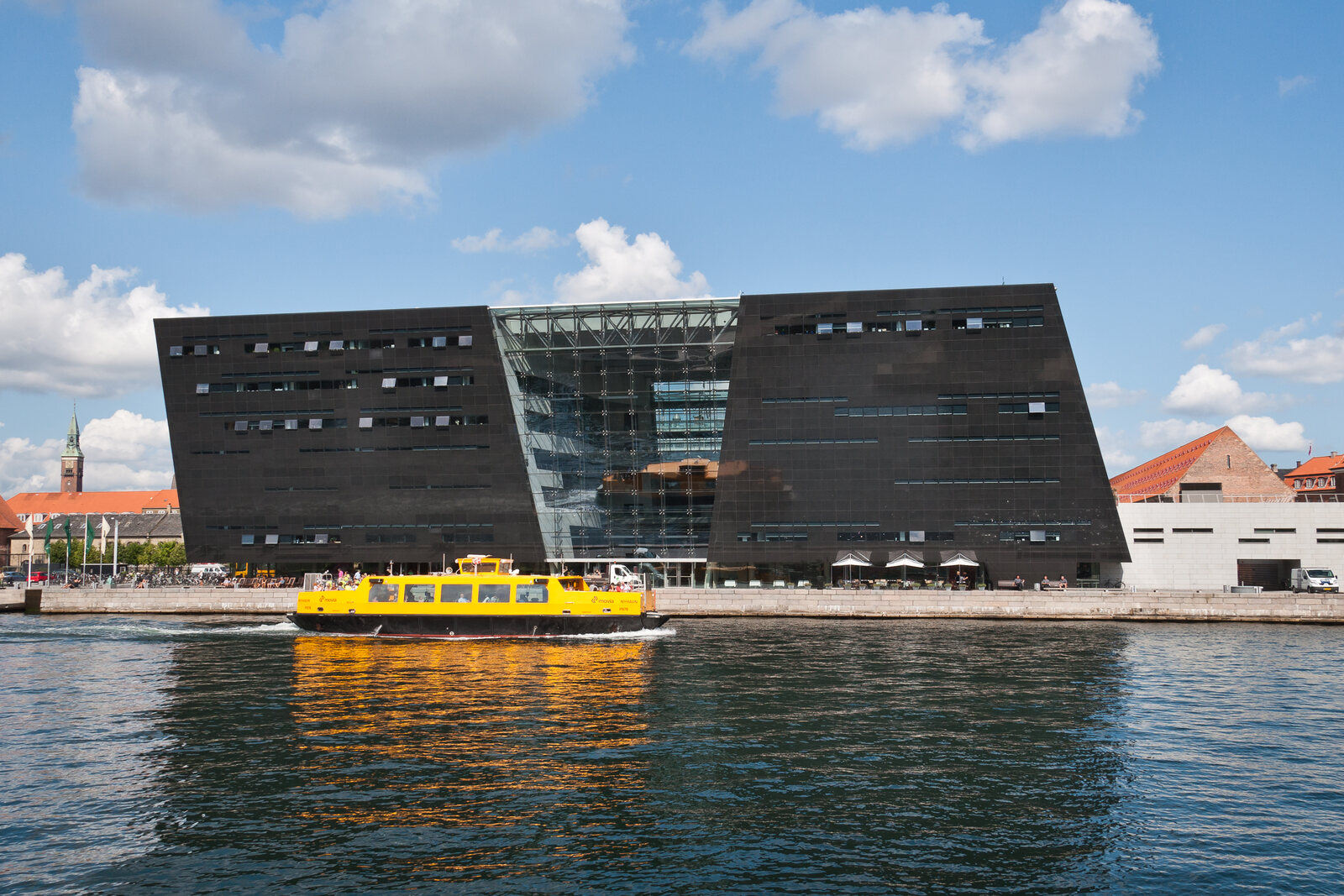
Look around first
What to notice
- Black granite panels
- Glass atrium
- Steps by the water
- The road running through the building
The story of the place
The coastal road still runs through the building: it was not moved, and the strip between the building and the harbor was given to pedestrians. That is why broad steps descend to the water, while inside, a glass atrium links the parts of the library complex. From the waterfront, you can freely enter, go up to the reading rooms, or continue on to the old library buildings. A six-hundred-seat hall also operates here, where concerts sit alongside the national book collection.
The polished panels on the facade really are black: the granite was quarried in Zimbabwe, then cut and polished in Italy. Behind them is the new section of the Royal Danish Library, linked by walkways to the old building from nineteen oh six. Yet this extension was not begun by architects. First, the chief librarian, Erland Kolding Nielsen, decided to change the range of people the institution served.
He took charge of the library in nineteen eighty-six. The collections were already running out of space, while visitors were still mainly researchers. Kolding Nielsen campaigned for a building where someone could come to an exhibition, lecture, or concert even without needing a rare manuscript. At one of the first discussions, the debate came down to a stark choice: should Donald Duck comics be kept here, or only encyclopedias from the Age of Enlightenment?
The director had no money. He persuaded a construction company to pay for the calculations and a model of the waterfront extension. The company was going through a downturn in orders and hoped to win a major state construction project; the librarian received a finished proposal that could immediately be put before officials.
In the autumn of nineteen ninety-two, the Ministry of Finance called Kolding Nielsen and demanded that he bring the model that same day. The minister studied it overnight. The next day, the director was told that the project should include a multipurpose hall—immediately, so that later it could no longer be crossed out as an unnecessary luxury. On Friday, Kolding Nielsen entered the ministry with a proposal costing three hundred million kroner and left with instructions to expand it to four hundred million. He later called that day Golden Friday.
In nineteen ninety-three, an international competition was held. One hundred seventy-nine firms submitted designs. The winners were four young architects from Aarhus: for their small practice, this commission became the work after which they began receiving library commissions around the world. They placed a black volume right by the water, cut through it with a glass atrium, and ran the coastal road through the building. This kept cars on their existing route and freed the area between the facade and the harbor for a pedestrian square and steps by the water.
When the winning model was presented to the public, Minister of Culture Jytte Hilden said that the building looked like a black diamond. Hilden had trained as a chemical engineer and knew that black diamonds exist. The accidental phrase became its name even before the opening. Later, after leaving her ministerial post, Hilden applied for a job at the library and became the first head of the cultural program in the building she herself had named.
The Black Diamond opened in nineteen ninety-nine. Former readers objected to the shop, music in the atrium, and food beside the national collections. These were precisely the functions Kolding Nielsen defended when he hurriedly incorporated them into the project. Now you can enter the atrium free of charge from the waterfront, go up to the reading rooms, or continue into the old library, while behind the black facade a six-hundred-seat concert hall still operates—the very feature the director managed to have written into the model overnight.
Useful on site
The best exterior view opens up from the waterfront, but do not stand right at the edge in windy weather. Manuscripts and archival materials cannot be considered a permanently available exhibition—their display must be checked separately.