 Guide On Map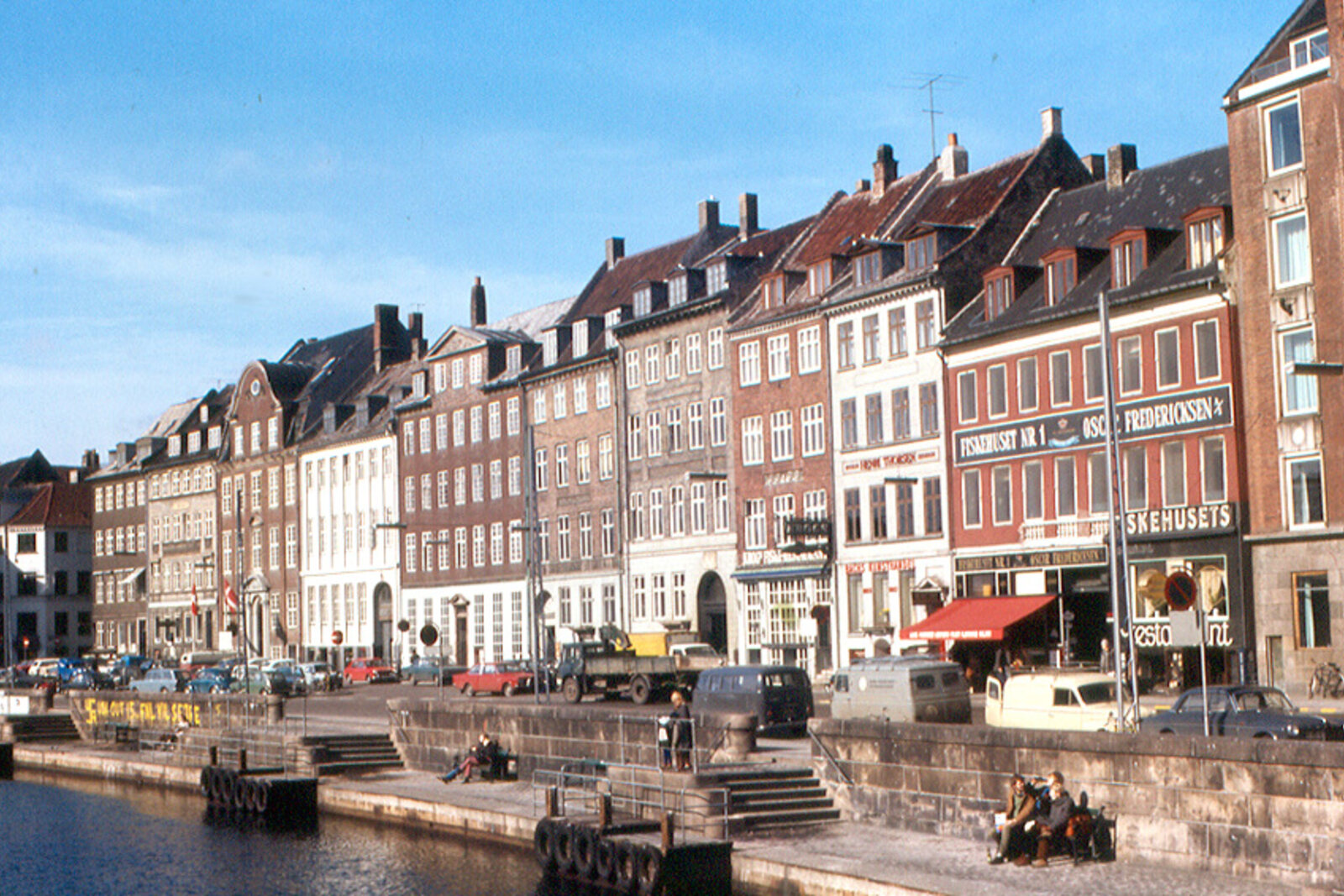
Look around first
What to notice
- Granite fishwife
- Flounder in the statue's hand
- Canal
- Edge of the old quay
The story of the place
The present canal marks the edge of the former natural harbor. When the water reached the sandy shore, boats were pulled straight onto land, and later fishing vessels moored at docks; centuries of land reclamation gradually pushed the water back, although parts of vessels and old fortifications were found beneath the houses. For several centuries, the catch that fishermen brought into the city from the sea was sold here. At the edge of the quay, the granite fishwife still holds a flounder in her hand.
On New Year's Eve, nineteen sixty-three, Doris Marx, the daughter-in-law of a fishwife, came to this canal to help her mother-in-law wrap cod for customers. She expected to spend one day behind the counter. After that, Doris traded here for nearly forty-five years.
By then, the main fish market had already been moved to the South Harbor: the old quay had become too cramped. When Doris began working, only five fishwives remained here. Twenty years later, she was the only one left.
Before the market moved, fish trading defined Gammel Strand's purpose for several centuries. The name means “Old Shore.” This was once the shoreline of a natural harbor: at first, boats were pulled straight onto the sand; later, fishermen moored at docks. After centuries of land-reclamation work, the water retreated to the present canal. Archaeologists found parts of vessels and old shore fortifications even beneath the houses along the street.
From the mid-eighteenth century, women from Skovshoved, a fishing village about ten kilometers north of Copenhagen, made up most of the vendors. They were called skovserkoner—wives from Skovshoved. In fishing families, the men went to sea and operated the boats; the women helped with the nets and were responsible for selling the catch. Boys were taught to fish, girls to trade, and older people knitted and mended nets. If fishermen returned without a catch, the family had neither fish nor money.
At first, the women bought fish in Skovshoved and carried it into the city in baskets on their backs. Later, fishermen began delivering the catch by boat straight to Gammel Strand every morning. Customers immediately recognized the vendors by their white headscarves and thick aprons. In winter, they tucked newspapers under their clothes for warmth. Perishable goods had to be sold before the neighboring women sold theirs, so the ability to attract a customer was part of the profession alongside cleaning and weighing fish.
Doris inherited her mother-in-law's counter; women in her family had worked in this trade for several generations. She still saw a whole row of fish shops, and for the last twenty-five years she worked alone. Customers' habits changed along with the quay: people once bought a whole cleaned fish and prepared it at home; later, they asked for fillets, minced fish, and ready-made patties.
Doris stopped trading not because she lacked customers. After the neighboring courtyard was renovated, she could no longer leave her heavy vending cart there. Transporting it from afar proved expensive, and Doris found no new storage place nearby. On March thirteenth, two thousand eight, she sold her last fish here and retired. Customers stood in line and passed a notebook around to leave her farewell wishes.
At the edge of the quay, a granite fishwife remains, installed as early as nineteen forty, when the market occupied the entire shore. She holds a flounder in her hand. Doris's counter was taken away; the stone skovserkone remained above the canal at the Old Shore.
Useful on site
The sculpture and the shore are accessible from the street; step away from the bicycle traffic for a look and do not block the narrow passage. Traces of the former shoreline are hidden beneath modern development.