 Guide On Map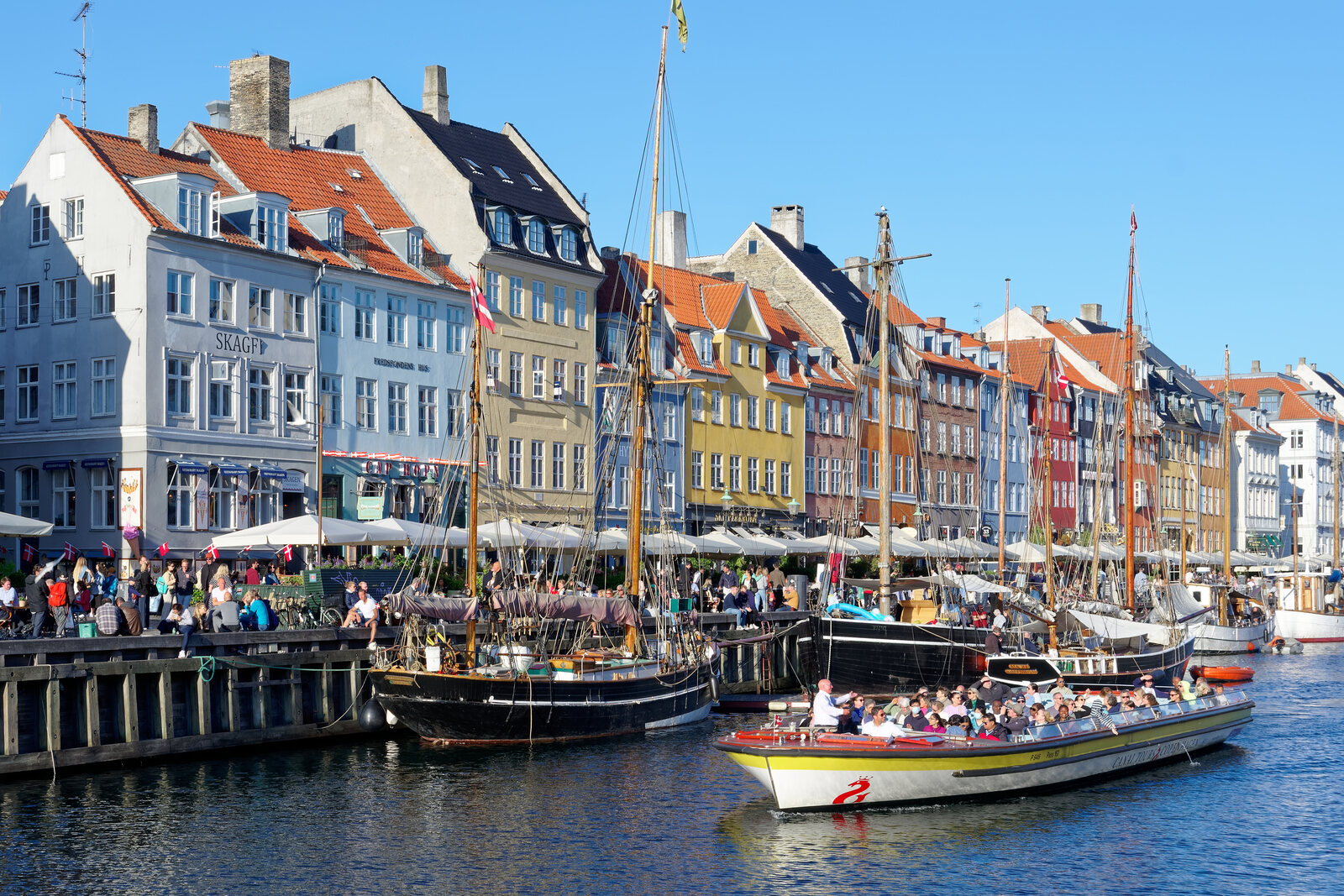
Look around first
What to notice
- House number twenty
- Commemorative plaque
- Nyhavn canal
- Old museum ships
The story of the place
The Botanical Garden once began behind Charlottenborg, but it was moved, and nothing remains of the green neighbor of house number twenty. The house itself survives among the row of facades along the narrow canal; a commemorative plaque hangs on its wall. Old museum ships stand in the inner part of Nyhavn, and tour boats pass along the water.
Nyhavn means “New Harbor.” In sixteen seventy-one, Christian V ordered a canal dug from the main harbor straight to the new commercial center at Kongens Nytorv. Soldiers and Swedish prisoners of war removed the earth, and two years later water was let into the canal. Seagoing ships could unload beside the city’s houses. That is why warehouses, inns, and rented rooms for people who made their living at sea appeared nearby. Cargo is no longer transferred here: the inner part of the canal has been set aside for old museum ships, while tour boats travel along the water.
In September eighteen thirty-four, twenty-nine-year-old Hans Christian Andersen moved into house number twenty. He had already published poems and plays, taken a state-funded journey through Europe, and was seeking lasting literary recognition. He did not have a home of his own. The widow of a sea captain rented him two rooms on the second floor.
Andersen described them in a letter: a bed, a shelf with papers, a table, chairs, and a stove. The study windows looked out onto the canal, where three-masted ships could be seen. From the bedroom, he looked the other way, toward the Botanical Garden, which then occupied the site behind Charlottenborg.
Matthias Thiele, a collector of folk legends and secretary of the Royal Danish Academy of Fine Arts, lived in Charlottenborg. Once, Andersen wanted to amuse Thiele’s little daughter Ida and told her that the flowers from the neighboring garden went dancing at night. Later, the writer kept several of the girl’s remarks and incorporated them into the fairy tale Little Ida's Flowers.
It appeared in Andersen’s first collection of fairy tales together with The Tinderbox, Little Claus and Big Claus, and The Princess and the Pea. He had heard the first three plots as a child; Ida’s story arose here, between the rented room, the Thiele family, and the Botanical Garden behind the house. Andersen wrote down fairy tales as he would tell them to a child: with conversational syntax intended for an adult listener as well. For Danish prose of that time, this was an unusual choice.
The first issue appeared in May eighteen thirty-five. An anonymous critic declared the fairy tales unsuitable for children: in his view, a children’s book had to pursue a higher purpose than entertainment. He was especially outraged by the murders in Little Claus and Big Claus and by the sensitivity of the princess who detected a pea beneath the featherbeds. Andersen took reviews hard, and twenty years later he still remembered this one in particular.
He continued to publish fairy-tale booklets. By eighteen forty-two, six had appeared, and by eighteen seventy-two Andersen had published more than one hundred fifty fairy tales and stories. The girl’s name remained in the title of one of the very first.
The Botanical Garden was moved from Charlottenborg in eighteen seventy-four. It is no longer behind house number twenty. The house itself has survived, and in May nineteen thirty-five, exactly one hundred years after the first collection was published, a commemorative plaque was installed on its facade.
Useful on site
The waterfront is often crowded and noisy; for the story, find a spot away from the passageway and venue entrances. Andersen’s houses are viewed from outside, and the memorial anchor stands in open urban space.