 Guide On Map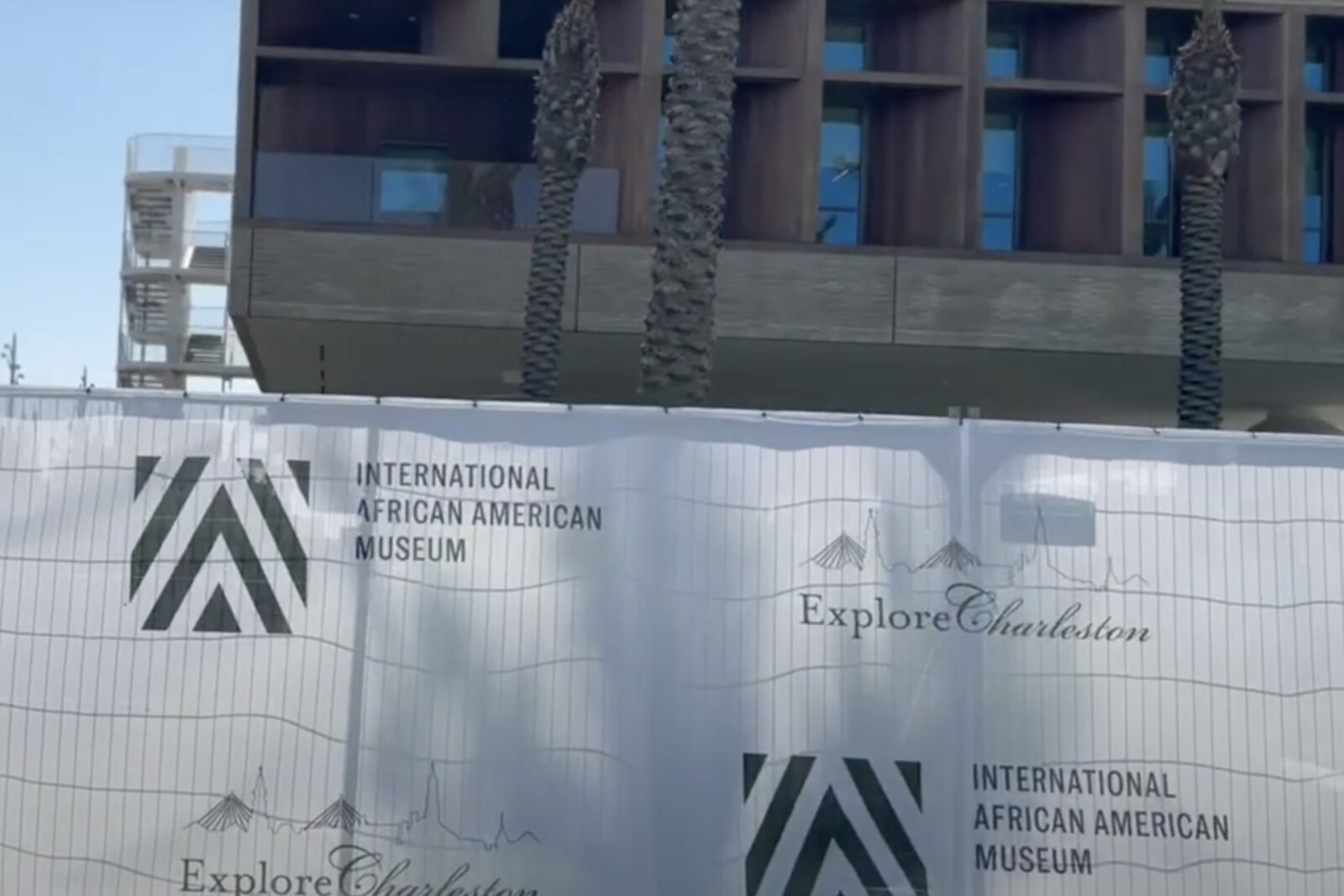
Look around first
What to notice
- Raised exhibition building
- Cylindrical columns
- Open space beneath the building
The story of the place
In two thousand, Charleston Mayor Joseph P. Riley Jr. proposed creating a museum that would tell the history of African Americans without the city's customary omissions. Riley had to seek funding, assemble trustees, and persuade residents; for nearly fourteen years, an empty lot opposite the aquarium, a block from here, was set aside for the museum.
Architect Henry N. Cobb proposed moving the project. Riley invited him to rethink the building, and Cobb flew to Charleston at his own expense. After inspecting the proposed site, he led the mayor to the river and said that the museum had to stand by the water. Cobb made his participation in the project conditional on choosing the right location.
By then, Robert Macdonald, the former director of the Museum of the City of New York, had settled nearby and begun studying the history of the area around the aquarium. In old plans and documents, he reconstructed the boundaries of Gadsden's Wharf—an enormous wharf that had existed here since the eighteenth century. In the final years of the legal transatlantic slave trade, tens of thousands of Africans were brought here. Captives were kept in warehouse spaces until they were sold, then separated and sent to plantations in South Carolina and other states.
The land proposed by Cobb had once belonged to the city, but it had already been sold for a restaurant. In two thousand fourteen, Riley persuaded the city to buy the site back for three and a half million dollars. After that, archaeologist Eric Poplin and his staff dug three exploratory trenches here. Their earlier survey had not found remains significant enough, but now the archaeologists were looking in different places and asking different questions.
Beneath later fill, they found wooden structures that the builders of Gadsden's Wharf had used to reinforce land reclaimed from the water. South of the future museum, a brick floor from a late eighteenth-century warehouse came to light; historical plans showed that the building extended onto the museum site. The researchers obtained material confirmation that African captives had been held in this very part of the wharf before being sold.
After the discovery, Cobb designed a long, one-story exhibition building raised thirteen feet—almost four meters. It is supported by eighteen cylindrical columns. The exhibition hall did not occupy the historic ground level: beneath it, open space remained, where landscape architect Walter Hood marked the former line of the wharf and the location of the warehouse.
The museum opened on June twenty-seventh, two thousand twenty-three, twenty-three years after Riley's proposal. In the galleries, curators trace a story from African societies and the transatlantic trade in human beings to the history of Black Charleston, Gullah Geechee culture, and the life of the African diaspora. The word “International” in the name points to this geography: people's fates link Africa, both sides of the Atlantic Ocean, and the communities of their descendants.
The Center for Family History also operates here. Its staff teach visitors how to search for ancestors among records of enslaved and free Black residents, direct people to archives, and collect family materials. The center holds the largest collection outside the National Archives of documents about Black troops in the Union Army during the Civil War.
The museum that was to be built in another block now stands above the site for which Riley returned the sold land to the city. The exhibitions are upstairs; below remains the surface of the old wharf, to which Cobb once led the mayor.
Useful on site
Tuesday—Sunday 10:00—17:00, last entry 16:00; closed Monday. Tickets are sold for assigned times.
Checked: July 1, 2026. Check the official source before visiting.The meaning of this stop is clear from outside as well; for the exhibitions inside, you need to plan a separate museum visit.