 Guide On Map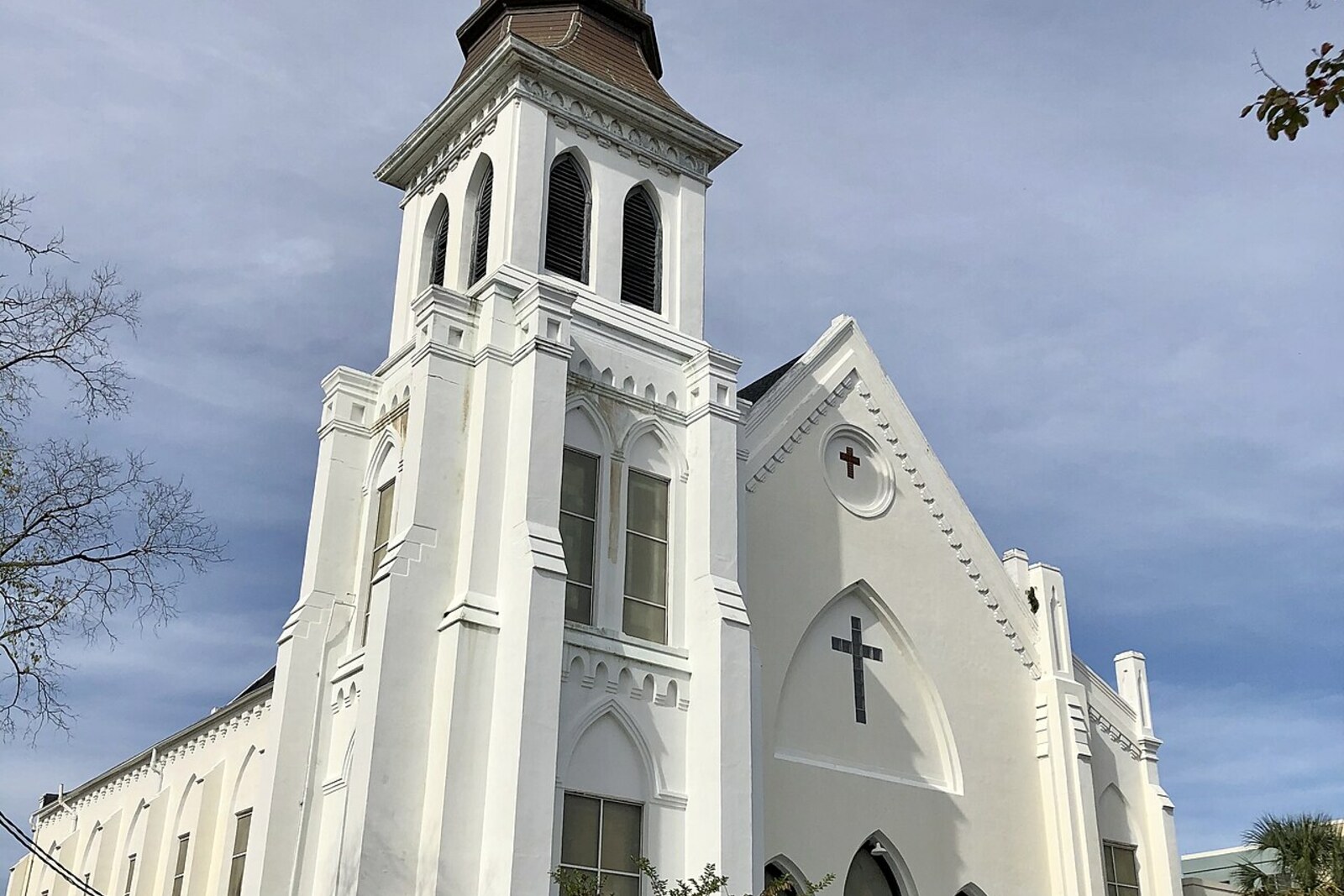
Look around first
What to notice
- The white neo-Gothic building
- The main entrance doors
The story of the place
This white neo-Gothic church was built for the oldest African Methodist Episcopal congregation in the South. On the lower floor is a hall where parishioners gather on weekdays. After the Civil War, they founded two more churches of their tradition in Charleston, so the oldest one came to be called Mother Emanuel AME Church. The congregation chose the name Emanuel in eighteen sixty-five, when it was again able to pray openly after long years of secret gatherings.
On the evening of June seventeenth, two thousand fifteen, twelve people gathered in the church hall on the lower floor. It was a regular Wednesday Bible study meeting. That evening, Myra Singleton Thompson led the session for the first time: she had just received permission to preach and asked her friend Polly Sheppard to come and support her. Senior pastor Clementa C. Pinckney sat with everyone else.
When an unfamiliar young White man came in, clergywoman Sharonda Coleman-Singleton told the pastor about the visitor. Pinckney seated the visitor beside him, gave him a Bible and a sheet with the session’s topic. His name was Dylann Roof. He had chosen the oldest African Methodist Episcopal Church in the South in advance, learned from one of the parishioners that people gathered here on Wednesdays to study the Bible, and came to kill Black people. Roof hoped to intensify racial hostility and bring a war between White and Black people closer.
His choice explains the name Mother Emanuel AME Church. After the Civil War, members of this congregation founded two more African Methodist Episcopal churches in Charleston, so the oldest one came to be called the mother. The congregation adopted the name Emanuel, meaning “God with us,” in eighteen sixty-five, when it was able to resume worship openly after decades of secret meetings. The current white neo-Gothic building was built in eighteen ninety-one.
Roof spent about forty-five minutes with the group. When the participants stood and closed their eyes for the final prayer, he opened fire. Twenty-six-year-old Tywanza Kibwe Diop Sanders realized that his mother and his eleven-year-old niece remained under the table. He stood up to distract the killer, asked why he was doing this, and said that no one there wished him harm. Roof shot him. He deliberately left Polly Sheppard alive so that she could tell people about the attack.
Nine people died, now known as the Emanuel Nine: pastor Clementa C. Pinckney; Myra Singleton Thompson, who was leading the session for the first time; clergy members Sharonda Coleman-Singleton, DePayne Middleton-Doctor, and Daniel Lee Simmons Sr.; librarian Cynthia Marie Graham Hurd; church worker Ethel Lee Lance; Susie J. Jackson, an elder in a large church family and a choir singer; and Tywanza Kibwe Diop Sanders, who rose from under the table for his mother and the girl.
Roof was arrested the next morning. Jurors found him guilty of racist crimes, murders, and obstructing the free exercise of religion; in nineteen seventeen, a federal court sentenced him to death and to life imprisonment on other counts. Just two days later, relatives of several of those killed addressed him at a court hearing and said that they forgave him in accordance with their faith. Four days after the murders, parishioners reopened the doors of Mother Emanuel AME Church and held a Sunday service.
In June two thousand twenty-five, ten years after the attack, a memorial gathering took place in the same church hall where Myra Singleton Thompson had led Bible study for the first time and where Clementa C. Pinckney had handed the stranger a Bible and an assignment sheet.
Useful on site
Group tours by appointment only for groups of at least 10 people: Tuesday—Saturday 10:00—15:00, except the first Saturday of the month. No individual tours. Sunday service begins at 10:00.
Checked: July 1, 2026. Check the official source before visiting.Treat this place as an active house of worship: do not expect to enter without an invitation, speak quietly, and give parishioners space.