 Guide On Map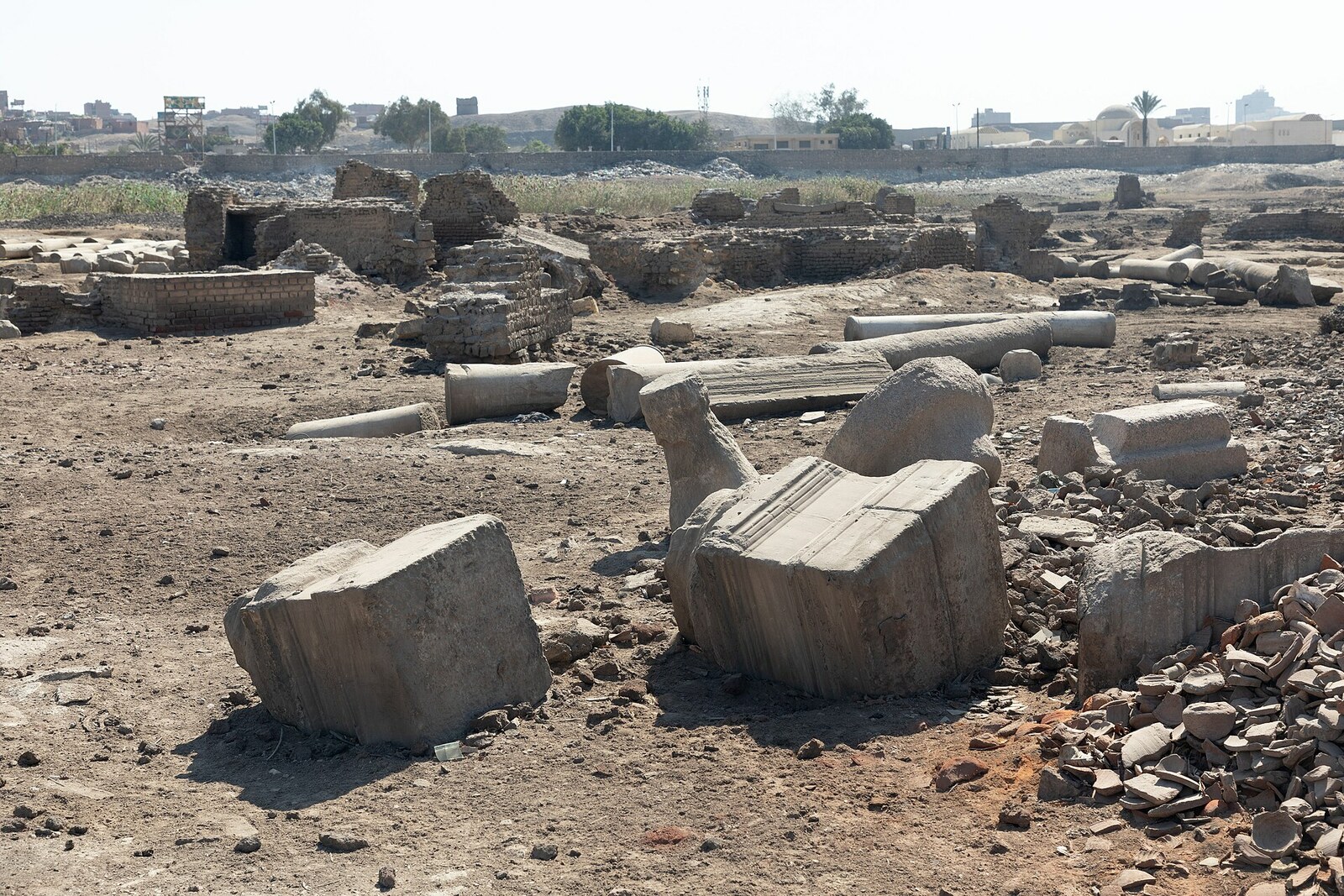
Look around first
What to notice
- Remains of house walls
- Archaeological excavations
- Walking path
- Exposed urban areas
The story of the place
A park in Fustat was created in nineteen eighty-nine where the city dump had previously stood. It is now being expanded under the name Fustat Hills Park, and a walking path runs around a separate archaeological zone east of Amr ibn al-As Mosque. Among the exposed areas and excavations, walls of houses from the old city have survived.
At the beginning of the twentieth century, sabbakhin—sebakh extractors—came here, east of Amr ibn al-As Mosque. They dug up the mounds, loaded the soil onto camels, and sold it to farmers as fertilizer. Sebakh was the name for a nitrogen-rich mixture of decomposed mud brick and household waste accumulated over centuries. For some, old Fustat lay beneath these hills; for others, it was merchandise that earned them a living.
Along with the soil, house walls, ovens, and drains disappeared. Whole vessels and attractive pottery sherds went to antiquities dealers; the remaining finds were broken or thrown away. It was difficult to ban the extraction: permits were officially issued, while excavations of the Islamic city received almost no funding.
In nineteen twelve, Aly Bahgat, an employee of the Museum of Arab Art, was put in charge of the work. He wanted to save what remained of Fustat. That was the name then of what is now Cairo's Museum of Islamic Art. Bahgat was fifty-four years old. He had begun as a translator with the committee for the preservation of monuments and built a career in a field that many archaeologists considered less prestigious than excavations from the time of the pharaohs.
He was not given money for a large expedition of his own. Bahgat proposed that the extractors continue removing sebakh, but he put them under the supervision of guards and directed the work so that the trenches would sequentially expose a single city block. The sabbakhin kept their income, and Bahgat gained a workforce the museum could not pay for.
Over twelve years, they uncovered about twelve hectares of Fustat. Plans of streets and large houses emerged, along with information about water supply and sewerage. Thousands of objects were transferred to the museum: ceramics, glass, wooden and bronze items. Bahgat was able to prove that the patterned sherds from these mounds were products of local workshops, not randomly imported goods.
The cost of this compromise also remained in the reports. The extractors worked for the soil, so archaeologists did not have time to record every layer precisely. Colleagues debated Bahgat's method, but this work made him one of the founders of Islamic archaeology in Egypt. He died in nineteen twenty-four, when his last season at Fustat ended.
After the excavations, rubbish was piled up on the site again. In nineteen eighty-nine, Fustat Park was created on the site of the city dump. It is now being expanded as Fustat Hills Park; work is still underway. East of Amr ibn al-As Mosque, a separate archaeological zone with the remains of houses is being preserved, and a walking path is being laid around the site that Aly Bahgat once made the sabbakhin, the sebakh extractors, excavate sequentially.
Useful on site
Fustat Hills Park/Fustat reconstruction zone; check current entrances, events, and hours on the day.
Checked: June 28, 2026. Check the official source before visiting.Stay on permitted paths and do not go beyond barriers for a closer view. Some archaeological remains may be closed or difficult to make out from the surface.