 Guide On Map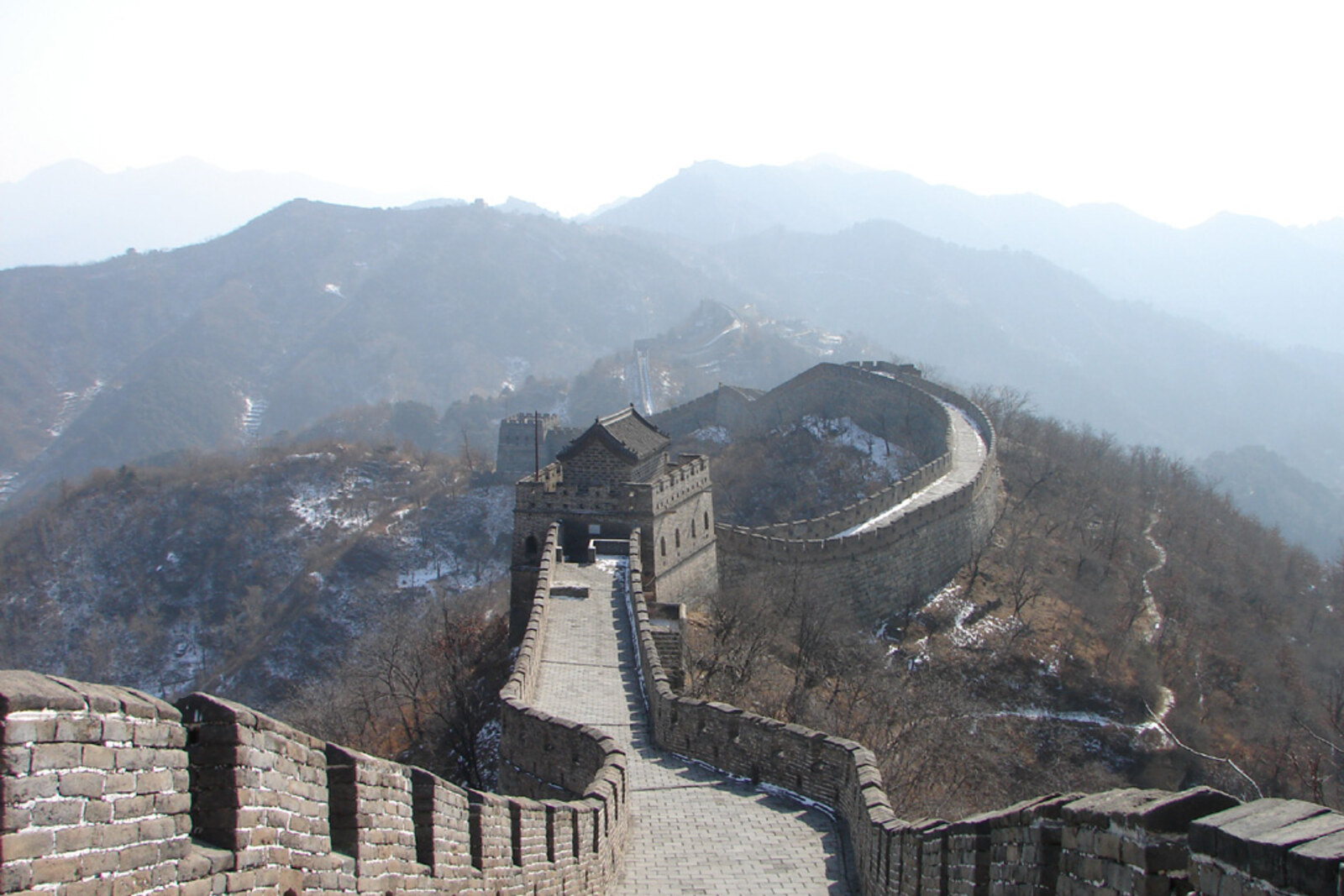
Look around first
What to notice
- Northern ticket entrance
- Cableway
- Gorge
- Wooded slopes
The story of the place
In the autumn of nineteen eighty-one, the northern ticket entrance in this gorge did not yet exist. Badaling remained the only section of the Great Wall near Beijing equipped for mass visits, and it could no longer handle the flow of people. Specialists were looking for a location for a second route.
Mutianyu was chosen for three very practical reasons. A relatively convenient road led here from Beijing, watchtowers stood close together along the ridge, with rare double-sided crenellations, and the slopes had retained their forest. Deputy Premier Chen Muhua, who was to determine the new tourist section, accepted the experts' proposal. The gorge, which had previously led to a village and a military pass in the mountains, was to become an entrance to the Great Wall.
Archaeologists came here first. They hurried to survey the fortifications before tourist construction began: for several centuries, the towers had been filling with earth, and clearing them could destroy traces of their construction. Residents of Mutianyu helped carry out the soil. The researchers measured each tower separately—no two proved alike. In one, they found a recess where defenders stored a rope ladder; from the surviving foundations, they reconstructed the layouts of vanished upper rooms.
In nineteen eighty-three, Jia Ruicheng, a young surveyor who had previously recorded elevations for a reservoir in Huairou District, joined the crew. The restorers needed someone who could lay pipes and calculate water reservoirs on the slope, then precisely measure the walls, stairways, and towers. A theodolite and a level were expensive, so Jia carried them himself all day: the working drawings depended on those two instruments.
There was still not enough money. In nineteen eighty-four, a public fundraising campaign for repairs to the Great Wall began; the first stage at Mutianyu received more than one million yuan in donations. The restored section opened in late April of nineteen eighty-eight. Jia Ruicheng stayed here and, a quarter of a century later, became Mutianyu's chief engineer.
The Mutianyu Cableway from the north entrance rises to Tower No. 14. This was as far as the first section extended—the section that archaeologists had managed to measure, village residents had cleared, and Jia Ruicheng's crew had prepared for opening.
Useful on site
High season March 16–November 15: weekdays 07:30–18:00, weekends 07:30–18:30; ticket sales and access to security screening close earlier. Check current announcements before your trip.
Checked: June 28, 2026. Check the official source before visiting.The Wall is barely visible from here; use this stop to get your bearings and choose the enclosed cableway to Tower No. 14.