 Guide On Map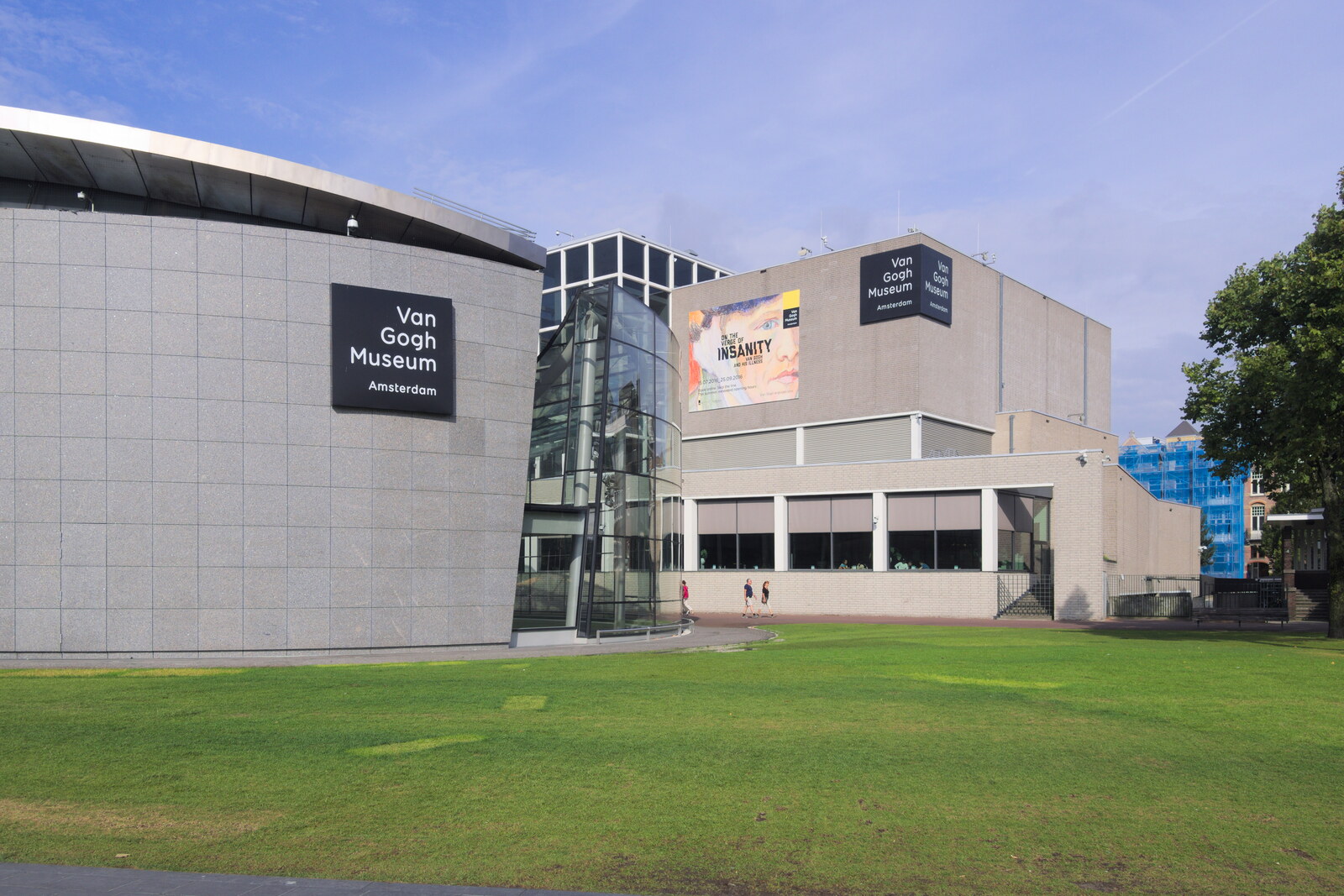
Look around first
What to notice
- The museum building
- Museumplein
- The neighboring Stedelijk Museum
The story of the place
Beside the Stedelijk Museum stands a separate museum building that brought together the artist’s family collection. Previously, parts of it hung in the owner’s home, lay in an adapted storage room, or were shown for years in the neighboring museum. The foundation now lends the museum for permanent use about two hundred paintings, five hundred drawings, and more than eight hundred letters.
In the summer of nineteen eleven, the art dealer Johannes de Bois came to Jo van Gogh-Bonger with nearly unrestricted powers: his client wanted to buy the remaining collection of Vincent van Gogh in its entirety for a future museum. The buyer’s name is not given in the first account. Later records enabled researchers to establish that the offer came from the industrialist Anton Kröller, who was collecting paintings for the museum of his wife, Helene Kröller-Müller.
Jo was pursuing something entirely different. She was the widow of Theo van Gogh, the art dealer who supported his artist brother Vincent and received his works in return. Vincent died in eighteen ninety, and Theo survived him by only half a year. Twenty-eight-year-old Jo was left with an infant and hundreds of paintings, drawings, and letters that brought in almost no money. To support herself and her son, she opened a boarding house in Bussum and worked as a translator.
Jo sold the paintings one at a time, choosing the buyers, and lent the rest to exhibitions. She needed both to pay for her life and to keep hold of the core of the collection. By the time of the enormous offer, she was preparing Vincent’s letters for publication: through them, the public was to learn about an artist whom few had known during his lifetime. Selling all the works would have ruined that plan. Jo refused de Bois calmly and definitively.
After her death, the collection passed to her son, Vincent Willem van Gogh, an engineer and the artist’s nephew. Twenty famous canvases hung in his home; the rest were kept in an adapted storage room or were on long-term display at the neighboring Stedelijk Museum. The engineer understood that after his death, some of the works would have to be sold to pay inheritance tax, while the remainder would be divided among his three children.
In nineteen sixty, he established the Vincent van Gogh Foundation so that this would not happen. Two years later, the state paid for the transfer of the family collection to the foundation and committed itself to building a separate museum for it. The engineer’s children gave up their future inheritance, and Amsterdam provided a site here on Museumplein, beside the Stedelijk Museum, where the paintings had already been shown to the public. The museum opened on June second, nineteen seventy-three.
The foundation still owns the core of the collection and lends it to the museum for permanent use: about two hundred paintings, five hundred drawings, and more than eight hundred letters. Among them remain works and documents that Jo refused to hand over in their entirety to a single buyer.
Useful on site
The schedule changes by month: in 2026, most often 09:00-18:00, with many Fridays until 21:00; a timed ticket is required.
Checked: June 28, 2026. Check the official source before visiting.You can listen to this story from outside: it is primarily about the creation of the collection and the museum. A separate visit is needed to see the paintings and letters.