 Guide On Map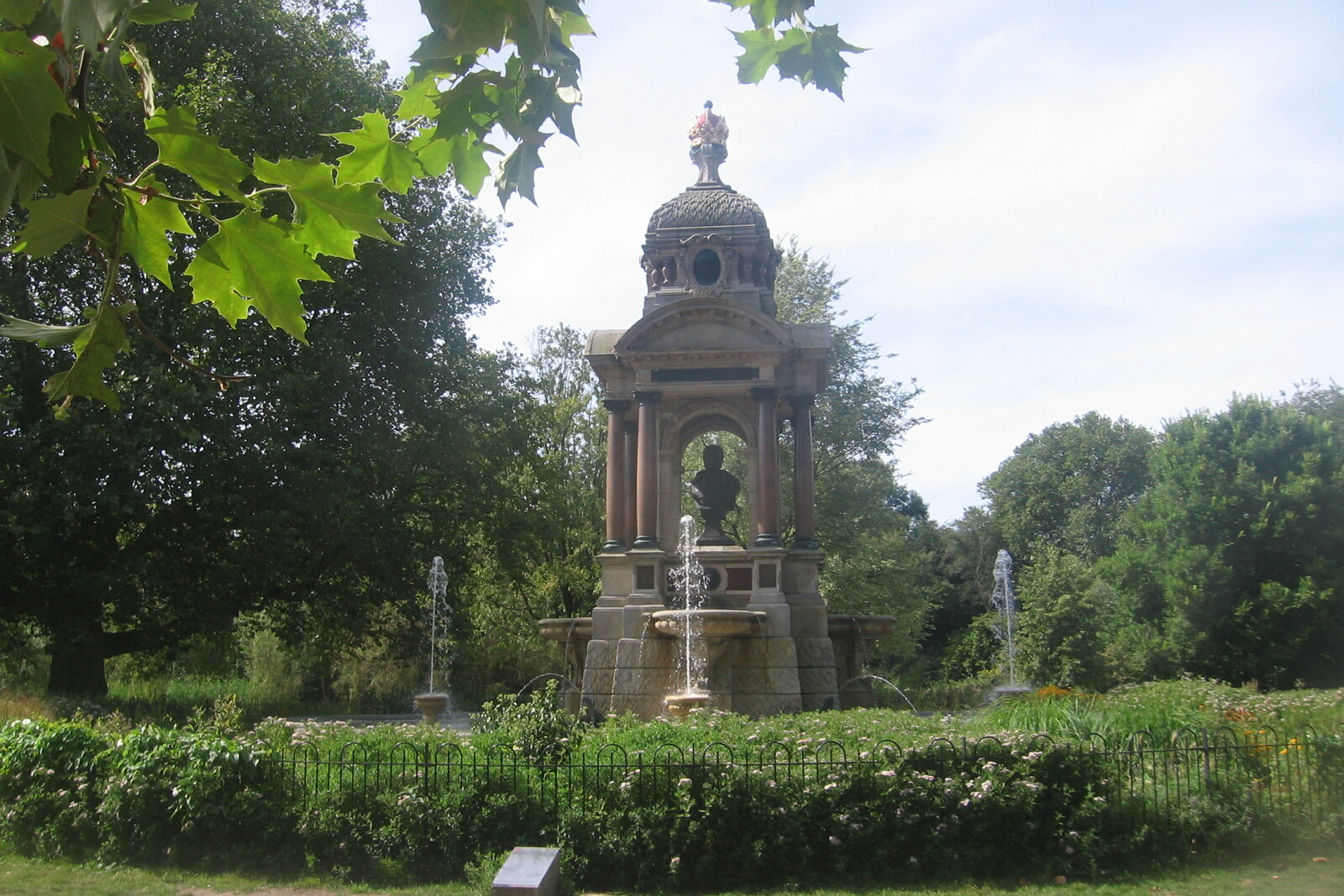
Look around first
What to notice
- Bronze bust
- Dome
- Columns of red granite
- Bronze lion heads and frogs
The story of the place
Among the ponds and paths of De Pijp, a domed pavilion stands on an artificial hill: a bronze bust is surrounded by columns of red granite, while lion heads and frogs are hidden below. Before the residential development, pastureland stretched here. The park was named after Samuel Sarphati, a doctor who treated poor city residents and advocated clean streets, affordable bread, spacious housing, and greenery for Amsterdam. The monument beneath the dome preserves the memory of a man whose plans for the city outlived him.
On July fifteenth, eighteen eighty-six, the banker Abraham Carel Wertheim waited here for the cover to be removed from the bronze bust of his late friend. Wertheim had spent twelve years raising money for this monument. The park around it was brand new: the city council had insisted that two blocks be set aside in the rapidly built-up De Pijp neighborhood for ponds, paths, and shared green space.
Wertheim's friend was Samuel Sarphati, a doctor who grew up in a poor Jewish family and treated Amsterdam residents of limited means. From his medical practice, he knew what dirty streets and poor food led to. Sarphati organized private garbage collection, opened a mechanized bakery that produced cheaper bread, and advocated expanding the city with spacious homes and greenery. He was the first to propose creating a park in the future De Pijp neighborhood, but he died in eighteen sixty-six, when pastureland still lay here.
Eight years later, Wertheim proposed erecting a monument to him. Wealthy citizens contributed without much enthusiasm: some had lost money invested in Sarphati's overly bold ventures. So the committee organized a lottery. Artists gave paintings and drawings, cigar makers gave boxes of cigars they had rolled themselves, and women gave embroidery. People brought a child's stove, clocks, hat brushes, pincushions, and a tea-kettle warmer. Many participants made their living by their craft and gave things made with their own hands.
The lottery raised more than twenty-three thousand guilders. The city provided a site on an artificial hill, and the architect Jacobus de Kruijff placed the bust by Sarah Stracké-van Bosse beneath a dome, between columns of red granite. When Wertheim removed the cover, water was released simultaneously from bronze lion heads and frogs. Two years later, the park was officially named after Sarphati.
In nineteen forty-two, the German occupation administration ordered the names of Jews removed from Amsterdam's streets and parks. Sarphatipark was renamed Bollandpark, after the philosopher Gerard Bolland, known for his antisemitic statements. The bust was removed; it was to be destroyed, but it was hidden in the storage of the Stedelijk Museum in time. On May eighteenth, nineteen forty-five, the city was given the park's former name back, and on June twenty-sixth the bust was installed again and unveiled for a second time.
The dedication remains on the bronze plaques beneath the dome: “Sarphati—Founder of New Amsterdam.” Between the granite columns stands that very bust, paid for with paintings, embroidery, and boxes of cigars, and kept safe during the occupation in museum storage.
Useful on site
Open urban space; check signs and city maps for rules on barbecues, dogs, and play areas.
Checked: June 28, 2026. Check the official source before visiting.Choose a spot by the monument without obstructing passage or residents' rest. The bust is in an open park; the current rules on signs at the entrances must be observed.