 Guide On Map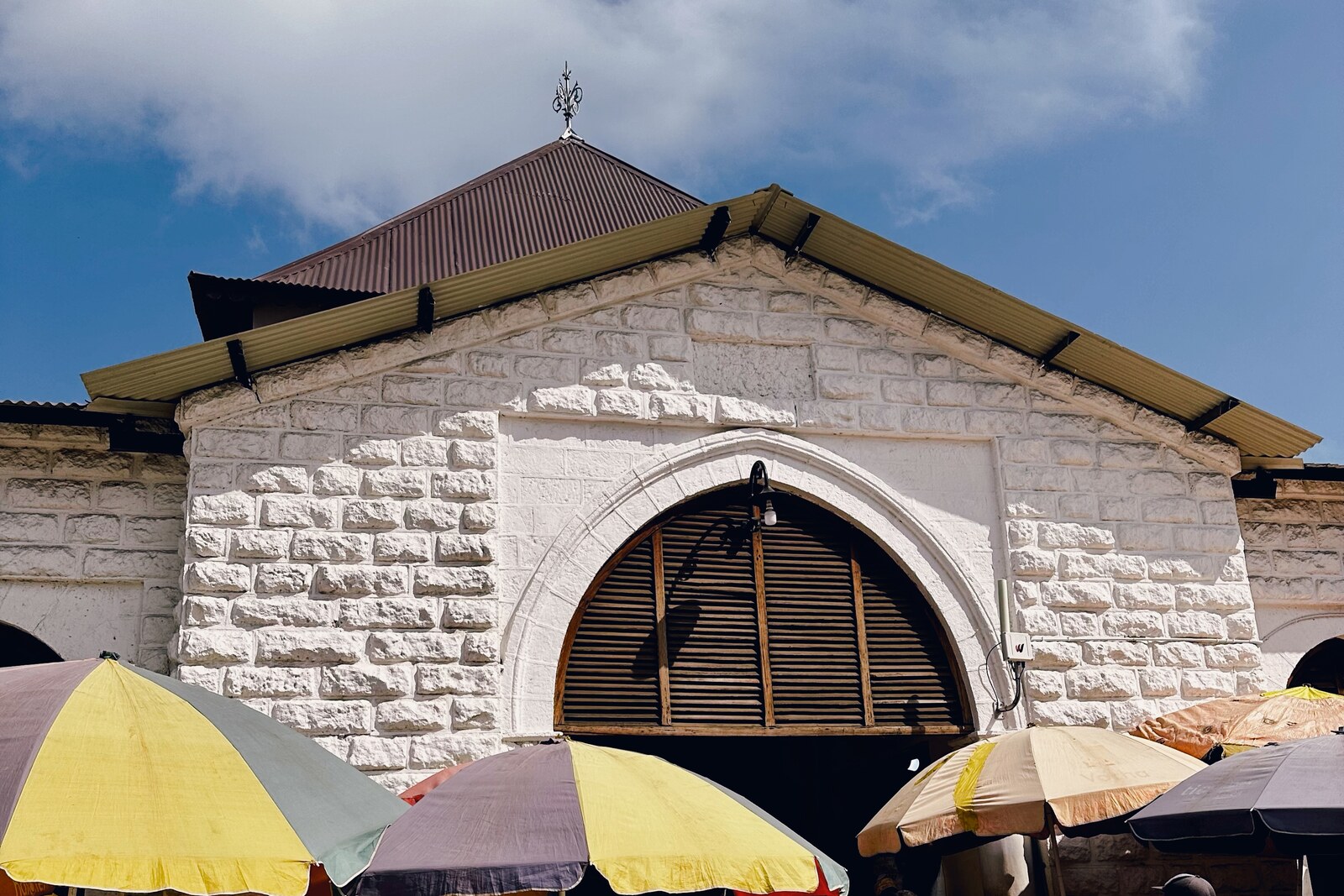
Look around first
What to notice
- One-story market hall
- Arched openings
- Corrugated iron roof
- Stalls around the building
The story of the place
The long, one-story hall with arched openings and a corrugated iron roof has remained the old core of Darajani Market. At the beginning of the twentieth century, it was built for the first purpose-built city market, where sellers received permanent places under cover. Trade soon spread into the courtyards and neighboring streets. Today, fish, meat, vegetables, fruit, grain, and spices are sold beneath and around the arches, while fabric, clothing, household goods, and electronics stand farther out.
After the neighboring slave market closed, food sellers set up a new bazaar here in the eighteen eighties, on the shore of the tidal channel of Pwani Ndogo—“Little Beach.” The water separated the stone-built quarters from Ng'ambo—“the Other Shore”—where artisans, porters, servants, and other workers lived. Many of them remained enslaved and gave their owners most of their earnings.
At low tide, people crossed the channel on foot. At high tide, local boatmen ferried them across in canoes. The only bridge brought together residents of both shores and those carrying goods from the island’s interior. For a seller of fish, vegetables, or fruit, that flow of customers determined whether they could sell all their goods in a day. The market got its name from this bridge: in Swahili, “Darajani” means “at the bridge.”
In nineteen oh four, Sultan Ali bin Hamud instructed the minister of public works, Bomanjee Manekjee, to turn the abandoned plot here into the first purpose-built city market. Manekjee served under the sultan’s government and was responsible for public buildings. He erected a long, one-story hall with arched openings and a corrugated iron roof. Sellers received permanent places under cover, but trade quickly spread into the courtyards and neighboring streets.
Now the old hall makes up only the middle of Darajani Market. Fish, meat, fruit, vegetables, grain, and spices are sold inside it. Fabric, clothing, household goods, and electronics are sold around it. Buyers from Stone Town, Ng'ambo, and other parts of the island still converge here.
The bridge itself is gone. In nineteen seventeen, officials replaced the old wooden crossing with a new one, then began filling in the whole channel. Residents complained about sewage water and mosquito breeding grounds; public works employees brought household rubbish and rubble from demolished houses here. The filling continued until the end of the nineteen fifties. The boatmen had no one left to ferry, some waterfront homes were demolished, but the stagnant water disappeared.
Beneath the roads and stalls in front of the old market hall lies the former bed of Pwani Ndogo. No visible trace of the crossing remains; its exact location is preserved in the word “Darajani”—the market by the bridge that no longer exists.
Useful on site
Open daily 06:00–21:00; busiest in the early morning and at sunset. Some rows close during the daytime hours, but the main pavilions remain open.
Checked: date not specified. Check the official source before visiting.Do not linger in the middle of passageways, watch your step near wet stalls, and photograph sellers only with their consent.