 Guide On Map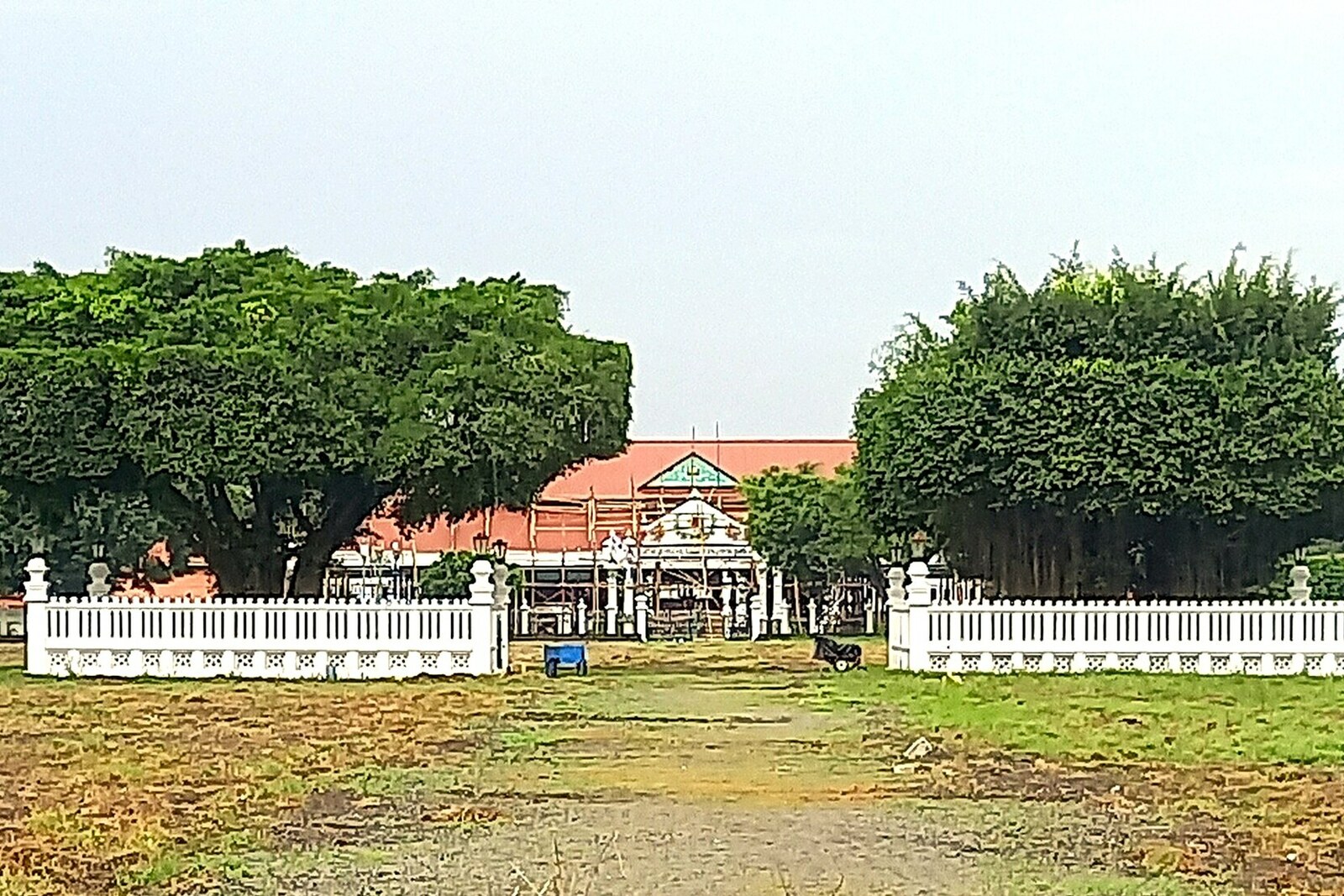
Look around first
What to notice
- Two enclosed banyan trees
- Open parade ground
- Main gate of Kraton Yogyakarta
The story of the place
At the beginning of seventeen eighty-three, the palace shield-bearer Raden Sasra Amijaya wounded Burgemeester, a captain of dragoons of the Dutch East India Company, in the thigh. This happened during Garebeg Mulud, a court festival honoring the birth of the prophet Muhammad, when city residents, the sultan's attendants, and Company representatives gathered at North Alun-alun.
Sasra Amijaya had to prove that he had not attacked deliberately. Burgemeester had to obtain satisfaction for the wound inflicted at a public ceremony. Sultan Hamengkubuwono I offered to pay for the captain's treatment, but Van Rijn, the Company's chief official in Yogyakarta, refused: he considered the blow intentional.
The sultan brought the arrested shield-bearer out to the square in front of Kraton Yogyakarta. Before witnesses, he announced that Sasra Amijaya would be executed. After that, Van Rijn, having already received the required public admission of guilt, himself asked for the condemned man to be pardoned. The sultan revoked the death sentence. Sasra Amijaya remained alive, and the Company representatives could report that the wounded captain's honor had been restored.
But the affair was concluded with one more spectacle. On this same square, by the sultan's order, a tiger was made to fight a buffalo. Such contests were intended above all for the rare visits of high-ranking Dutch officials. The tiger and buffalo were released into an enclosed space, around which palace spearmen stood. That day, the buffalo won.
In the Company's report, this victory was described as final satisfaction for the Dutch side. The Javanese had another interpretation of such fights: they associated the quick, fierce tiger with Europeans, and the slow, hardy buffalo with the Javanese themselves. Usually, the buffalo withstood the first onslaught and overcame the tiger. Van Rijn obtained a public verdict, saved the condemned man by asking for mercy, and then watched as the animal representing the Dutch lost.
North Alun-alun was needed for just such a resolution: Hamengkubuwono I laid out an open parade ground in front of Kraton Yogyakarta, where the court, city residents, and foreign representatives could all immediately see a judicial decision, a military review, or a ceremony. In the middle of the square, two enclosed banyan trees still stand: Kyai Dewadaru to the west and Kyai Wijayadaru to the east. The tiger arenas and cages have long since disappeared.
During Garebeg, palace attendants again pass through this square. They carry gunungan—tall pyramids of food and agricultural produce—to Kauman Great Mosque. The procession crosses that same open parade ground onto which Sasra Amijaya was once brought and where his death sentence ended with a buffalo victory.
Useful on site
Open space; there are no formal tourist hours.
Checked: June 24, 2026. Check the official source before visiting.The square remains a public and ceremonial space. During events, do not cross processions and follow security instructions; on an ordinary day, watch out for traffic along the edges.