 Guide On Map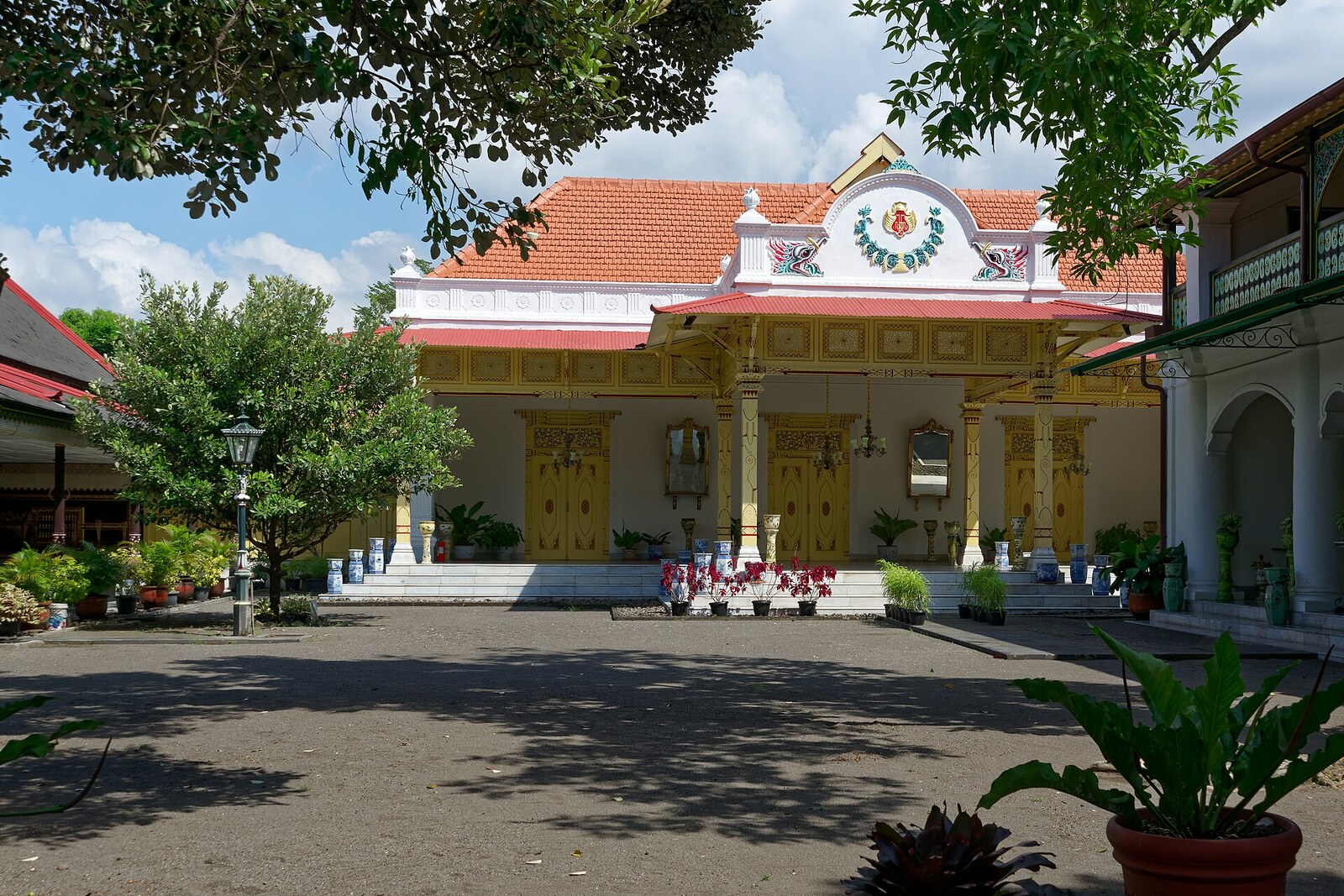
Look around first
What to notice
- Manguntur Tangkil Pavilion
- Siti Hinggil Hall
- The roof of the coronation pavilion
The story of the place
Beyond the walls of Kraton Yogyakarta lies an entire palace world: the sultan's family lives here, court ceremonies take place, and regalia are kept here. The complex stands in the middle of the city's line between Tugu Yogyakarta and Panggung Krapyak. The Manguntur Tangkil Pavilion stands in Siti Hinggil Hall; its roof marks the place where the most important palace decisions became visible to those assembled. Later, the palace departments came under the sultan's direct authority, and the office of chief minister was not restored here.
On March eighteenth, nineteen forty, twenty-eight-year-old Dorojatun was installed on the throne here twice in a single ceremony. First, the son of the deceased sultan received the title of crown prince. Immediately afterward, he was proclaimed Sultan Hamengkubuwono IX.
The ceremony took place in the Manguntur Tangkil Pavilion, inside Siti Hinggil Hall. Kraton means “place of the ruler”: it is a walled palace complex with the residence of the sultan's family, ceremonial courtyards, and storerooms for regalia. Hamengkubuwono I placed it at the center of a line drawn through the city from Tugu Yogyakarta to Panggung Krapyak. In the Manguntur Tangkil Pavilion, succession became an accomplished fact.
Dorojatun's father, Sultan Hamengkubuwono VIII, recalled his son from Leiden when war began in Europe. In Batavia—Jakarta's name at the time—he gave him the Joko Piturun kris, a dagger that served as the sign of the chosen successor. Four days later, the sultan died. Relatives at the palace agreed to hand the throne to Dorojatun, but family will alone was not enough.
Lucien Adam, the Dutch governor of Yogyakarta, sought the future sultan's signature on a new political agreement. Without the agreement, the colonial administration would not permit a coronation, while the palace's finances depended on annual Dutch payments. Dorojatun could receive the throne only together with terms that he considered dangerous for his own court.
The dispute lasted four months. The prince demanded that the pepatih dalem—the sultanate's chief minister—stop serving the colonial administration at the same time. He would not agree to accept advisers chosen by the Dutch or place the palace guard under their direct command. Sixty-year-old Adam did not yield on a single one of these points.
Then Dorojatun suddenly agreed to sign all fifty-nine articles. Later, he said that he had heard a voice telling him to accept the agreement: allegedly, the Dutch did not have long left on Java. This was the sultan's personal explanation; it cannot be verified. Six days before the coronation, he signed the papers at the palace, in the Tratag Prabayeksa Pavilion, and, in his own words, did not reread the text.
Adam received the agreement. Dorojatun received the throne. In his first speech, the new sultan recalled that he had received a Western education but remained Javanese. Two years later, Japanese troops drove out the Dutch administration, and the signed agreement lost force. Hamengkubuwono IX placed the palace departments directly under his own authority, gradually reduced the duties of the pepatih, the sultanate's chief minister, and on August first, nineteen forty-five, dismissed the last chief minister. No new pepatih was appointed in Kraton Yogyakarta.
The Manguntur Tangkil Pavilion has survived in Siti Hinggil Hall as the coronation pavilion. Its present hall was rebuilt by Hamengkubuwono VIII—the father who managed to give his son the kris but died before the heir was officially appointed. Under this roof, Dorojatun completed both remaining steps in succession: first becoming crown prince, then sultan.
Useful on site
Tuesday–Sunday 08:30–14:30; closed Monday.
Checked: June 24, 2026. Check the official source before visiting.Kraton Yogyakarta remains a residence and ceremonial center, so visit only the open areas. Follow the requirements for clothing, headwear, photography, and conduct; check the current entry arrangements separately.