 Guide On Map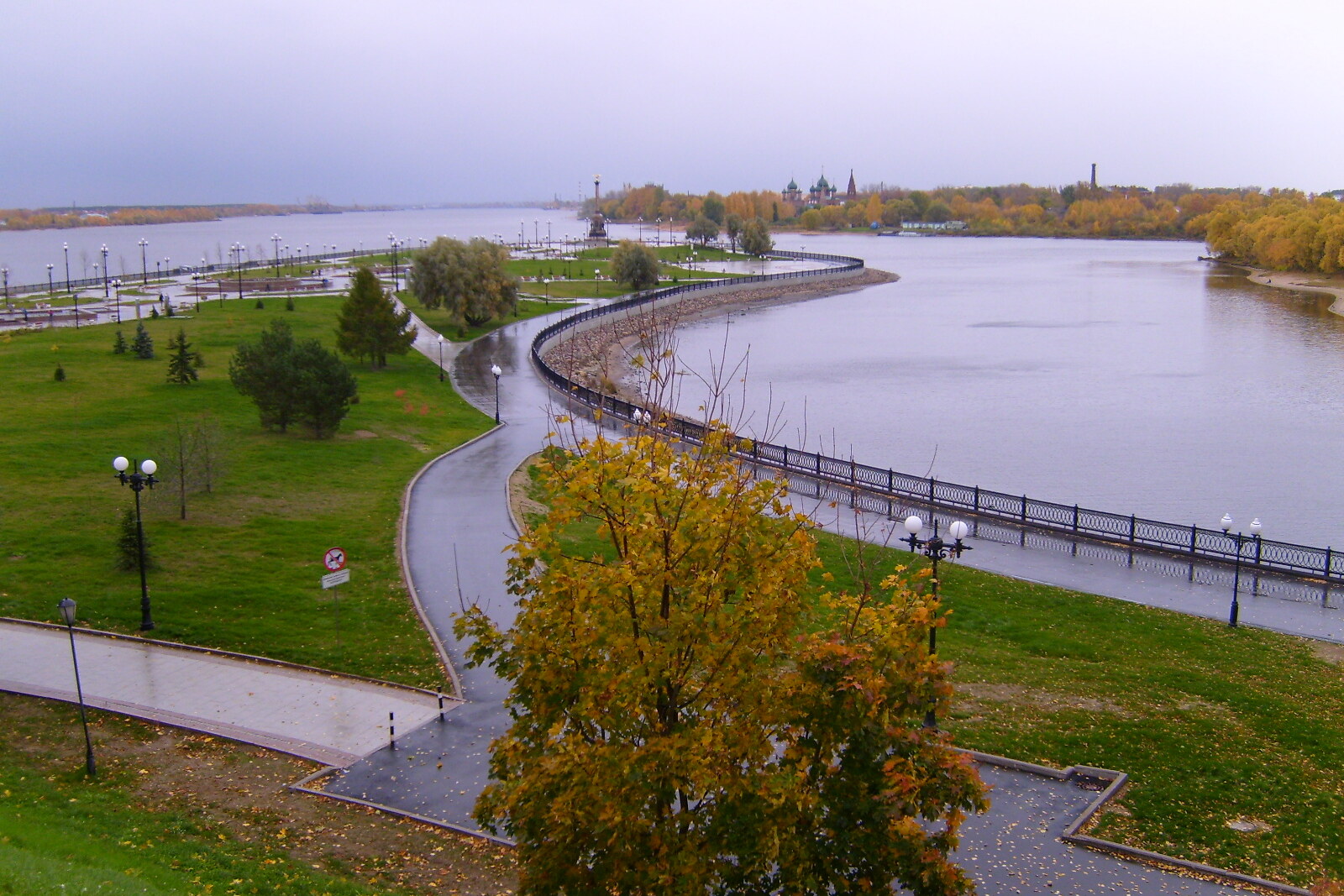
Look around first
What to notice
- Upper Strelka
- Lower park with fountains
- Sandy spit
- The confluence of the Volga River and the Kotorosl River
The story of the place
Strelka is the name for the high triangular headland squeezed between the Volga River and the Kotorosl River. From here, people could watch traffic on the Volga River, while the Kotorosl River provided a route to Rostov Veliky. The lower park with its fountains appeared much later: the sandy spit was widened in the mid-twentieth century. The ancient fortification stood higher up—where the historic development now ends.
The origin of this fortification is linked to an account recorded only in seventeen seventy-one, more than seven centuries after the supposed events. It is a legend, not a chronicle account.
According to it, the Prince of Rostov Veliky, Yaroslav, who sought control over Volga trade, once saw an attack on merchant vessels at the mouth of the Kotorosl River. His druzhina—a prince's armed retinue—drove off the attackers. Yaroslav then demanded that the inhabitants of a nearby settlement, known as Bear Corner, accept Christianity. They refused baptism, but promised not to touch passing vessels and to pay tribute to the prince. Yaroslav left.
He did not consider this agreement sufficient. The next time, the prince arrived with warriors, priests, and craftsmen: he intended to establish a church and a walled town here. For the inhabitants of Bear Corner, this meant losing their former way of life and old faith. They set dogs and some “fierce beast” on the arrivals. Yaroslav struck down the beast with an axe. The inhabitants submitted, and the prince's craftsmen began clearing the high headland, building the Church of the Prophet Elijah (legendary), and hewing wooden fortifications. Yaroslav named the new town after himself.
In the text of the legend itself, the beast is not called a bear. It was made into a bear by later urban tradition, which connected the story with the Coat of Arms of Yaroslavl. A bear with a weapon appeared on the Coat of Arms of Yaroslavl before the “Tale” was recorded, so the coat of arms cannot be considered a direct illustration of the fight.
Archaeologists were able to verify only another part of the story. Beneath upper Strelka, they found fortifications from the first half of the eleventh century: a broad earthen rampart with wooden log compartments inside and a deep ditch. These finds confirm that an early fortified town really existed on the headland, but prove nothing about either the fight or the bear.
The rampart, ditch, and first wooden walls now lie underground on the high bank. They were never on the lower sandy spit. What remains of the prince's town is its name: Yaroslavl literally means the town of Yaroslav.
Useful on site
A public space with no ticket office, but as of 24.06.2026 part of the park and the usual viewing route are closed off by fencing because of landscaping work. Actual access is determined on site.
Checked: June 24, 2026. Check the official source before visiting.Follow the open routes and do not go beyond construction fencing; if the descent is closed, remain on the upper platform.