 Guide On Map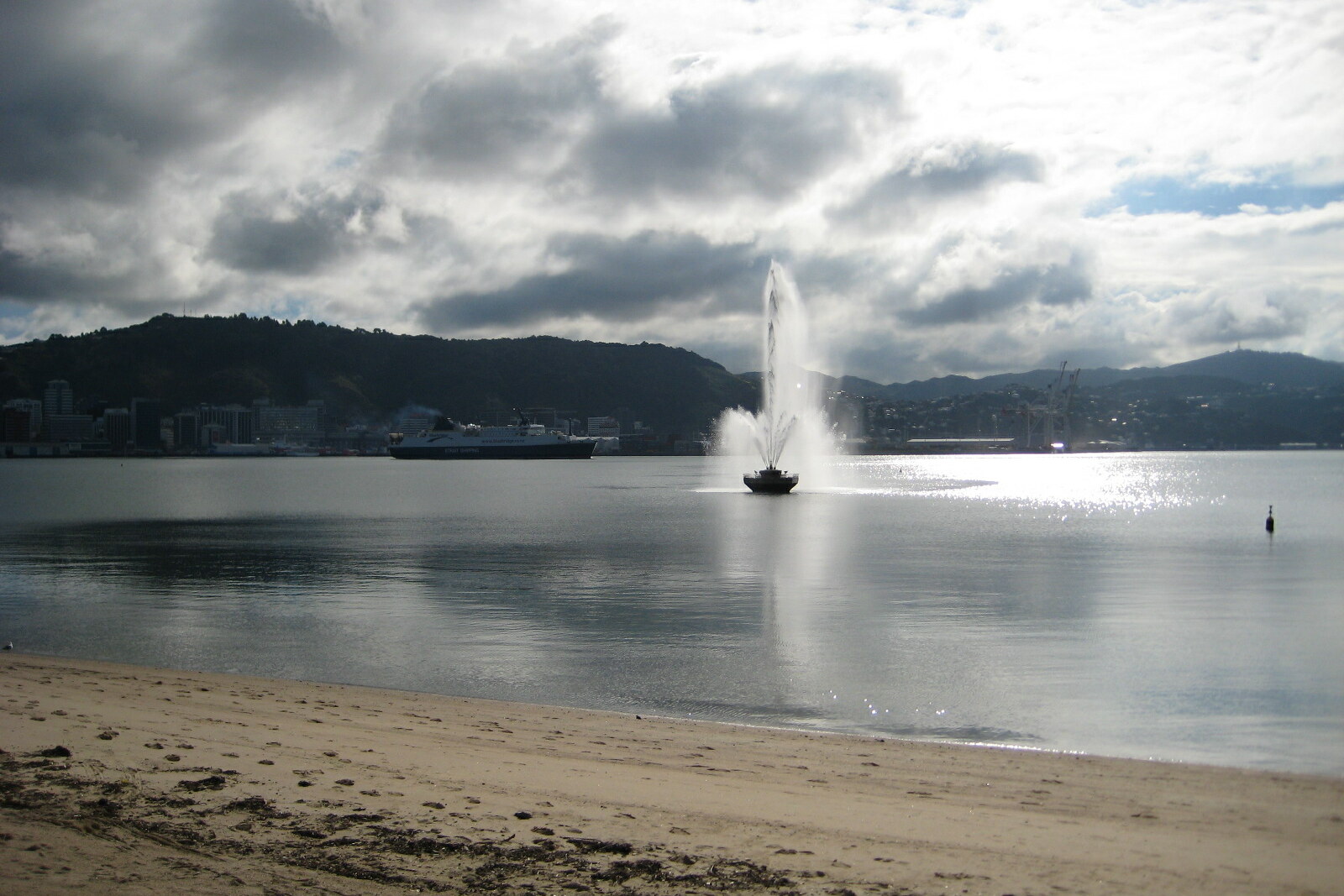
Look around first
What to notice
- The sandy stretch of Freyberg Beach
- The glass facade of Freyberg Pool
- The curve of Oriental Bay
The story of the place
The sandy pocket beside the long glass-fronted pool is called Freyberg Beach. Beyond it stretches the broad curve of Oriental Bay. On the ground, they merge into one urban bathing area, but each name marks a separate human story.
Oriental is the name of the sailing ship that brought the first British settlers to Wellington in eighteen forty. Among its passengers was George Duppa, who came to become a landowner and make money from farming. He first tried to establish a farm by the Hutt River. After a flood, an earthquake, and a fire in the settlement, Duppa moved to this then almost empty, rocky bay and assembled a house on its eastern shore, brought from England in separate sections.
At first, the bay was called Duppa Bay, after its only European resident. Duppa himself replaced this name with that of the ship on which he had arrived. He did not intend to live here for long: as early as eighteen forty-one, he left to look for land near Nelson, and the following summer he put the house up for sale. The advertisement was repeated for another three years, but no buyer was found. Duppa left the bay; the name of his ship remained.
The story of Freyberg Beach begins on the site of today’s pool. In nineteen hundred, the city council established the open-air Te Aro Baths here: part of the harbour was enclosed and turned into a public pool. In the early twentieth century, Bernard Cyril Freyberg, a young Wellington swimmer striving for a national championship, came here regularly. Swimming did not support him: he learned a trade from a dentist and later worked as a dentist himself. At Te Aro, Freyberg trained for New Zealand’s one-hundred-yard championships and won this title in nineteen oh six, and then in nineteen ten.
Five years later, this skill was needed outside sport. Before the Allied landing on the Gallipoli Peninsula, officers needed to simulate preparations for a landing at Bulair and divert Ottoman forces from the actual landing sites. Freyberg, then a lieutenant in the Royal Naval Division, volunteered to reach the shore by swimming. At night, he climbed down from a ship naked, having smeared his body with grease against the cold, and dragged a waterproof bag containing signal lights. The three kilometers to land took an hour and a quarter. Freyberg lit several lights at different points along the coast and returned to the sea. No landing at Bulair followed: the lights were part of a false operation. The swimmer himself made it back and received the Distinguished Service Order for this sortie.
Later, Freyberg commanded New Zealand troops and became the country’s first Governor-General to have grown up in New Zealand. He died in July nineteen sixty-three, when a new indoor pool was already nearing completion on the site of the demolished Te Aro Baths. For the first time, it gave Wellington swimmers the opportunity to train here year-round. The city named it after Freyberg in his memory: the future general learned to win in the water at this very site.
The old sea baths disappeared. In their place, Freyberg Pool juts out into the harbour, and the short beach by its wall bears Freyberg’s name. The broader curve of shore retains the name of the sailing ship Oriental; George Duppa’s prefabricated house has long been gone from it.
Useful on site
The beach and outdoor promenade are accessible as open urban space. Freyberg Pool has separate hours and paid admission; the route does not require entry.
Checked: June 30, 2026. Check the official source before visiting.Everything important is visible from the promenade. By the water, take account of the wind, slippery surfaces, and the tide; the story does not require entering the pool.