 Guide On Map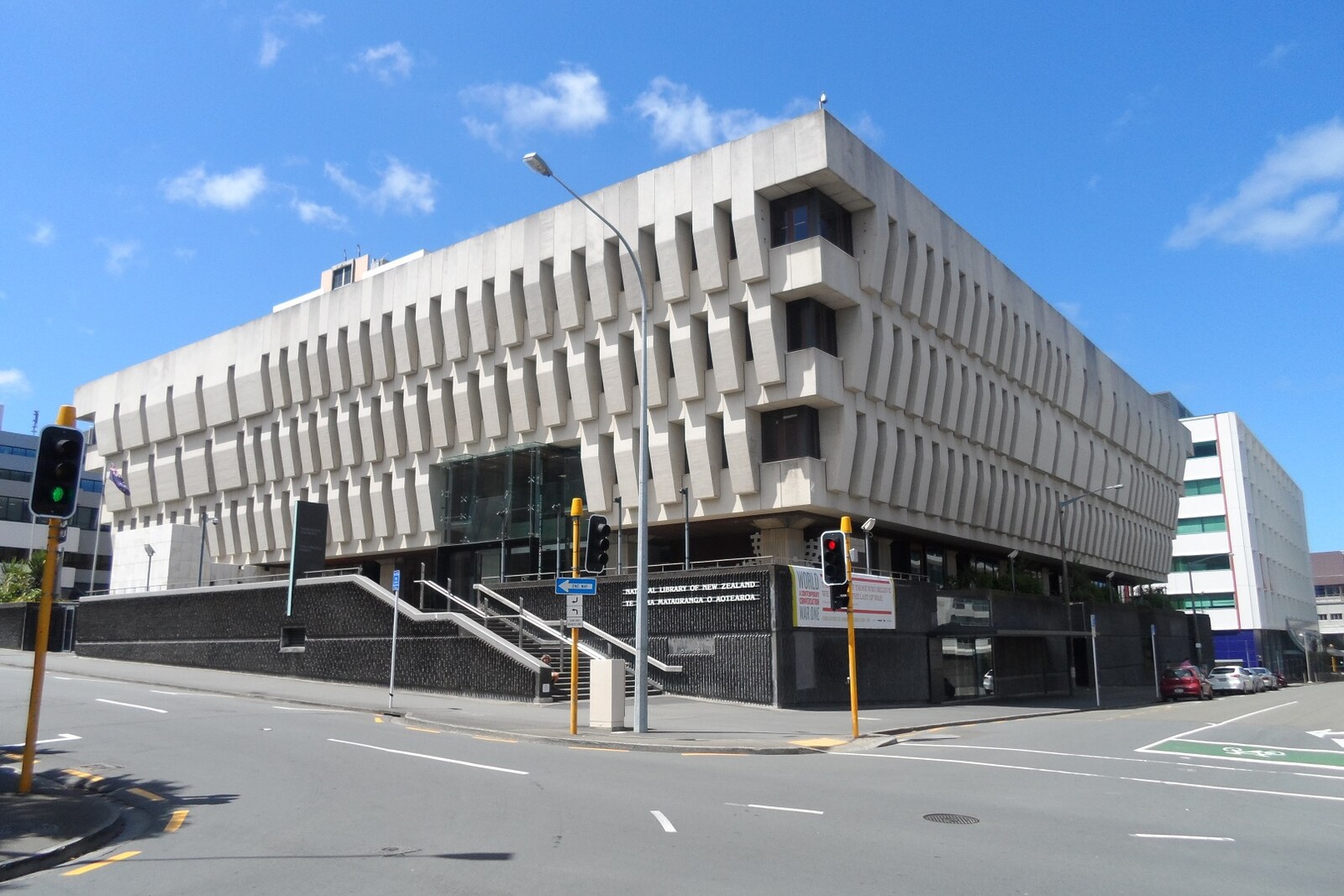
Look around first
What to notice
- The wooden casing of the exhibition room
- Glass display cases with documents
- The long petition scroll
- Signatures and personal marks
The story of the place
When the former room in the neighboring Archives New Zealand building could no longer handle storage, National Library of New Zealand equipped a separate room for three manuscripts. The Declaration of Independence, the Treaty of Waitangi, and the eighteen ninety-three Women's Suffrage Petition are displayed here, although the Chief Archivist remains responsible for the originals. Outside, the room is clad in rimu timber collected after the cyclone in Kahurangi National Park; its outlines recall a Māori casket for valuables. Behind glass lie sheets with signatures and personal marks, and among them stretches the women's petition scroll, made from hundreds of joined pages.
In August two thousand sixteen, two schoolchildren unveiled the name of the future exhibition here. Ella Thorpe worked with archivists, researching information about women who had signed the eighteen ninety-three Women's Suffrage Petition for an interactive index. Te Haupuru Makoare was descended from people whose signatures appeared on the Declaration of Independence of the United Tribes of New Zealand and the Treaty of Waitangi. The adults entrusted the unveiling of the emblem to people already connected with the three documents—through research and kinship.
The exhibition was called He Tohu—“signs.” This means signatures, names, and personal marks. Some Māori chiefs did not write their names in Latin letters and left their own marks. For the exhibition's creators, it was important to show not abstract state papers, but traces of particular people who agreed to support what was written.
The first document is the Declaration of Independence of the United Tribes of New Zealand of eighteen thirty-five. The second is the Treaty of Waitangi of eighteen forty, between the British Crown and Māori chiefs. The third is the petition of eighteen ninety-three, by which women demanded the right to vote. The petition's main scroll was assembled from more than five hundred joined sheets. It is about two hundred seventy-four meters long and weighs more than seven kilograms.
The originals used to be displayed in the Constitution Room of the neighboring Archives New Zealand building. Over time, archivists acknowledged that the room no longer provided the necessary storage conditions and convenient access. Moving old paper two hundred meters proved to be a separate operation. The Treaty of Waitangi had previously survived fire, damp, and rats; the long petition was divided into sections for conservation and digitization. Before He Tohu opened, conservators joined it together again into one scroll. Their craft involved working with fragile originals, and here any mistake would remain on a document that could not be replaced.
Before dawn on April twenty-second, two thousand seventeen, archive staff carried out special boxes. The procession was led by representatives of Ngāpuhi, the people to whom many signatories of the Declaration and the Treaty belonged. Representatives of other Māori communities, women's organizations, churches, the army, and government institutions walked with them. After a karakia prayer, the documents were brought into the library and placed in the prepared room.
Its wooden casing recalls a waka huia—a casket for valuables. The architects clad it in rimu timber: these trees had been felled by Cyclone Ita in Kahurangi National Park. Inside, the lighting, temperature, and humidity are controlled separately. The library receives visitors, but the documents did not become part of its collection: the Chief Archivist remains responsible for them. Under glass are the very sheets with signatures and marks for whose sake the predawn procession came here.
Useful on site
He Tohu is free; National Library of New Zealand lists hours 9:00–17:00 Monday-Friday and 9:00–13:00 Saturday, with closures on Sundays/holidays and possible changes.
Checked: June 27, 2026. Check the official source before visiting.Allow extra time for a meaningful visit. Follow the exhibition rules, and do not expect to be able to examine the documents properly in just a few minutes.