 Guide On Map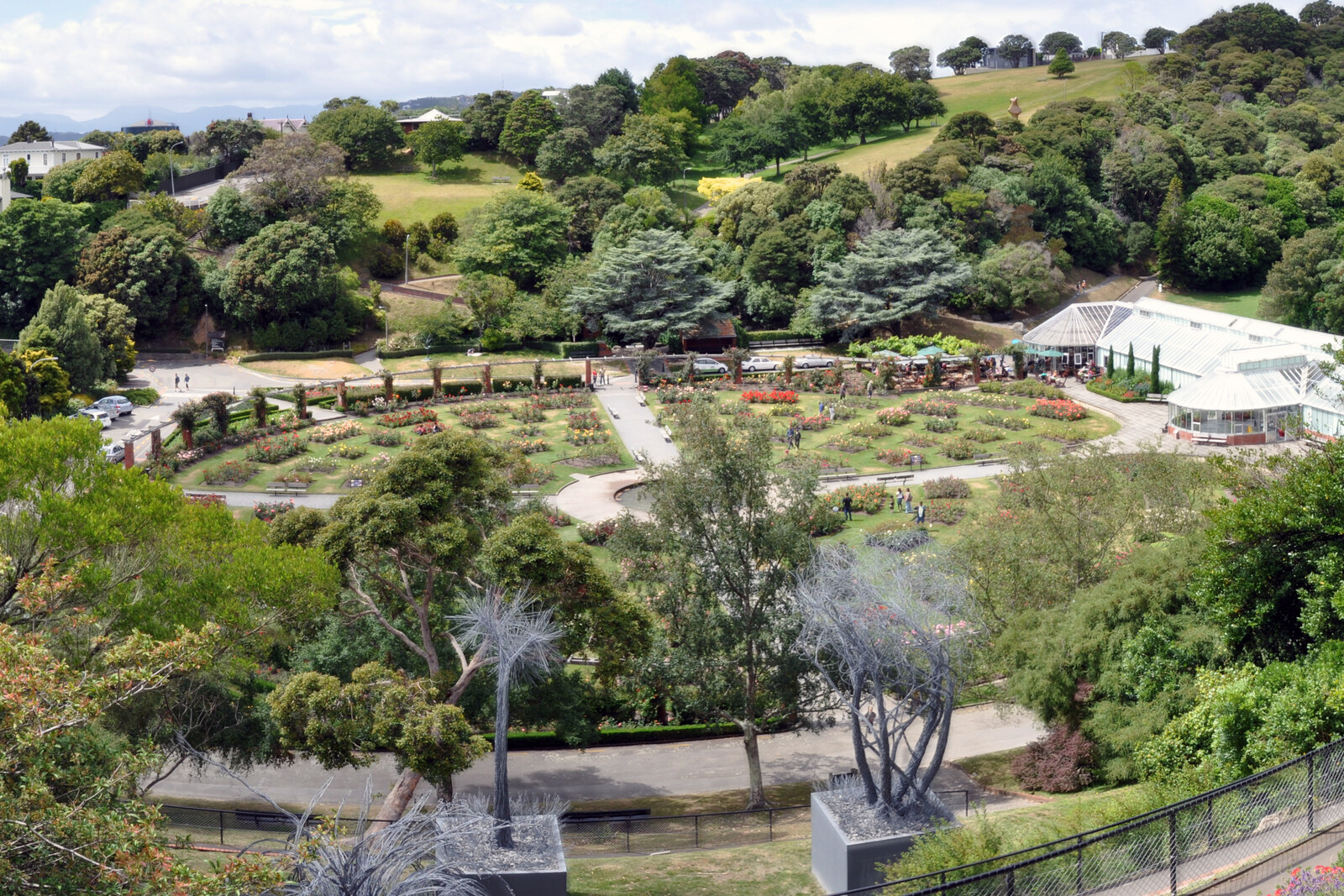
Look around first
What to notice
- Circular flower beds
- Variety labels
- Trial beds
- Bronze fountain
The story of the place
A ravine once ran beneath this level site by the slope, and it was filled with earth over the years. The resulting space became a formal city rose garden: circular flower beds form a ring around a bronze fountain. The garden is named in gratitude to Rosina and Charles Norwood for their work and donations to the city, and their children brought the present fountain basin to replace their mother's gift, which had stood in a London bank and then for almost a century on an Australian estate.
The labels beside the bushes serve a practical purpose. The garden contains more than three hundred varieties, and several beds are set aside for trials: gardeners test how new roses cope with local conditions. If a variety grows poorly year after year, the entire bed is replaced. Public pruning lessons have been held here since the nineteen fifties.
This system grew out of a highly inconvenient first experience. In the late nineteen forties, Edward Hutt, director of the city parks, was campaigning for a large formal rose garden for Wellington. He chose a rare level site at the foot of the slopes: a ravine had once run here and had gradually been filled with earth. Hutt persuaded Wellington City Council to allocate funds, ordered a circle of beds to be laid out around a central basin, and began planting in nineteen fifty.
When the young bushes began to grow, staff carried out the usual preventive spraying. A herbicide ended up on the roses instead of a treatment for disease. It was not possible to establish who had mixed up the products or whether it was the mistake of one person. At first, the bushes were heavily pruned in the hope of saving them.
Hutt was responsible for an expensive city project and tried to conceal what had happened. In a statement to the press, he said that the roses were affected by fungus and had been sent to Berhampore Nursery to recover. In fact, most of the bushes were taken to the dump. Replacement annuals occupied the empty beds for the summer, and new roses were grown for the garden. Stories of sabotage, resignation, and reshuffles circulated among the staff, but they were never confirmed. Hutt himself kept his position and ran the city parks until nineteen sixty-five.
The fountain at the center of the circle leads to the garden's name. Rosina Ann Norwood was the wife of former mayor Charles Norwood; after he was knighted, she was called Lady Norwood. She was interested in the development of city parks and headed a women's committee that raised money for a free Wellington ambulance service. Even before the war, Rosina offered funds to improve the greenhouse here, but the plan had to be postponed. In nineteen fifty, Wellington City Council resolved to name the rose garden then under construction after her, in gratitude to Rosina and Charles Norwood for their work and donations to the city.
A few years later, Rosina gave the garden its central fountain. The present bronze basin is a different one: in nineteen seventy-seven, the Norwood children replaced their mother's gift with an antique fountain that had once stood in a London bank and then for about one hundred years on an Australian estate. From the first planting, the plan of circular beds and the story Hutt wanted to hide remain here; from Lady Norwood, her name over the garden and the fountain chosen by her children.
Useful on site
Outdoor part of the garden; the guide is dawn to dusk.
Checked: June 26, 2026. Check the official source before visiting.Blooming depends on the season, but the layout and fountain can be appreciated all year round. Do not enter the flower beds or cut the plants.