 Guide On Map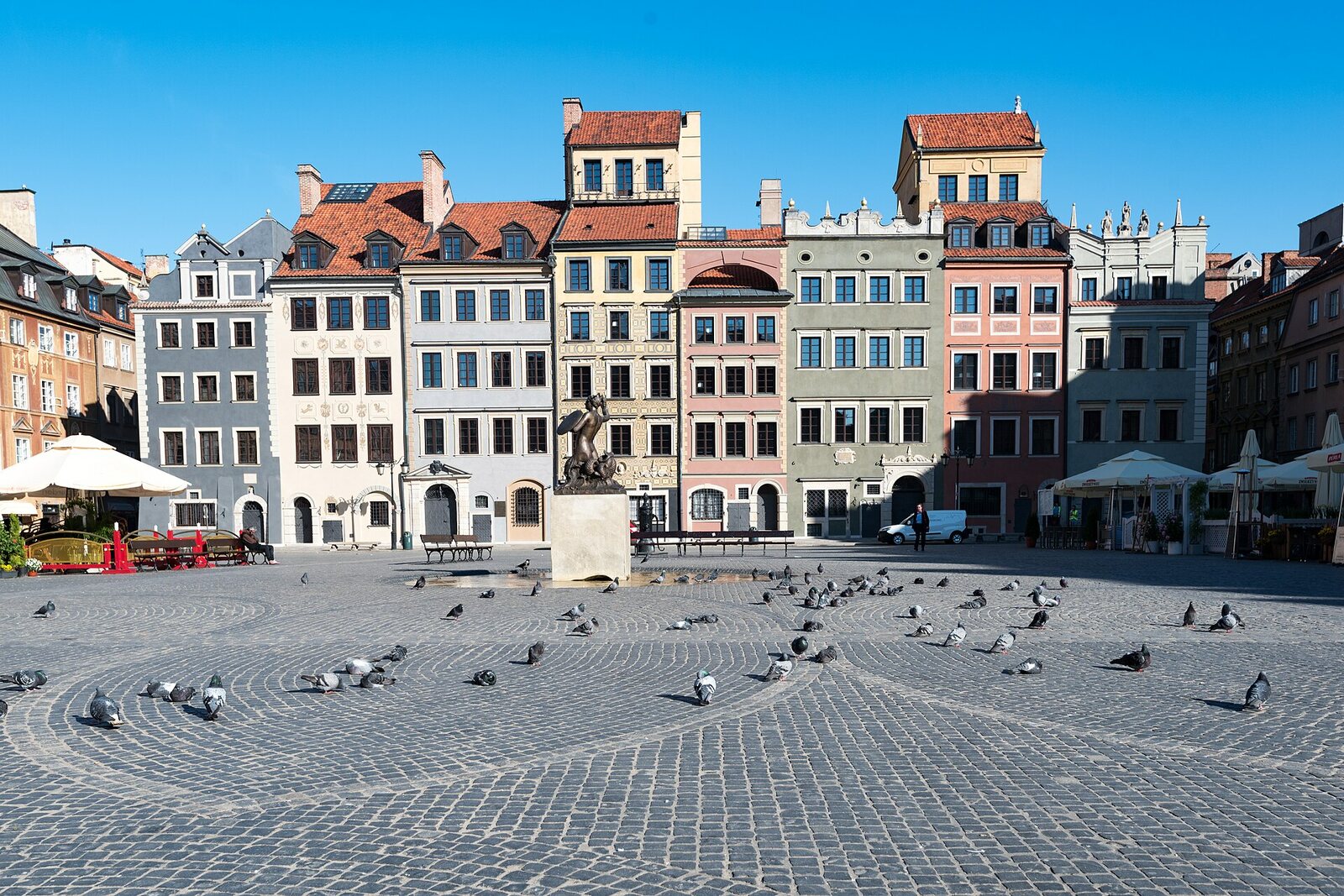
Look around first
What to notice
- The fountain with the Warsaw Mermaid
- The northern row of houses of the Museum of Warsaw
- Plaques of the Dekert Side
The story of the place
On December second, seventeen eighty-nine, carriages set off from the town hall that occupied the middle of this square for the Royal Castle. They carried nearly three hundred representatives of the royal cities—the name for cities subject to the Crown rather than to a private owner. The delegates wore black. Their journey became known as the Black Procession because of this clothing.
It was led by Jan Dekert, head of the municipal government of Old Warsaw—a city within the fortress walls. He sought for townspeople the rights that had previously been enjoyed almost exclusively by the nobility. Dekert began as a clerk in a cloth shop, then took over his employer's business and grew rich from the cloth trade and wool production. But wealth did not give him the status of a nobleman. Even a wealthy merchant did not have the same protection from arrest and confiscation without a court verdict, could not freely buy landed estates, and had almost no part in passing state laws.
The procession began here precisely because the market square was arranged around the city administration. The council met in the town hall, documents and the treasury were kept there, and market stalls stood around its walls. Dekert sent invitations across the country, and the delegates gathered in this building. They demanded inviolability of person and property, the right to acquire land, hold state offices, and represent the cities in the Sejm.
From the town hall, the delegates went to the king, the marshal of the Sejm, and the senators with a written memorial. After this demonstration, the Sejm established a special commission to consider the cities' demands. On April eighteenth, seventeen ninety-one, the Free Royal Cities Act was adopted. The townspeople did not receive full equality with the nobility, but they could no longer be imprisoned or deprived of property without a court verdict. They were permitted to buy land, advance in civil and military service, and, through representatives, take part in discussions of urban matters. The act applied only to royal cities. Two weeks later, it was incorporated into the Constitution of 3 May.
Dekert did not live to see this. The years-long campaign ruined his personal fortune, and on October fourth, seventeen ninety, he died—about half a year before the act was adopted. The reforms that were carried out also proved short-lived: the Partitions of Poland in the following years interrupted their implementation.
The town hall was dismantled in eighteen seventeen, when the city administration moved to Theatre Square. That is why the open center with its fountain and Warsaw Mermaid once looked different: the town hall and the stalls surrounding it occupied most of the space. The northern row of houses, where the Museum of Warsaw is located, has officially been called the Dekert Side since nineteen sixteen. Plaques bearing his name hang opposite the place from which the carriages of the Black Procession set off.
Useful on site
Open urban space; choose a viewing spot that does not obstruct pedestrian traffic.
Checked: date not specified. Check the official source before visiting.The figure in the square is a copy; the damaged historic original is kept in the Museum of Warsaw and requires a separate visit. For listening, move away from cafés and tour groups.