 Guide On Map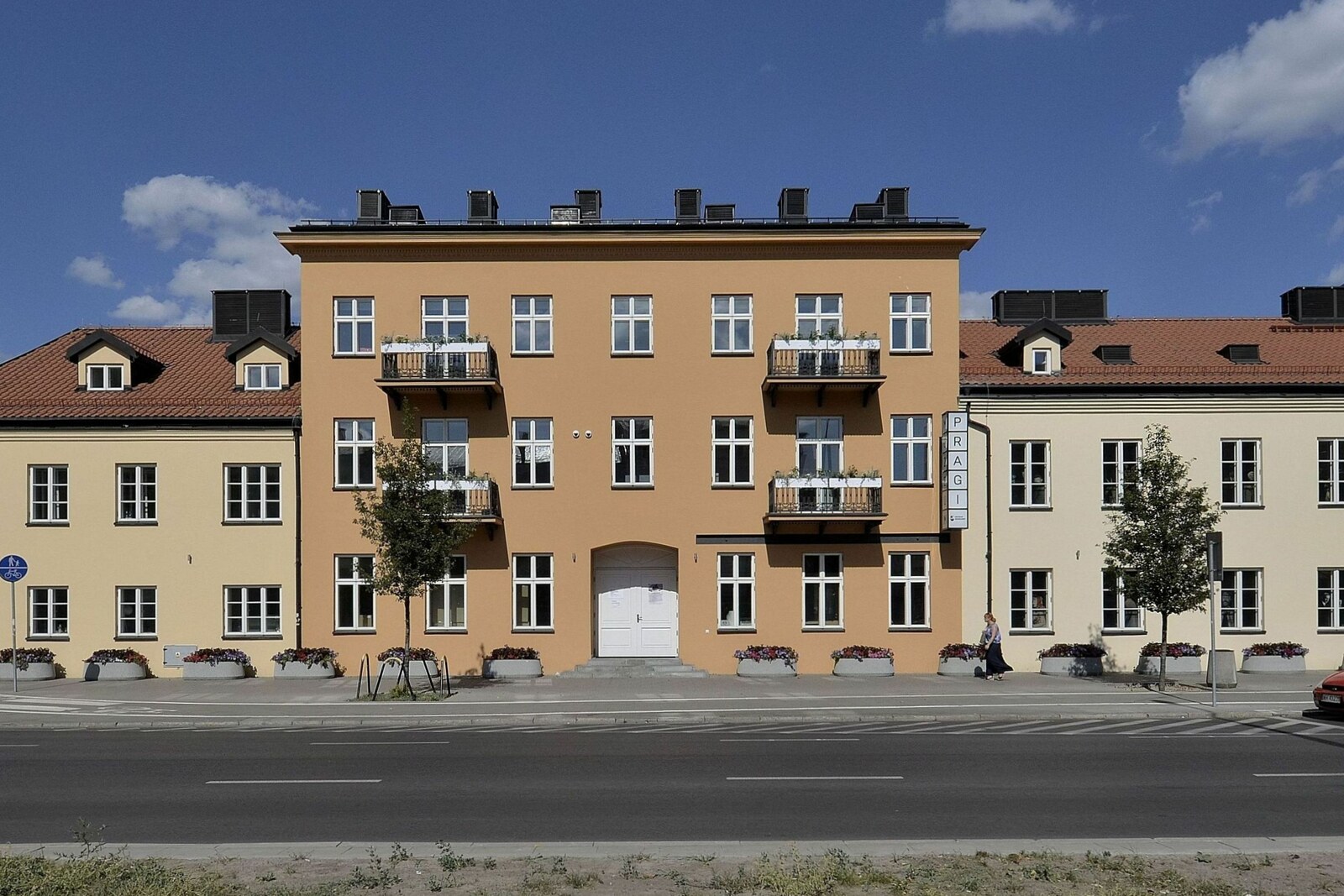
Look around first
What to notice
- Three houses along Targowa Street
- The courtyard annex
- Fragments of wall paintings
- An image of the Western Wall
The story of the place
Three old houses stretch along Targowa Street, and behind their facades lies a courtyard with a low service building. The museum galleries contain family photographs, objects, and recorded voices of residents of Warsaw's right bank, alongside a model of old Praga and accounts of markets, crafts, and local businesses. Deep in the courtyard, two small rooms have survived, where neighbors and traders once came for daily prayer. They were left in their original place, and the museum occupies not only the houses along the street but also this hidden courtyard.
In the spring of nineteen ninety-six, the Warsaw historians Janusz Sujecki and Jarosław Zieliński inspected a dilapidated annex in the courtyard at Targowa Street, fifty to fifty-two. Sujecki belonged to a group defending Warsaw's cultural heritage, while Zieliński belonged to the Society for the Protection of Monuments. They were looking for traces of old development that could disappear during repairs or demolition.
The annex's main room was then used as a warehouse. Behind shelves and piles of boxes, the historians saw fragments of Jerusalem on the wall: people at the Western Wall, Rachel's Tomb, zodiac signs, and inscriptions in Hebrew. This was how two former Jewish prayer rooms were discovered. They were small rooms for the daily prayers of neighbors and traders, not a large communal synagogue. In nineteen twenty-six, three such rooms were registered at this address.
The surviving paintings were executed in nineteen thirty-four. An inscription says that the image of the Western Wall was paid for by four brothers, the sons of David Grinstein. After the war, a workshop and a garage were set up in one room, and a tailor's workshop in the other. The walls were covered with mortar and layers of paint. Moisture and practical use destroyed most of the images, but the surviving fragments remained hidden until the researchers arrived.
The discovery did not yet mean salvation. The garage tenant had to be evicted, the empty annex remained damp and unheated, and the paint continued to peel off. New fragments were discovered in the neighboring room only three years later. Sujecki's organization sought protection for the entire site, and in two thousand one the complex was entered in the register of monuments. According to the defenders themselves, this listing halted the planned demolition.
It was the paintings that determined the address's further fate. In two thousand six, the Historical Museum of Warsaw created a department devoted to the right bank, and a year later the city transferred three houses on Targowa Street and the courtyard annex to it. Restorers stabilized the plaster, dried the walls, and uncovered the images without painting in the lost scenes. About one fifth of the former painting remained.
While the repairs were underway, staff began recording the memories of residents of Warsaw's right bank. These interviews, family photographs, and objects donated by city residents entered the exhibition alongside a model of old Praga and materials on markets, crafts, and local businesses. This was how the present-day Museum of Praga came into being—a district museum assembled in part from the testimony of Praga residents themselves.
The rooms discovered by Sujecki and Zieliński were not moved anywhere. The main exhibition occupies three houses along Targowa Street, and behind them, in the annex of the former warehouse, remain the very walls because of which the museum was located at this address.
Useful on site
Until 5 July 2026: Tue, Wed, Fri 9:00–17:00; Thu 11:00–20:00; Sat–Sun 10:00–18:00; Mon closed. The official page states that it will be closed 6 July–15 September 2026; Thursday is usually free.
Checked: June 29, 2026. Check the official source before visiting.Before visiting, check whether the museum is admitting visitors. If the building is closed, limit yourself to the facades and do not go beyond the closed gates.