 Guide On Map
Praga-Północ: Warsaw's Right Bank
From Wileński Square along Ząbkowska Street to Nowa Praga
Guide On Map on your phone
Open the walk like a regular app
It takes about 10 seconds to install. No app store needed.
The whole path
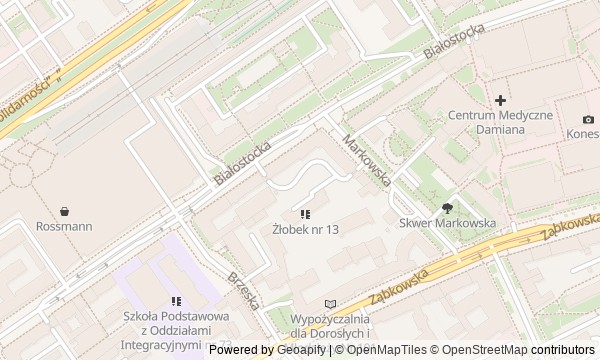
Route map
About the walk
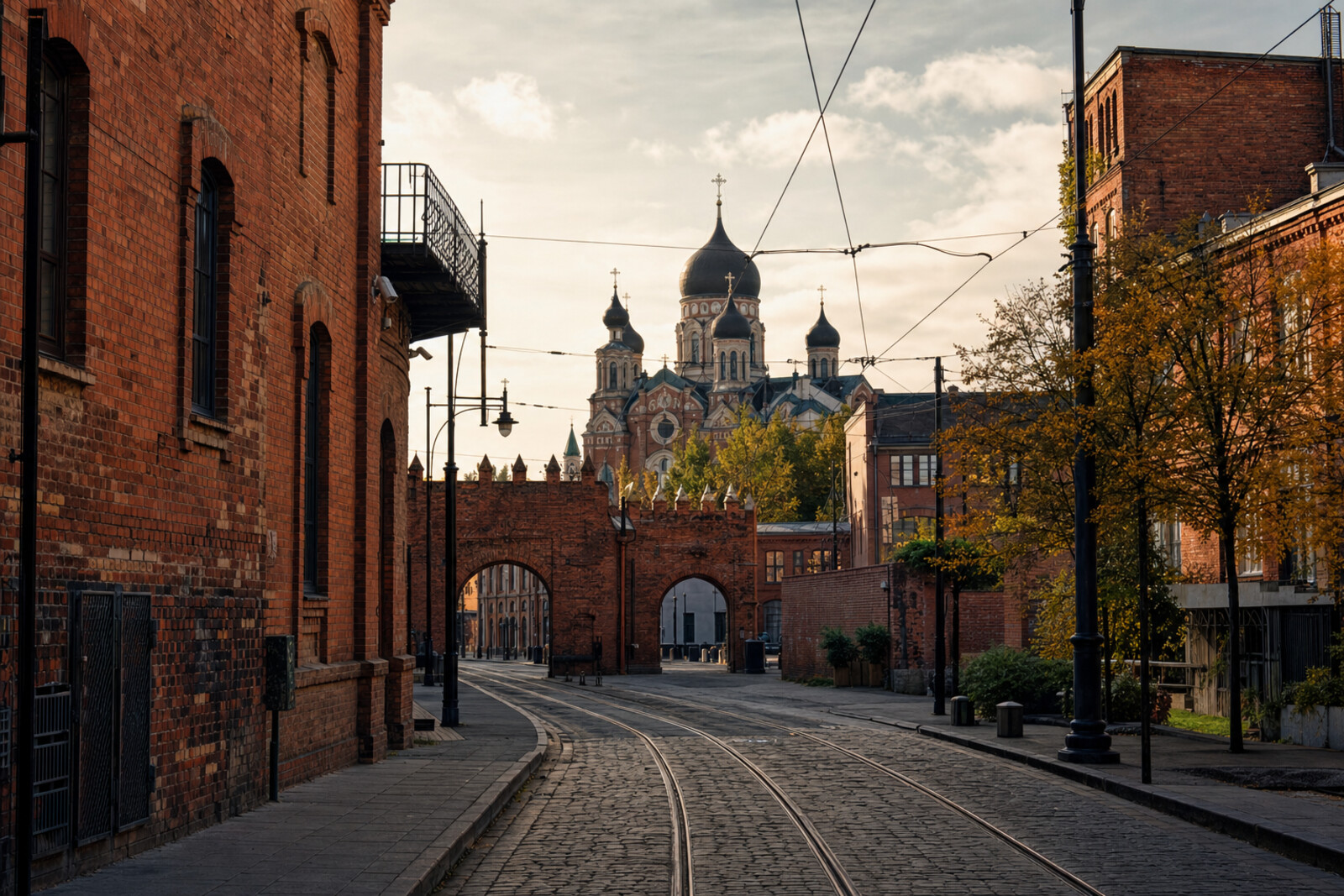
The walk follows Praga-Północ—from the railway station and the Orthodox cathedral, along Ząbkowska Street to the old bazaar, the red-brick buildings of Koneser, and the streets of Nowa Praga.
You will walk the right bank, where prewar houses, courtyards, workshops, and factory buildings still hold traces of an earlier city life. Behind an ordinary facade, a prayer hall will emerge. In a warehouse annex, fragments of Jerusalem will appear. At the former factory, a permit to obtain vodka will one day be written right on a board—why will become clear in the story.
These stories rest on particular human decisions: who left valuable land undeveloped, how painted decorations vanished beneath practical layers, and who risked a position of authority for a worker. There will be no survey lecture or ready-made city legends.
By the end, you will be able to distinguish the commercial Praga that grew up around the stations from Nowa Praga, laid out on sand—and explain why these courtyards, buildings, and streets tell more about the right bank than grand facades do.
Why this order
Wileński Square and the cathedral form one opening scene: the railway entrance to the city stands beside a church built to greet passengers arriving from St. Petersburg. The route then heads south along Targowa Street and turns onto Ząbkowska Street—from the official facade of imperial Praga to a private prayer hall in the courtyard of a tenement house. The bazaar continues this courtyard story as a commercial one: nearby, you will see how a private plot took in sellers pushed off the street. Heading east along Ząbkowska Street leads from individual shops to an entire industrial quarter that grew thanks to the same railways. Returning to Targowa Street is necessary for the museum: after the factory buildings, it shows how residential houses and hidden prayer halls became documents of the district. The final stretch north, toward Stalowa Street and Konopacki Palace, takes you out of old commercial Praga and into the planned settlement of Nowa Praga—to the home of the man who divided this area into streets and plots.
Those who want to see Warsaw beyond the grand center Lovers of urban history, old courtyards, and industrial architecture Those who care about human decisions, not a list of dates
Those expecting a walk only among postcard sights Those who dislike stories of religious conflict and military occupation Those who need a route without entering courtyards and museum spaces
Before you go
Wear comfortable shoes: much of the experience lies not inside a single building but between squares, gates, and long facades. Check access to the Museum of Praga in advance: it is scheduled to close from 6 July to 15 September 2026. The cathedral remains an active church, so keep quiet inside and do not enter during a service unless necessary. The bazaar's activity depends on the day and on the sellers; do not expect to see the historic market in full. A visit to the Polish Vodka Museum and its tasting are organized separately, so plan them in advance if you want to add them to the walk.
When to go
The route takes about 2,5 hours and covers roughly 2,7 km. With a visit to the Museum of Praga or a separate tour at the Polish Vodka Museum, allow about 3 hours, not including any possible wait before entry.
Backup plan
If the Museum of Praga is closed, look at the three tenement houses and the entrance section of the complex from the street, then give the freed-up time to the bazaar and Ząbkowska Street; enter the courtyard only when access is open. Even closed, the cathedral remains a complete stop thanks to its five-domed silhouette, memorial cross, and fragments of bells by the entrance. At Koneser, you can skip the museum and focus on the gates, chimney, and production buildings. If Konopacki Palace is not open to visitors, end the route at its facade and walk along Stalowa Street, without trying to enter closed residential courtyards.
Route conditions
Elevation. Ascent — 9 m; descent — 6 m
OpenStreetMap extract of June 18, 2026: database data, not a check on the ground. Data © OpenStreetMap contributors, ODbL licence
Walk plan
Open in maps ↗- 1
Wileński Square
This stop will explain how a railway designed to move troops became the beginning of an exiled scholar's journey. - 2
Cathedral of St. Mary Magdalene
Here, a church dispute will leave the metropolitan’s office and change the structure of Polish Orthodoxy. - 3
Ząbkowska Street, eleven
The courtyard prayer hall shows how a room for prayer became a workshop, and how fragments of wall painting revealed its former purpose. - 4
Różycki Bazaar
This stop will show how a ban on street trading turned an undeveloped private plot into a permanent market. - 5
“Koneser” and the Polish Vodka Museum
The factory quarter will show how official papers and the products of an occupation-era enterprise were used to save workers. - 6
Museum of Praga
Here, a chance discovery will halt the demolition of dilapidated buildings and determine the address of the district's future museum. - 7
Stalowa Street and the Konopacki Palace
The finale will show how a new settlement appeared on sandy ground and why its street received the name of a factory that operated only briefly.
Route features
Everything you need stays in the browser
Progress, saves and your trip plan are stored on this device.
Add Guide On Map to your home screen so the walk opens outside the browser.
How we handle sources, maps and corrections: our editorial standards