 Guide On Map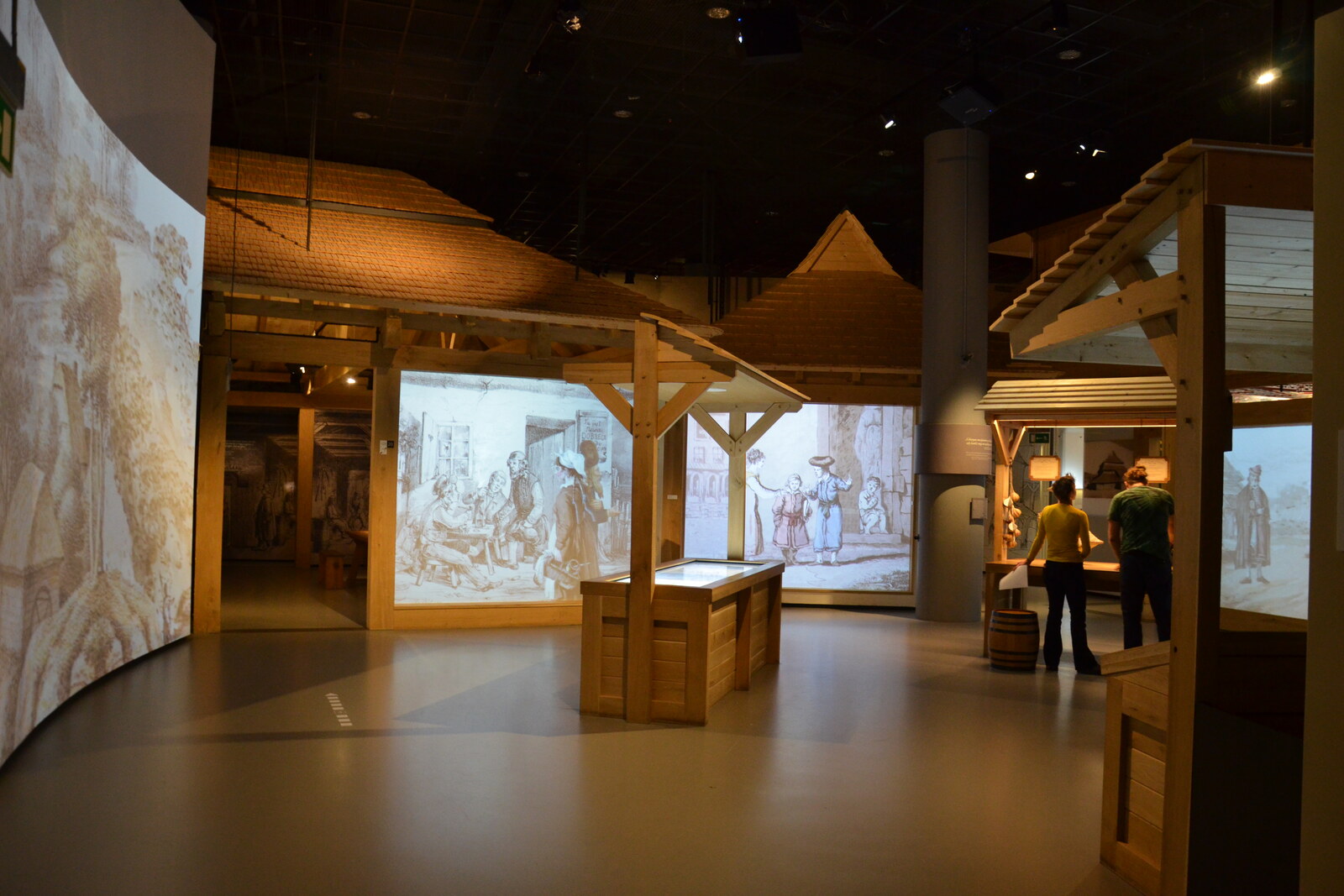
Look around first
What to notice
- Glass facade
- The word “POLIN” on the facade
- The monument opposite
The story of the place
The museum's glass facade, opposite the Monument to the Ghetto Heroes, bears the large word POLIN. Its nine halls bring together Jewish life in the Polish lands from the Middle Ages to the present day. The catastrophe is given one part of this journey, and the exhibition then leads on to the postwar years and the community's life today. The city transferred the museum site to the civic initiative beside the monument, while different participants in the project paid for the building and the main exhibition.
In the spring of nineteen forty-five, surviving members of the Jewish resistance gathered for the first time in this square, amid the ruins of Muranów. Most of their comrades had died; the former district no longer existed. Those gathered said that a museum was needed here. It was meant to preserve not only the circumstances of destruction, but also the world that had perished with the people.
Construction did not begin then. Monuments appeared, residential buildings rose around them, and the idea remained a conversation among survivors. In nineteen eighty-nine, Marek Edelman, one of the surviving commanders of the ghetto uprising, recalled that meeting in a letter to the organizers of a commemorative ceremony. Thanks to his letter, it is known that the idea of a museum arose in this square before its postwar redevelopment.
The practical path to the present building began four years after the letter. Grażyna Pawlak, deputy director for development at the Association of the Jewish Historical Institute of Poland, came to Washington, D.C., for the opening of the United States Holocaust Memorial Museum. She saw how an entire historical catastrophe could be told through space and testimony, and decided to complement that account in Warsaw: to show how Polish Jews had lived before their destruction, what they had created, and why their history had continued for centuries.
Pawlak had no building, collection, or state budget. For twelve years, the project remained a civic initiative. She approached Jeshajahu Weinberg, a museum specialist who had led the creation of the Washington exhibition. Weinberg agreed to help. Historians began designing the future exhibition before architects received a commission for the walls around it.
In nineteen ninety-seven, Warsaw transferred to the association a site next to the Monument to the Ghetto Heroes. The place was chosen deliberately: this had been the center of the prewar Jewish district, the Germans had established the ghetto here, and survivors had first spoken of a museum here. In two thousand five, the city, the Ministry of Culture, and the Association of the Jewish Historical Institute of Poland jointly founded the museum. The city and the ministry paid for the building; the association raised donations for the permanent exhibition. It opened on October twenty-eighth, two thousand fourteen.
Inside, the visitor passes through nine galleries, from the Middle Ages to the present day. The Holocaust occupies one of them; after it, the story continues with the postwar years and Jewish life today. This fulfilled Pawlak's original idea: to give destruction a precise place in history without turning it into the only history of Polish Jews.
The word “POLIN” on the glass facade explains where these thousand years begin. According to a Jewish legend, Jews arriving in the Polish lands divided the country's name into two ancient Hebrew words—“po lin,” meaning “rest here”—and took them as a promise of refuge. This is a legend, not a documented account of the first migration. In the museum, it opens the very first gallery.
In this square, the survivors' idea took a precise form: opposite the monument to the dead stands a building whose facade repeats the word from the legend of arrival. Inside, the route continues beyond the Holocaust gallery.
Useful on site
Mon, Wed, Thu, Fri, Sun 10:00–18:00; Sat 10:00–20:00; Tue closed. Last entry to the permanent exhibition is 2 hours before closing. Admission is free on Thursdays, but the museum asks visitors to book online.
Checked: June 30, 2026. Check the official source before visiting.The facade can be viewed independently from the square. Plan the permanent exhibition and the wooden reconstruction as a separate museum visit.