 Guide On Map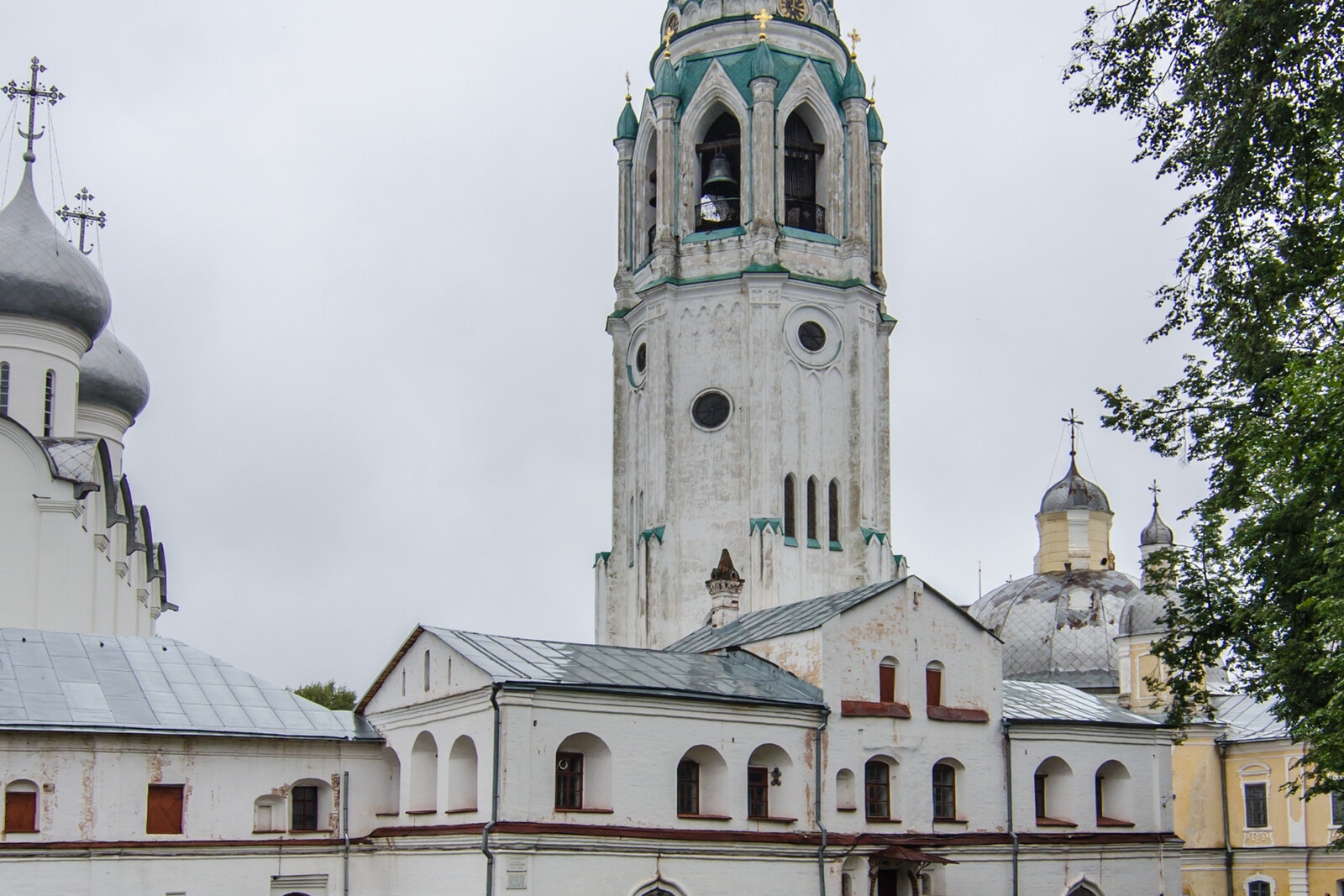
Look around first
What to notice
- White tower
- Bell tier
- Bells
- Wooden beams
The story of the place
On February ninth, nineteen thirty, a muster of work columns from city enterprises was scheduled at the former cathedral. After the rally, experienced workers were to receive equipment, climb the bell towers, and throw down the bells. The copper was earmarked for industry. Sophia Cathedral was on the list as well.
By then, the cathedral complex had already been transferred to the state museum, and bell-ringing had been banned. Museum staff defended objects that could not be used for their intended purpose. They insisted that the entire bell tower was protected by Glavnauka—the state administration responsible for museums and monuments—and therefore could not be dismantled.
Museum tradition links this resistance to Ivan Vasilyevich Fedyshin, head of the art and history department. The staff’s general protest and Glavnauka’s prohibition are firmly established; documents do not confirm Fedyshin’s personal role, which was preserved by his colleagues. For him, this was part of his official duties: since nineteen twenty-four, he had received a salary from the museum and collected icons and church antiquities for it from churches that were being closed. Here he sought to preserve an entire set of bells, rather than individual specimens of metal.
The prohibition came in time. Bells were being removed from other city bell towers that day, while the workers left Sophia Cathedral Bell Tower without them. Two days later, the local newspaper admitted that the first voluntary-work day had not been entirely successful and mocked the people who had secured protection for the cathedral bell tower. The article’s author did not know the defenders’ names.
Above them stood the same tall white tower that stands here now. Its stone base was erected in the middle of the seventeenth century, and the present upper tiers were added in eighteen sixty-nine and eighteen seventy. Bells with their own names hung on the bell tier: Chasovoy, Velikopostny, Vodovoz, Bolshaya Lebed, and Malaya Lebed. The oldest, Chasovoy, was cast as early as sixteen twenty-seven. In all, the staff defended twenty-four bells dating from the seventeenth through the nineteenth centuries.
The saved bell tower remained silent for almost six more decades. In the summer of nineteen eighty-eight, the Leningrad bell-ringer Valery Lokhansky proposed restoring its sound. The museum director, Galina Novozhilova, supported him, and students from the music college and young museum staff formed an ensemble. On August twenty-eighth, they gave the first bell-ringing concert here.
The bells are still suspended from wooden beams by iron clamps. The clappers of the heaviest bells are held by multilayered straps of oiled bull hide. The bell-ringers put back into use the very bells that work crews came to Sophia Cathedral for on the morning of February ninth, nineteen thirty.
Useful on site
Monday–Thursday 10:00–17:30, ticket office until 17:00; Friday–Sunday 10:00–21:00, ticket office until 20:30. The ascent is possible only in dry, warm weather; in rain or wind, the site may be closed.
Checked: June 24, 2026. Check the official source before visiting.Admission upstairs depends on the condition of the site and the weather. Gauge your strength before taking the stairs, do not rush on the way up, and follow staff instructions.