 Guide On Map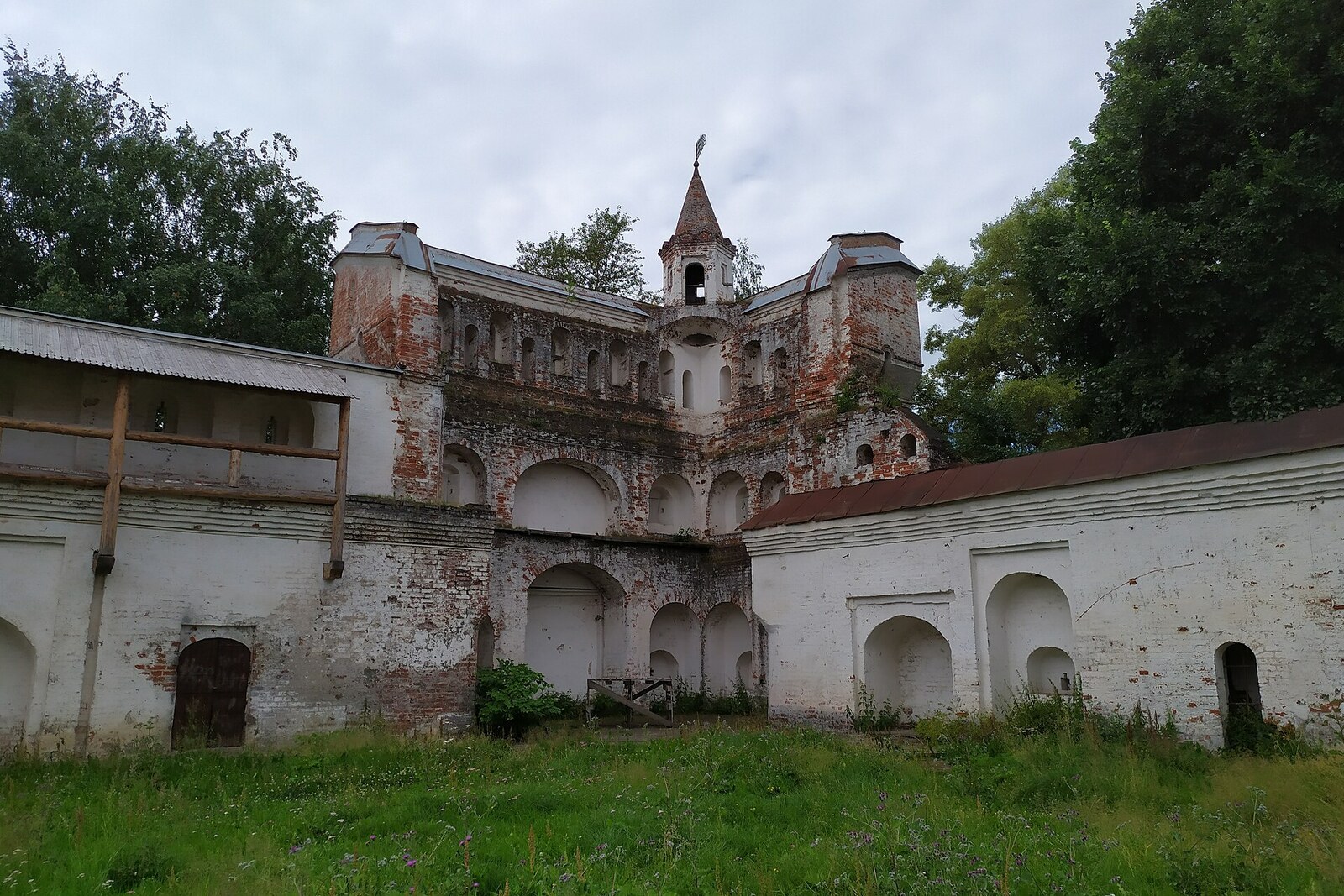
Look around first
What to notice
- Brick arch
- Wooden gates
- Battlements
- Brick masonry
The story of the place
The brick arch with wooden gates once served as the rear entrance to the enclosed court of the Bishop's Court. Behind the battlements were chambers, a chancery, a court office, grain stores, cellars, a kitchen, and stables: the affairs of a large diocese and its household were administered from here. The tower did not belong to the fortress walls of Ivan IV (Ivan the Terrible); its name preserves the memory of the demolished Church of Paraskeva and Pyatnitskaya Street, which led from here to the church.
These walls began to be laid during a famine. In sixteen seventy-one, the grain crop in Vologda Uyezd was almost a failure. Archbishop Simon, who headed the diocese and controlled the reserves of the Bishop's House, wrote to other bishops that mothers were throwing their children into the river and that the shelter had filled with the bodies of people who had died of hunger.
Simon opened the bishop's granaries. Grain was sold more cheaply to those in need, and those able to work were invited to build the stone Bishop's Court Walls. The builders received no money: they were paid in bread. Later, Simon explained that this allowed him to manage with a small treasury and provide people with food. The documents preserved neither their names nor their testimony, so it is unknown how the workers themselves viewed this arrangement. The result is known: they received bread, and by sixteen seventy-five, walls with towers stood around the Bishop's Court.
This masonry does not belong to the fortress walls of Ivan IV (Ivan the Terrible). Simon was building a separate enclosure within its territory. Behind the battlements stood the bishop's chambers, the chancery, the court office, granaries, cellars, a bakery, a kitchen, and stables. A large diocese and its household were administered here; Pyatnitskaya Tower served as the rear entrance to the court. An inventory from seventeen oh one mentions wooden double-leaf gates beneath it and an icon of Our Lady of Vladimir above them.
The tower's name came from outside. Nearby stood the parish Church of Paraskeva, a Christian martyr whose Greek name means “Friday.” Pyatnitskaya Street—today's Maltseva Street—ran from the gates to the church. The church is gone, but its name remains with the tower.
In the nineteenth century, the passage was bricked up. During the restoration completed in two thousand twenty-four, the arch was reopened and fitted with wooden gates modeled on examples from the late seventeenth century. They are opened during public events. The brick around the passage belongs to those very Bishop's Court Walls whose construction was paid for with bread given to hungry Vologda residents.
Useful on site
Exterior viewing is available from city streets. The ensemble is closed for restoration; the gate passage of Pyatnitskaya Tower is opened only for certain public events.
Checked: June 24, 2026. Check the official source before visiting.View the tower from permitted walkways and do not approach excavations, foundations, or construction barriers. Archaeological finds are not on the street but in museum storage.