 Guide On Map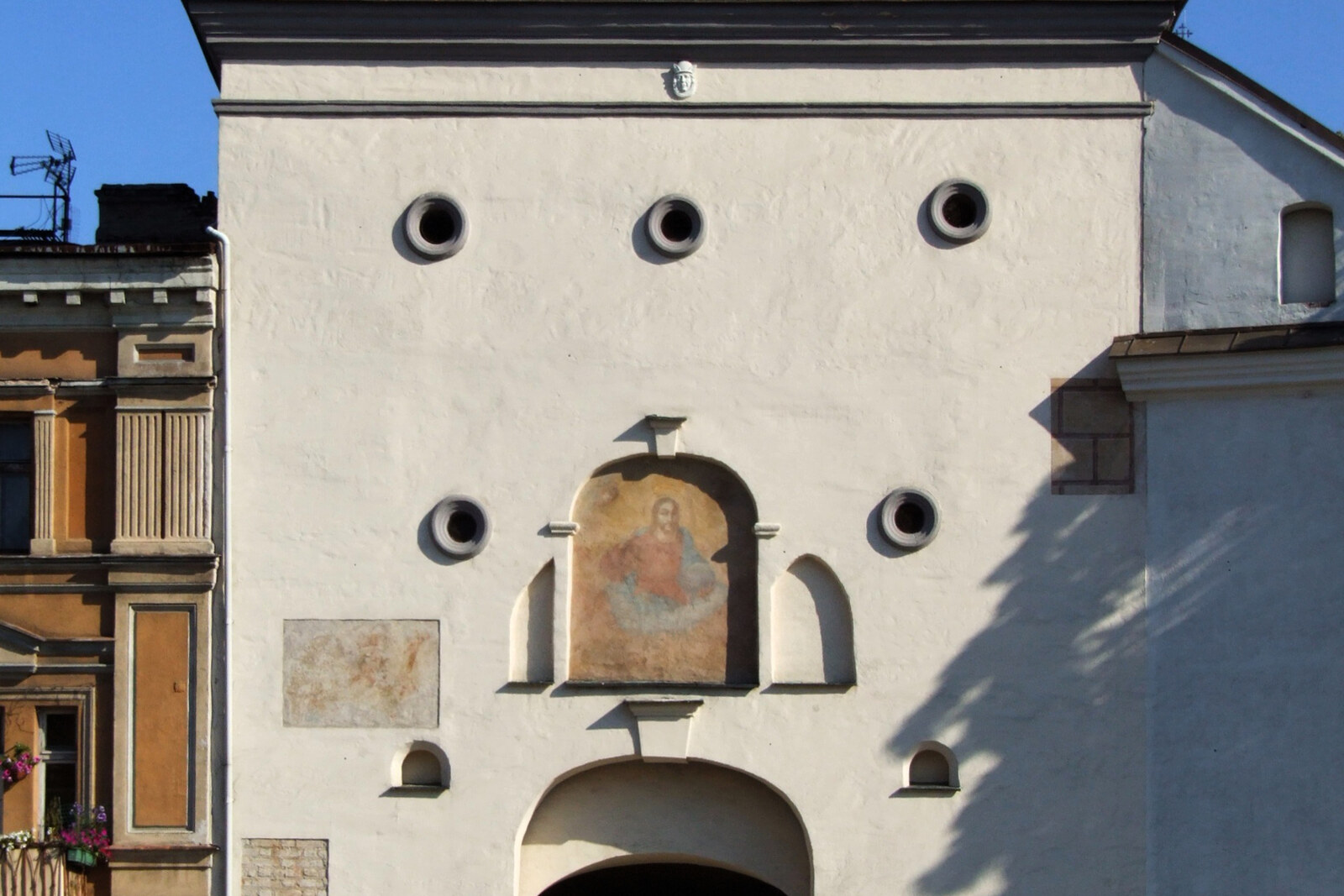
Look around first
What to notice
- The arch of the city gate
- The chapel windows above the passage
- The image of Mary
- Silver votives
The story of the place
Above the passage through the Gate of Dawn is a chapel whose windows open directly onto the street. The lower part of the building was a city gate: the road to Medininkai passed through it, so in fifteen fourteen the gate was called the Medininkai Gate. The name “Sharp” was first recorded in fifteen ninety-four. Its exact origin has been forgotten: perhaps it is connected with the road to Ashmyany or with the Sharp End, a suburb of the city. The Lithuanian name translates as “Gate of Dawn” and appeared later; it is associated with the image of Mary as the Morning Star.
At the beginning of the seventeenth century, two city paintings hung in a niche above the passage. Our Lady of the Gate of Dawn faced the city, while Christ faced the road beyond the wall. The image of Mary was protected from bad weather by shutters. It had neither a chapel nor a silver revetment yet.
The Carmelite preacher Father Charles of the Holy Spirit wanted to establish regular services here. The Carmelites lived at the neighboring Church of St Teresa, but the gate and both paintings belonged to the city magistrate. First, the owners' consent had to be obtained. In sixteen sixty-eight, the magistrate entrusted the monks with the care of the image, and three years later Father Charles secured the construction of a wooden chapel. During the work, the painting was taken to the church. When it was returned, the highest dignitaries of the Grand Duchy of Lithuania carried it, then raised it by ropes above the passage. After that, the Carmelites began singing the litany here every day.
The chapel could be entered from the monastery garden. Laypeople, especially women, were not admitted. The windows above the gate solved the problem: the priest conducted the service upstairs, while townspeople prayed in the street. Thus, the road through the gate became part of the sanctuary.
In the spring of seventeen oh two, this openness made the Gate of Dawn a dangerous point. During the Great Northern War, the Swedish army occupied Vilnius and banned public veneration of the image and gatherings before the gate. Ludwik Konstanty Pociej, Grand Scribe of Lithuania and field commander of the supporters of King Augustus II, decided to retake the capital. He expected to gather four thousand warriors. About two thousand came: the horses were exhausted, fodder was scarce, and Pociej himself was asking the king for money so that the detachment would not disperse altogether.
On April sixteenth, at Easter, Pociej's men attacked Vilnius from three sides. Antoni Nowosielski, commander of the advance detachment, led one column through the Gate of Dawn. His men knocked down the Swedish guard and burst into the city. But another detachment failed to capture the stone bridge across the Neris River. The main Swedish forces crossed the river from their camp in Šnipiškės and struck back. The attackers retreated, leaving behind two light cannon. The Swedes held Vilnius for about another month, exacted an enormous contribution from residents and monasteries, and hanged about ten townspeople from the poorer estates for helping the participants in the attack.
Church tradition preserves a different outcome. In it, the iron leaves of the gate fell on the eve of the battle and crushed Swedish soldiers, while Mary protected Nowosielski's detachment. This is specifically tradition: military letters report a breakthrough through the gate, the subsequent retreat, and Swedish reprisals. The history of the shrine adds one more detail: during the battle, a bullet pierced the painting. Nowosielski is credited with a silver votive offering in gratitude for returning alive.
The wooden chapel later burned down, and the Carmelites replaced it with a stone one. It still contains that very image, while thousands of votives—silver plaques, ornaments, and commemorative gifts—are kept around the altar and in the treasury. During major services, people once again stand below, in the street where they were forbidden to gather in seventeen oh two.
Useful on site
The chapel is open daily 7:00–19:00.
Checked: June 24, 2026. Check the official source before visiting.Begin your visit outside, without lingering in the passage. In the chapel, give space to those praying, keep quiet, and postpone entering if a service is underway.