 Guide On Map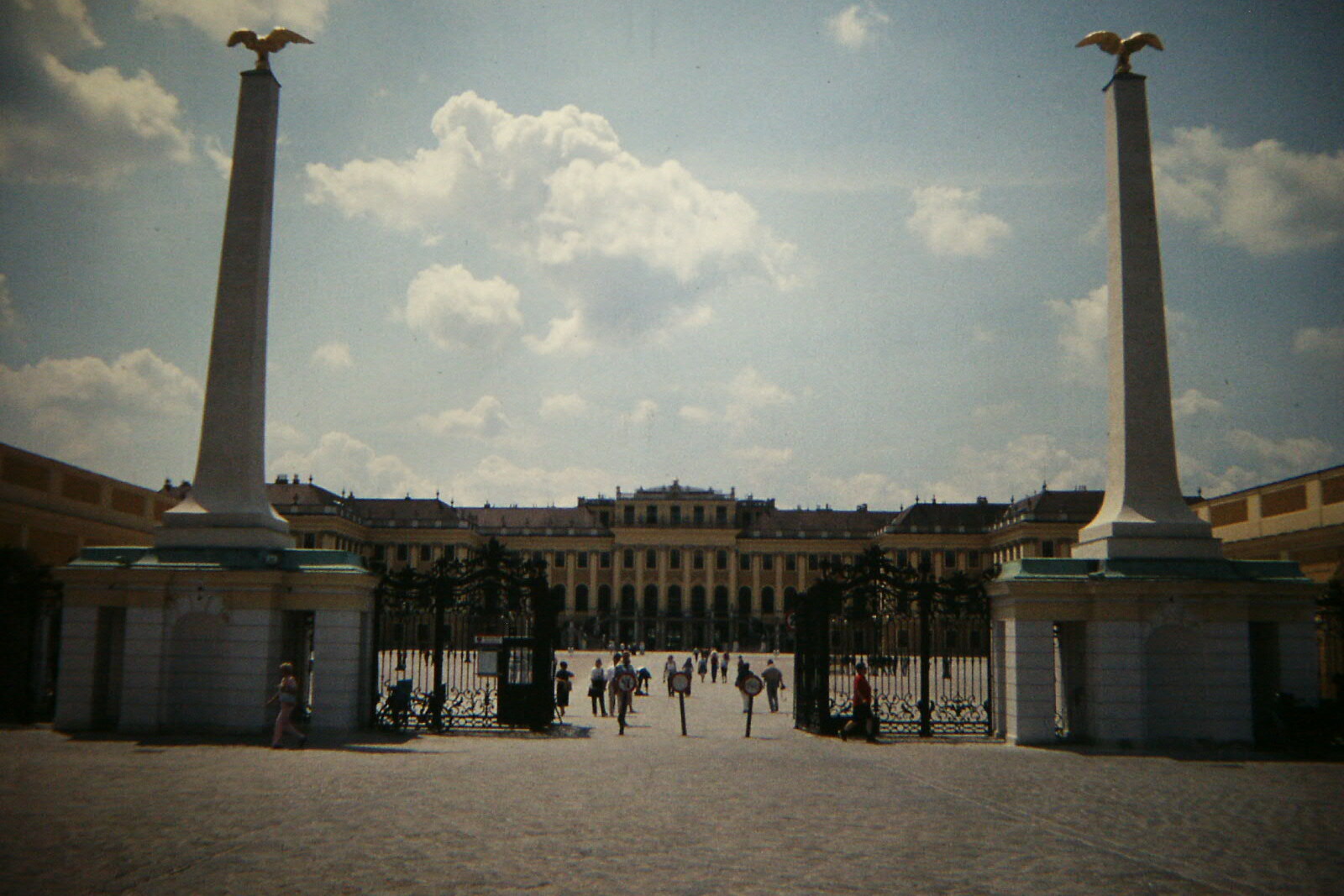
Look around first
What to notice
- Main gate
- Two fountains at the edges of the courtyard
- Palace staircase
The story of the place
Schönbrunn's courtyard is called the Ehrenhof—the Court of Honor. Carriages entered here through the main gate, while guests were received and troops drawn up in the open space before the palace staircase. Two fountains are set toward the edges so that the middle remains clear. In the autumn of eighteen oh nine, Napoleon Bonaparte made use of this arrangement.
The French army occupied Vienna, and Napoleon took up residence in the Habsburgs' summer residence, seeking a peace treaty from defeated Austria on his own terms. In the mornings, he came out onto the staircase on the Ehrenhof side and took the salute at parades. Tickets were sold for these reviews: Viennese came into the courtyard to see a man who usually appeared in public only rarely.
One ticket went to Friedrich Staps, the seventeen-year-old son of a Lutheran pastor from Naumburg. From the age of fourteen, he had been learning the merchant's trade at a factory in Erfurt and preparing to make his living through commerce. A year earlier, Staps had seen Napoleon at a meeting of European monarchs and admired him. Then the wars continued, French troops subjugated a considerable part of the German lands, and the apprentice decided that the emperor's death would stop them. Before leaving, he wrote to his parents that he was going to fulfill a promise made to God and expected to sacrifice his own life.
On October twelfth, Staps came to the Ehrenhof with a sharply honed kitchen knife. Instead of a sheath, he wrapped the blade in gray paper and tied it with twine. While troops were passing before the palace, the young man tried twice to approach Napoleon, as though he wanted to hand over a petition. The emperor's adjutant, General Jean Rapp, noticed his persistence and ordered him detained. The knife was found in a search.
During questioning, Staps did not deny his intention and said that he had acted alone. Napoleon first took him for a mentally ill man, then offered to spare his life if he asked for a pardon. Staps refused and warned that, if free, he would try again. A military court sentenced him to be shot; the sentence was carried out on October sixteenth.
Napoleon ordered the incident concealed. He wrote to the minister of police that he himself had noticed nothing, and that if the news nevertheless spread, the young man should be declared insane. After the attempt, tickets for palace parades were no longer sold.
There is no monument to Staps here. What remains are the main gate, the broad space between the fountains, and the palace staircase where Napoleon took the salute. Between that staircase and the gate, officers stopped the merchant's apprentice who had come to a paid parade with a kitchen knife.
Useful on site
Accessible during park opening hours: daily from 6:30; closing varies by month from 17:30 to 21:00. Entry to the park is free.
Checked: June 29, 2026. Check the official source before visiting.Stand at the edge of the courtyard without blocking the passage to the palace; all the details of the story can be seen from outside.