 Guide On Map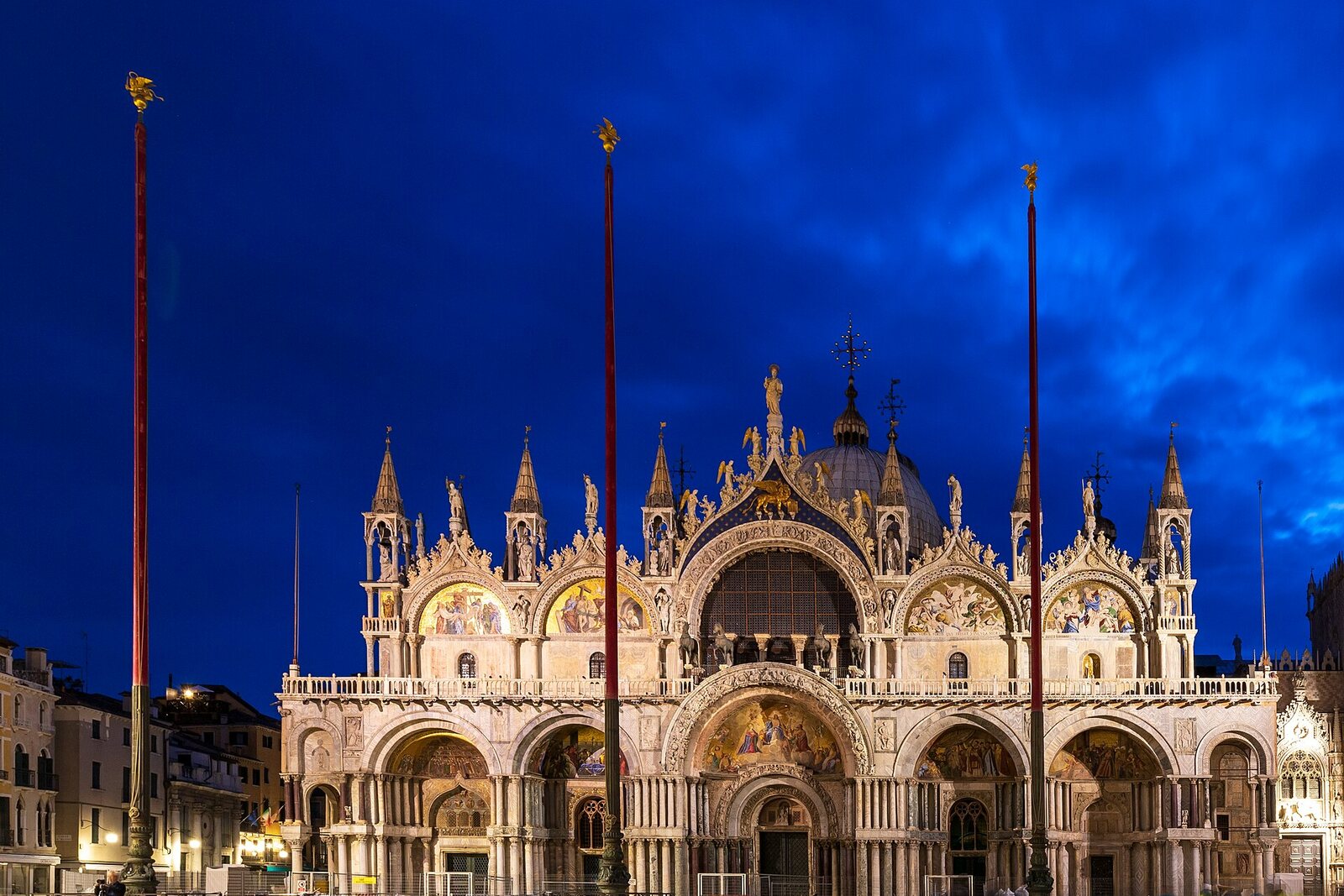
Look around first
What to notice
- Mosaics on the main facade
- Five domes
- Marble cladding
- Main portal
The story of the place
In ten ninety-four, Doge Vitale Falier was preparing to consecrate the newly built basilica, but its attendants could not find its principal shrine: the remains venerated as the body of Saint Mark the Evangelist.
The doge was Venice's elected head. Those elected were presented to the townspeople in this very church, and the doge himself appointed its clergy. At that time, the city's cathedral stood in another part of Venice, at the Church of San Pietro di Castello. St Mark's served as the doges' palace church, connected to their residence.
Mark was a Christian evangelist after whom one of the four Gospels is named. He was venerated in Alexandria, where, according to church tradition, he preached and was buried. In eight twenty-eight, Venetian merchants brought from there the relics believed to be his body. The doge of the time received them and ordered a separate church to be built beside the palace. This is how Mark became Venice's patron saint, and his name passed to the basilica.
Construction of the present building began in ten sixty-three. Venetian tradition claims that during the work, the reliquary was secretly walled up for safekeeping, and the people who knew its exact location died. There is no reliable evidence of such a hiding place. All that is certain is that by the end of construction, the relics had to be searched for.
Falier proclaimed several days of fasting and communal prayers. On June twenty-fifth, the doge, the bishop, the nobility, and townspeople gathered inside the basilica. According to the church account, Saint Mark's hand appeared from a pilaster in the right-hand part of the church and pointed to where the body was hidden. This is a tradition of a miracle, not a confirmed account of the opening of a hiding place.
On October eighth, Falier did indeed place the found relics in a sarcophagus in the enlarged crypt and consecrate the basilica. People descended to the tomb by side staircases, approached on their knees, and touched the reliquary with their hands or pieces of cloth. The church acquired the shrine for which Venetian doges had built it beside their own palace.
In eighteen oh seven, the former palace church became the cathedral and the residence of the Patriarch of Venice. The venerated relics of Mark are now in a marble sarcophagus beneath the high altar. Behind the Altar of Saint James stands the pilaster from which, according to tradition, the hand appeared; opposite it, mosaics depict the people gathered here and the found reliquary.
Useful on site
Official ticket service: Mon–Sat 09:30–17:15, Sun/holidays basilica from 14:00; last entry usually 16:45, hours may change.
Opening hours by day
The main details of the facade are visible from the square. The interior and the original horses require a separate visit, observing access and dress rules.