 Guide On Map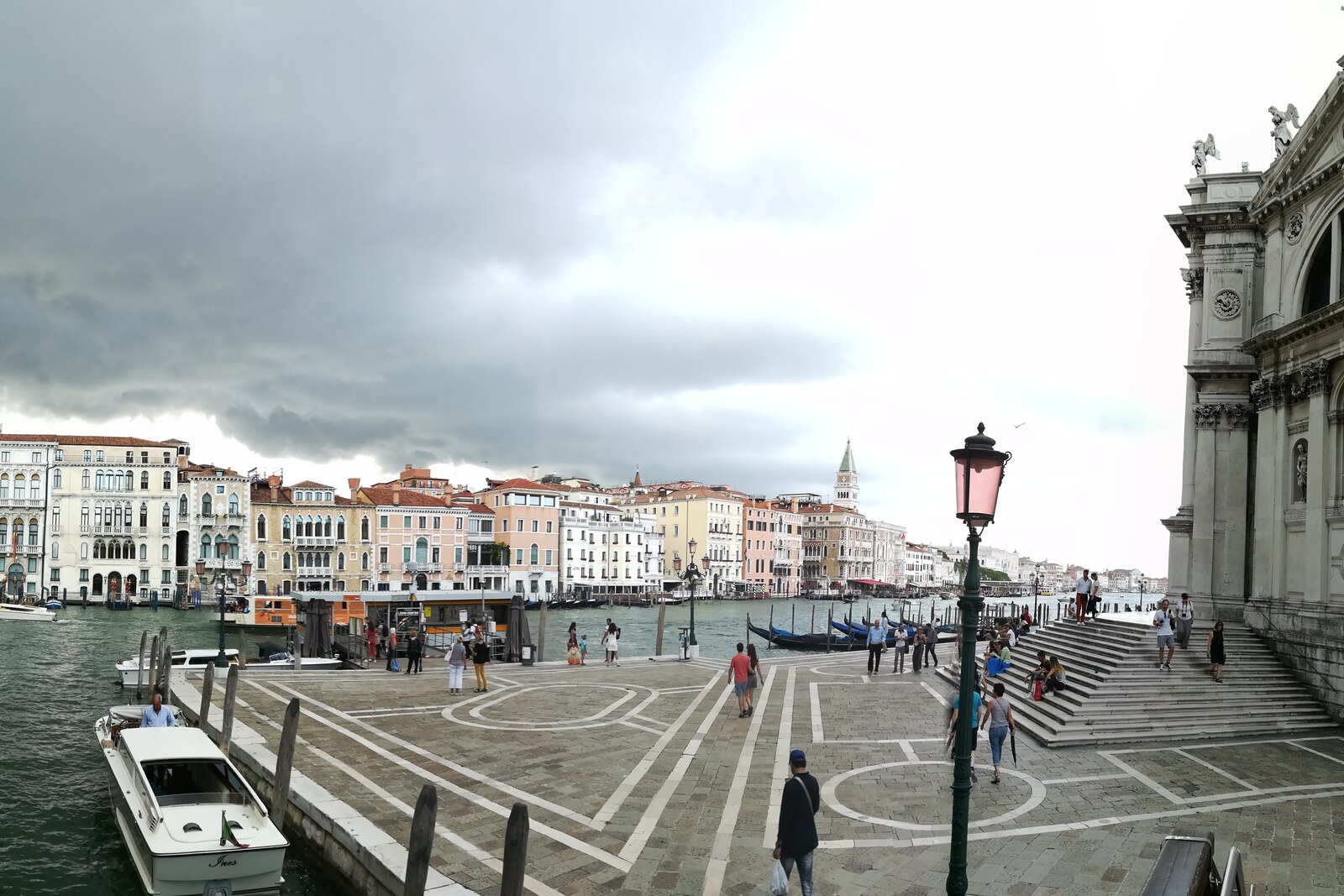
Look around first
What to notice
- White dome
- Basilica facade
- High altar
The story of the place
The white dome of Santa Maria della Salute rises above the facade of the spacious basilica with its high altar. The Santissima Trinità complex once stood here: a church, a monastery, and a school. It was dismantled, and the stone from the old buildings was intended for use in the new foundations; then piles began to be driven into the ground. Three senators considered the spacious plot near San Marco suitable for the new church.
On November twenty-first, sixteen thirty-one, a procession of people who had survived the plague epidemic came here for the first time. They crossed the Grand Canal over a temporary bridge and stopped at the site of the present basilica. The white dome was not there yet. The procession was met by a small wooden church, erected in four days.
A year earlier, Doge Nicolò Contarini, the elected head of the Republic of Venice, had remained in the infected city and had to find a way to keep it from falling apart. The plague hospitals were overcrowded, and quarantine measures did not stop the disease. On October twenty-sixth, sixteen thirty, Contarini came out before the people gathered in St Mark's Square without a hat, holding the doge's cap in his hand. On behalf of the republic, he made a vow: to build a magnificent church to the Virgin Mary and call it Santa Maria della Salute. The word “Salute” means “health.” If the city were freed from the epidemic, the doge and senators would have to come to the new church every year in a procession of thanksgiving.
The vow did not stop the infection. People continued to die, and on April first, sixteen thirty-one, Contarini himself died as well. He had set the construction in motion, but he did not live to see either the end of the epidemic or the present church.
Three senators charged with choosing the site inspected several places. The Santissima Trinità complex stood here at the time: a church, a monastery, and a school. The senators found the spacious plot, its proximity to San Marco, and the possibility of bringing a ceremonial procession here suitable. The stone from the dismantled buildings was proposed for use in the new foundations. The Santissima Trinità complex was demolished, and piles for the basilica began to be driven into the ground in its place.
In the autumn of sixteen thirty-one, the city health service declared Venice free of plague. Over sixteen months, nearly forty-seven thousand people died in the city itself—about a third of the population. The new doge, Francesco Erizzo, Contarini's successor, led senators and city residents across the canal to fulfill the promise of his deceased predecessor. They came to that very wooden church built in four days. The permanent basilica, designed by Baldassare Longhena, was not blessed until sixteen eighty-seven.
Every November twenty-first, a temporary bridge is assembled across the Grand Canal again. Venetian families carry candles to Santa Maria della Salute; the candles left after the feast then burn at the high altar. Four centuries ago, at the end of the same crossing, stood a wooden church built for people whose number in the city had fallen by a third.
Useful on site
Accessible outside as an urban space; entry to the basilica depends on the church schedule and breaks.
Checked: date not specified. Check the official source before visiting.It is best to view the basilica from several distances outside, to see both its base and its silhouette. Inside, observe the quiet of the church; access during services may be limited.