 Guide On Map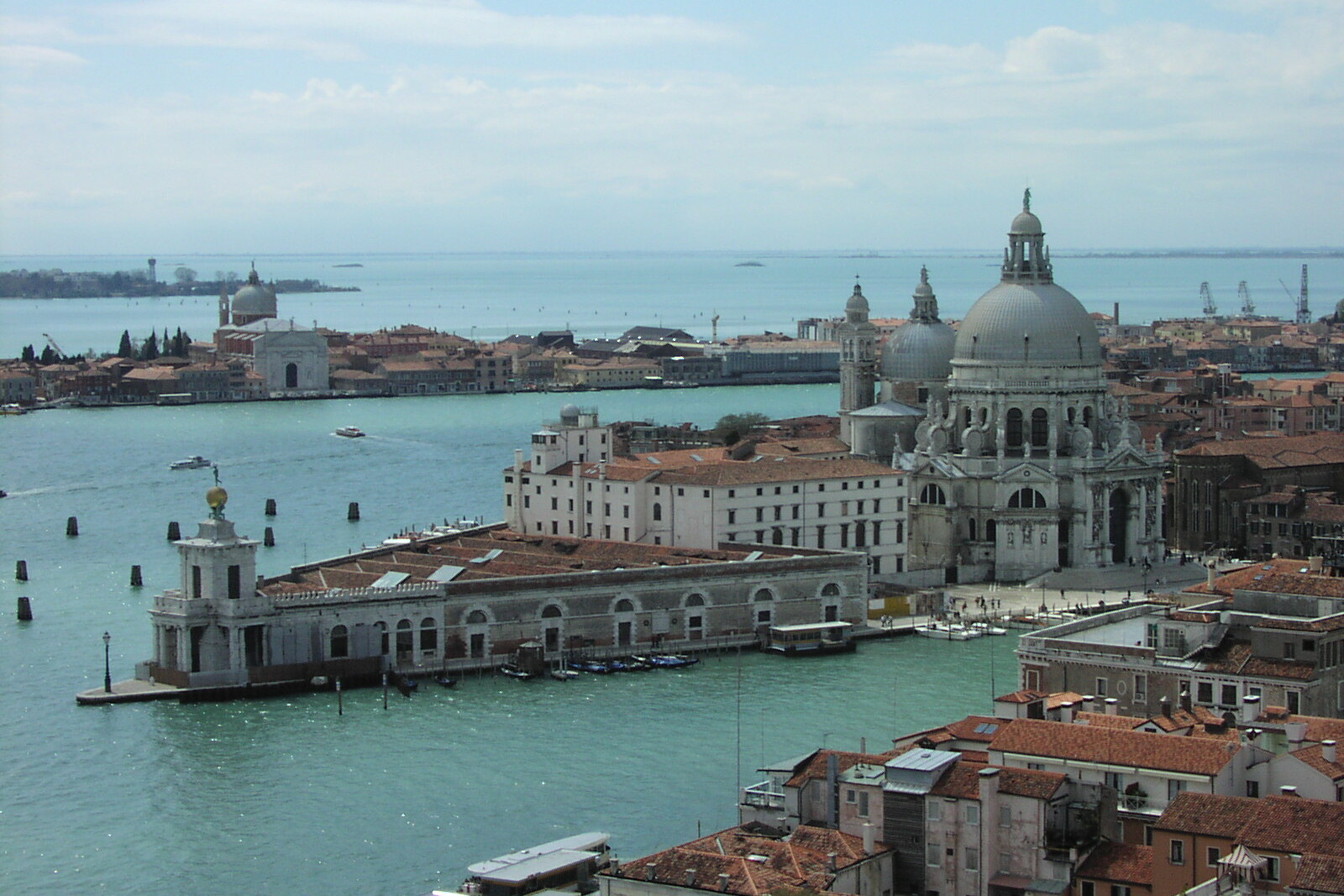
Look around first
What to notice
- Two bronze Atlases
- Gilded globe
- Figure of Fortuna with a sail
- Concrete cube inside
The story of the place
Punta della Dogana means “Customs Point.” In fourteen fourteen, Venetian councilors moved the maritime customs house here: the former site near the Venetian Arsenal could no longer hold the arriving cargoes. The point lay between St Mark's Basin, the Grand Canal, and the Giudecca Canal. Customs officers could stop a vessel before its cargo was distributed among the city's warehouses and shops.
In fifteen thirty-two, Yunus Bey, the chief interpreter at the court of the Ottoman sultan and his envoy in Venice, tried to circumvent this system. This was already his fourth visit. Merchants joined Yunus's retinue and handed their goods over to him: if the cargo could be presented as the envoy's property, the duty could be avoided. In return, they promised Yunus a reward.
The calculation rested on his position. Yunus delivered the sultan's instructions and, after returning, told the court how he had been treated in Venice. The senators tried not to offend him. The customs officers nevertheless demanded that the goods be produced, found out whom they belonged to, and collected the duty from Yunus. Afterward, he complained about the inspection and his reception, while the senators regarded him as a man who sought every opportunity to make money. They had to preserve relations with the envoy, but the merchants' cargo received no exemption.
Yunus passed through an earlier customs complex. The present building was not completed until sixteen eighty-two. Above its tower, two bronze Atlases hold a gilded globe, and on the globe stands a rotating Fortuna with a sail. These figures were not yet here in Yunus's time. What remained from that story were the exact place of inspection and the name itself: a vessel entered the trading part of Venice by passing Punta della Dogana.
Customs officers left these premises in the late nineteen eighties. The warehouses stood empty for more than two decades, until the city announced a competition to create a center for contemporary art. The collector François Pinault proposed a project by Tadao Ando; the Solomon R. Guggenheim Foundation submitted a project by Zaha Hadid. In nineteen oh seven, the city chose Pinault. He paid for the building's restoration and received exhibition space for his collection.
Ando removed later partitions, revealed the brick walls and wooden rafters, and reinforced the foundation against dampness and high water. At the center of the triangular building, he placed a smooth concrete cube two stories high. After fourteen months of work, in June two thousand nine, the former maritime customs house opened as a museum. Temporary exhibitions now change behind its walls, while the concrete cube occupies the middle of the warehouses where customs officers once sorted arriving cargoes.
Useful on site
Accessible outside as an urban space; exhibitions are open only during the current periods of the Pinault Collection.
Checked: date not specified. Check the official source before visiting.The point and the customs house's exterior can be explored independently, while the exhibitions require a separate visit. The stone by the water may be wet; do not approach the edge for a photograph.