 Guide On Map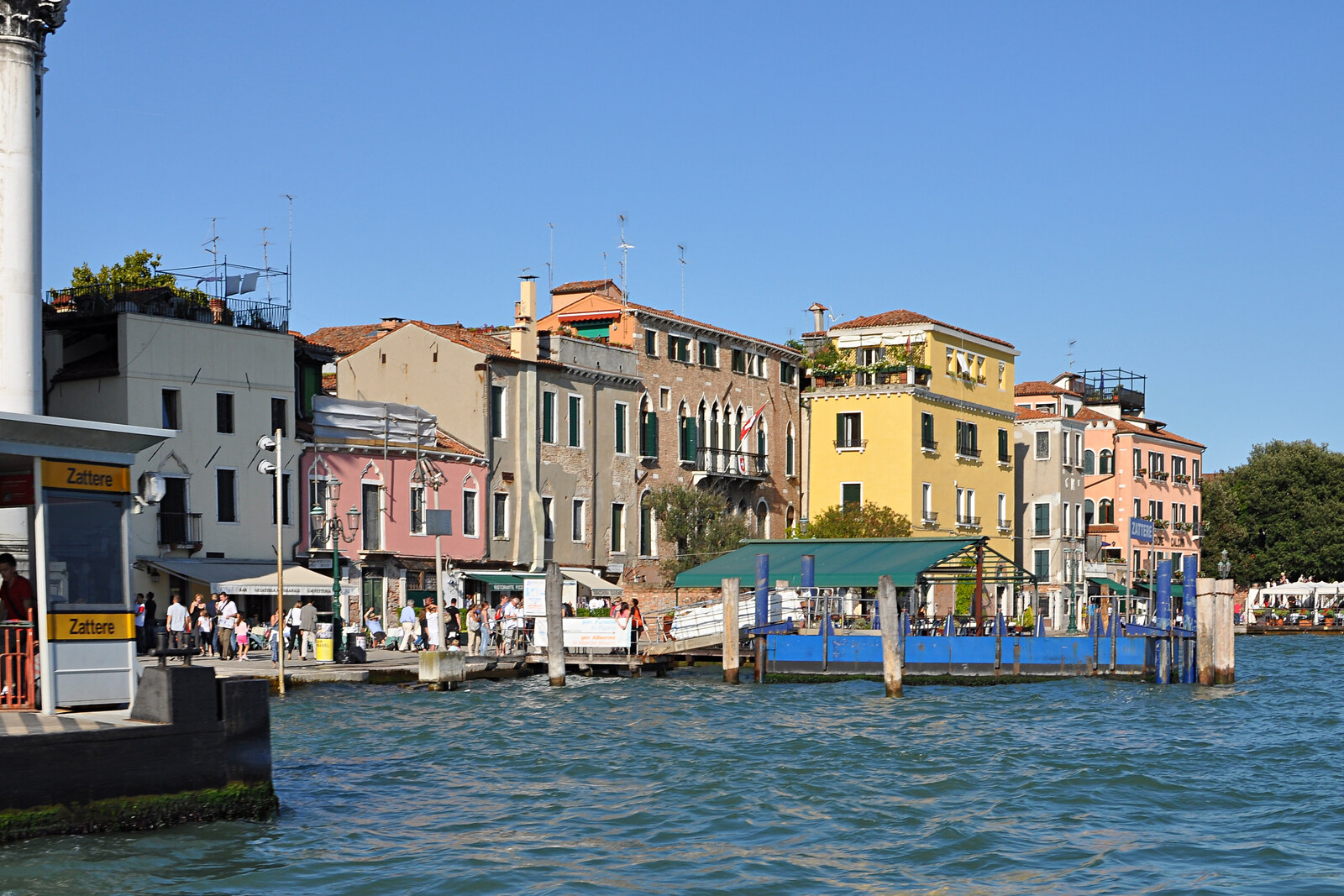
Look around first
What to notice
- Stone waterfront
- Giudecca Canal
- Long warehouse facades
The story of the place
“Zattere” is a plural noun: literally, “rafts.” Until the beginning of the twentieth century, this shore was the end of the journey for raftmen from the valleys of the Piave and Brenta. They were paid to deliver other people’s timber to Venice intact. Along with the cargo, they also steered the vessel itself: the raft was assembled from the same logs and planks that were to be sold.
Further upstream, lumberjacks felled the trees, river drivers set the logs drifting downstream, and other workers caught them with pike poles. Then raft binders assembled the rafts. Instead of rope, they often used flexible hazel shoots: in water, the wood swelled and the knots tightened. Coal, iron, stone, and other goods from the mountain valleys were loaded on top. Sometimes ship masts up to thirty-five meters long had to be brought all the way to Venice without breaking them on river bends.
Some raftmen knew the upper Piave, while others took over the cargo farther downstream. It became a relay between river settlements: a crew guided the raft through its own dangerous stretch, handed it over to the next crew, and returned home on foot. In the lagoon, the river current no longer helped, so the rafts were towed by large sailing barges. The final stretch ran along the Giudecca Canal to the southern edge of Dorsoduro.
The shore was prepared for this work in advance. Under a decree of fifteen nineteen, it began to be reinforced and paved with stone. Then, in sixteen forty, Giovanni Valier and Giuseppe Barbarigo, officials overseeing forests and timber supplies, brought unloading together at one point. They ordered all timber carriers to dock at the Riva of the Holy Spirit—a section of the Zattere near the church of the same name—and nowhere else. Warehouses, furnaces, and boat workshops stood along the waterfront: the cargo could immediately be taken apart and distributed.
After unloading, the raft itself disappeared as well. The bundles were cut apart and the logs sold; some of the timber went into piles, beams, and vessels. The raftmen were paid for the journey, but they no longer had a boat for the return trip. They walked back on foot, trying to stay together: people knew that returning carriers had money on them and lay in wait for them on the roads.
The railway and new freight transport left the raftmen without their former livelihood. No working fleet remains at today’s stone waterfront—it had disappeared after every successful journey even before. The raftmen left the Zattere on foot, while their rafts remained in Venice as planks, beams, and ship timber.
Useful on site
Open waterfront; there is little shade at noon, and it may be cooler in the wind and by the water.
Checked: date not specified. Check the official source before visiting.There is little shelter on the shore from sun, wind, and slanting rain. Keep away from the wet edge and leave the passage by the moorings clear.